What is an Anemometer? Types, Advantages, and Disadvantages
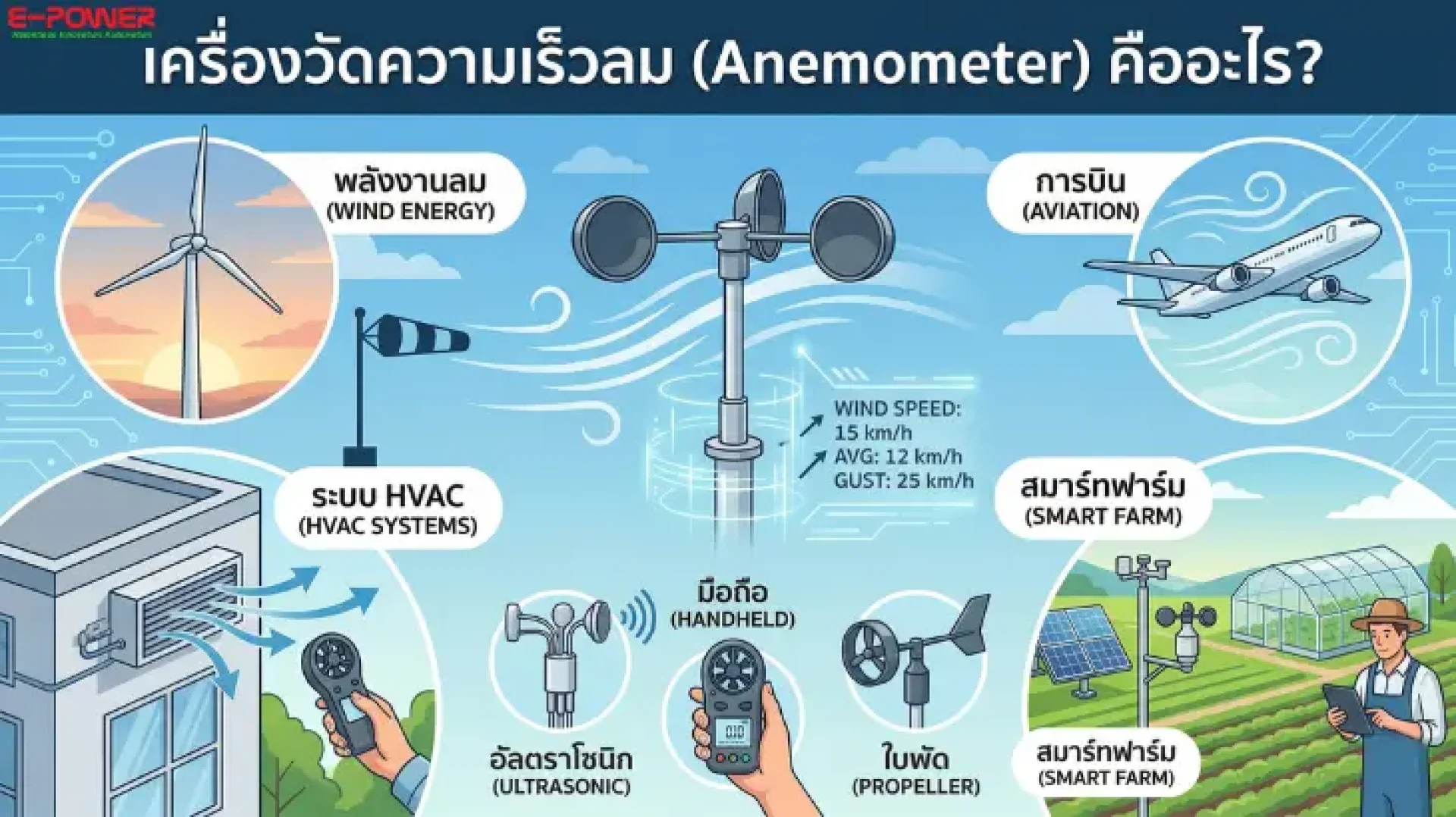
An Anemometer is a meteorological instrument designed to measure air velocity and, in many advanced models, wind direction. In professional engineering and meteorology, wind measurement goes beyond a single value; it encompasses time-averaged wind speed, gusts, turbulence intensity, and even three-dimensional wind vectors for specialized applications.
Today, anemometers are widely integrated across various sectors, including smart weather stations, wind energy assessments for turbines, aviation, environmental monitoring, HVAC systems, industrial process control, and ePower’s Smart Farm projects.
Choosing the right instrument requires a deep understanding of measurement principles and site-specific conditions. Different designs significantly impact long-term accuracy, bearing wear, and sensitivity to environmental interference.
Common Applications of Anemometers
Anemometers are utilized in complex scenarios far beyond simple wind checks:
- Climatological Statistics: Measuring mean wind speed and direction over defined periods (e.g., 1 or 10 minutes).
- Boundary Layer Studies: Measuring fluctuating velocity components in wind tunnels or atmospheric conditions.
- Turbulence Analysis: Determining Reynolds stress and flow characteristics in highly variable areas.
- Wall Shear Stress Measurement: Using specialized probes for near-surface flow in fluid dynamics.
- Fluid Temperature Measurement: Utilizing Thermal Anemometry to derive temperature from resistance variations.
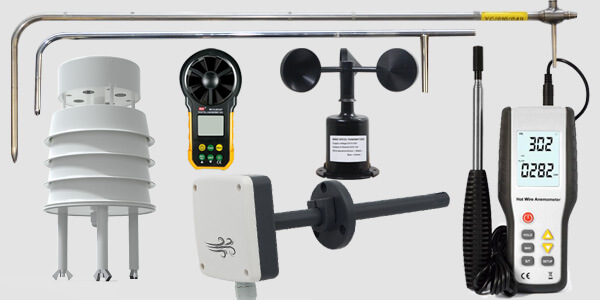
7 Types of Anemometers
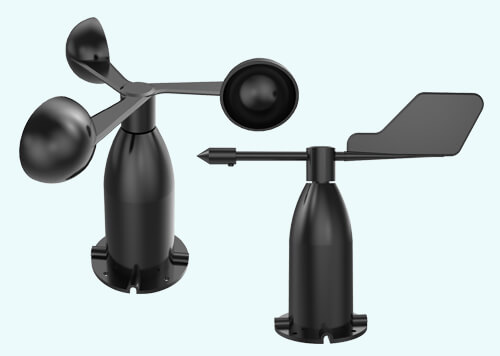
1. Cup Anemometers
The most common type for industrial weather stations, consisting of three cups mounted on horizontal arms around a vertical shaft.
- Advantages: Robust structure, excellent long-term stability, and high corrosion resistance (when using anodized aluminum or UV-resistant plastics).
- Disadvantages: Complex aerodynamics; accuracy may drop at very low or extremely high wind speeds due to mechanical friction.
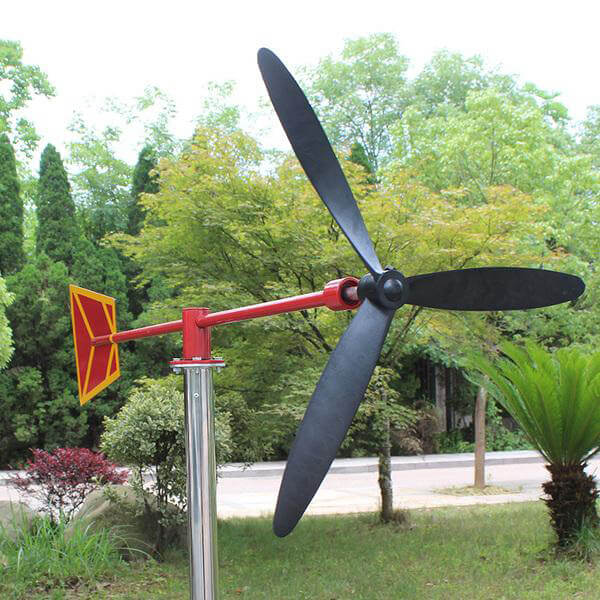
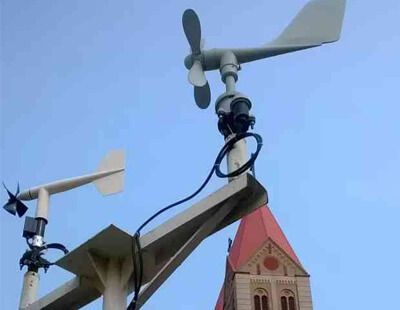
2. Propeller Anemometers
Features a propeller rotor mounted on a horizontal axis, often combined with a wind vane to ensure it faces the wind.
- Advantages: Simple installation and high sensitivity at moderate wind speeds.
- Disadvantages: In freezing climates, ice buildup on blades can cause mechanical blockage and data errors.
3. Hot Wire Anemometers
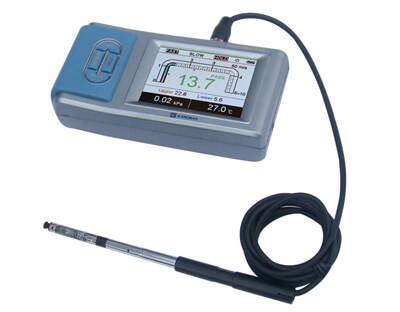
Uses a thin metallic wire heated by electricity; as air flows past, it removes heat, changing the wire's resistance.
- Advantages: Extremely high sensitivity and millisecond response time; ideal for low-speed and turbulent flow.
- Disadvantages: Fragile sensing wire and highly sensitive to dust contamination.
4. Vane Anemometers (Handheld)
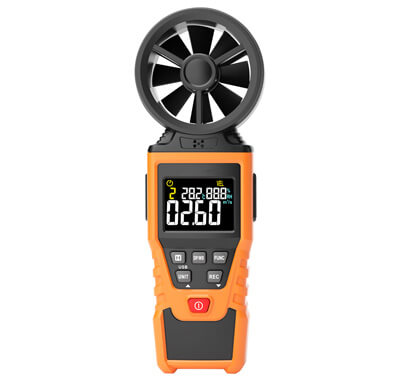
Compact, portable devices with a small impeller connected to a digital display.
- Advantages: Lightweight and portable; perfect for spot checks in HVAC systems.
- Disadvantages: Not suitable for long-term remote monitoring or continuous data transmission.
5. Ultrasonic Anemometers
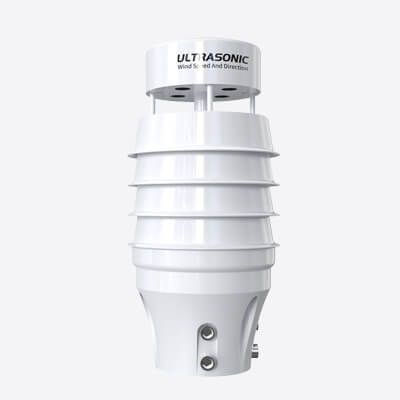
Advanced technology using sound waves to measure speed and direction without any moving parts.
- Advantages: Zero mechanical wear, low maintenance, and high precision even at near-zero wind speeds. The top choice for modern Smart Farms and Industrial Automation.
- Disadvantages: Higher initial cost and requires precise alignment during installation.
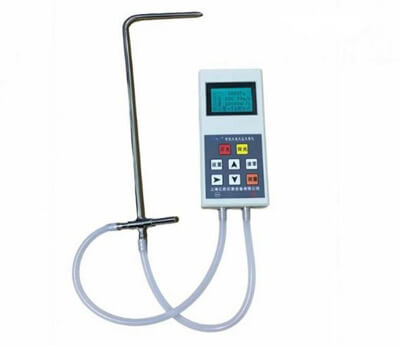
6. Pressure Anemometers (Pitot Tube)
Measures the difference between total and static pressure based on Bernoulli’s equation.
- Advantages: Stable and repeatable in controlled environments like air ducts or wind tunnels.
- Disadvantages: Impractical for open-air use as it requires precise directional alignment.
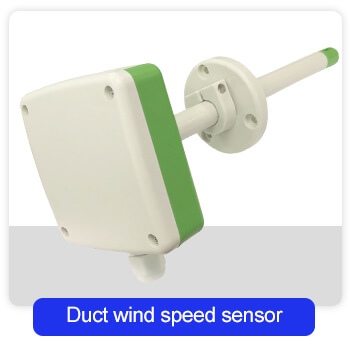
7. Tube Anemometers
Designed specifically for confined spaces like ventilation ducts.
- Advantages: Accurate air volume measurement in restricted areas with EMI protection.
- Disadvantages: Complex installation (requires duct drilling) and may obstruct airflow if installed incorrectly.
How to Choose the Right Anemometer
Measurement Range: Determine the required min/max wind speed and if temperature/humidity sensing is needed.
- Accuracy: Typically around ±2%; high-precision models involve more advanced sensor technology.
- Material Quality: For outdoors, ensure UV and corrosion resistance (IP65–IP68 standards) to minimize maintenance.
- Connectivity: Must support standard outputs like 4-20mA, RS485, or direct integration with the E-power IoT Platform.
- After-Sales Support: The ePower team provides engineering consultation and calibration services for long-term reliability.
Conclusion
Every anemometer type offers unique strengths. Selecting the right one ensures precise data to optimize your operations. Whether you need industrial-grade wind sensors or a smart weather station, E-Power Service Co., Ltd. (ePower) provides end-to-end design and installation. Visit us at www.epower.co.th.