Applications of Temperature and Humidity Sensors for Data Centers, HVAC, and Industrial Use
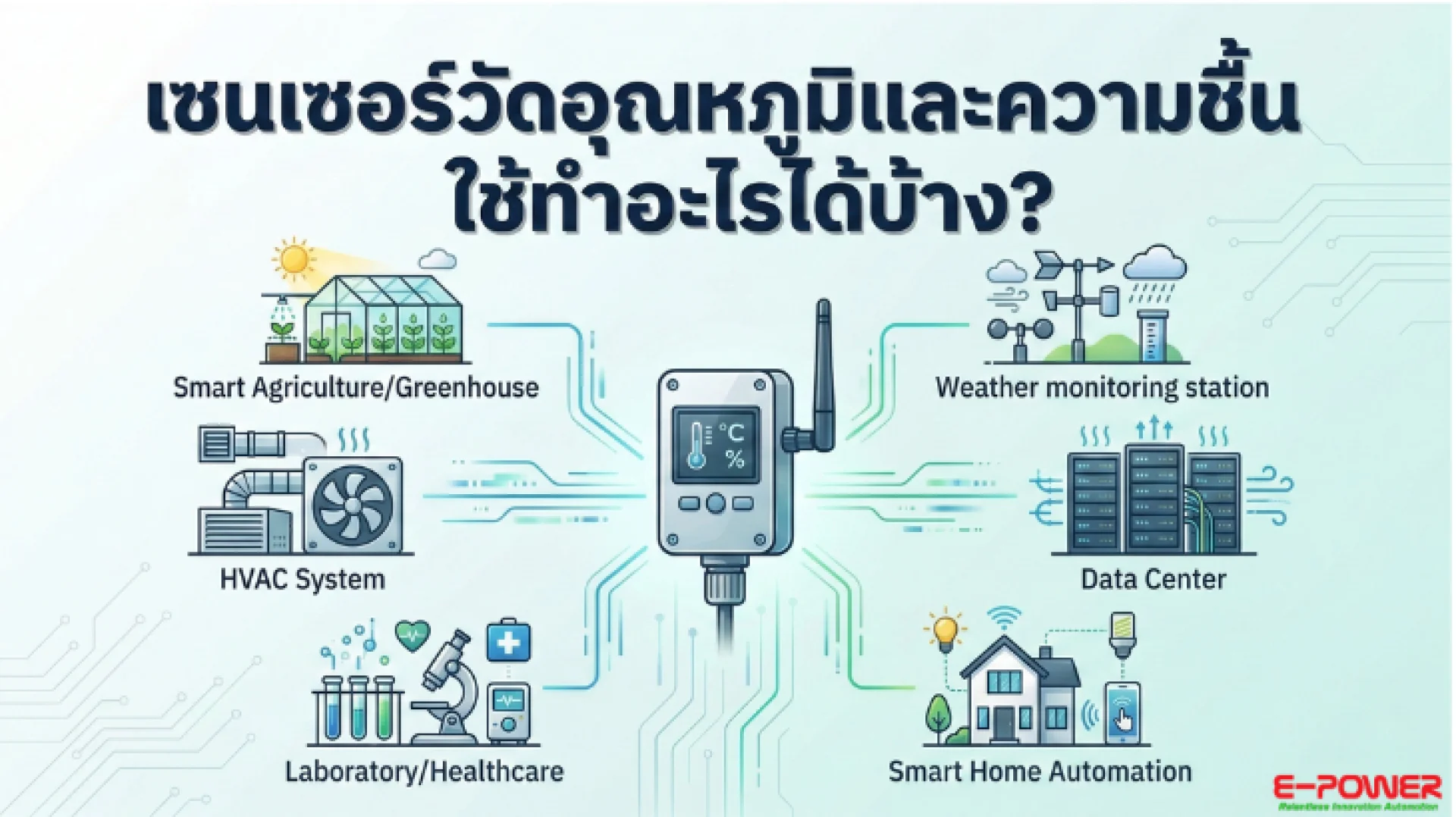
Did you know that a variance of just 1°C in temperature monitoring can cost Data Centers millions of dollars annually due to heat accumulation and equipment damage? Temperature and Humidity Sensors are the core components that deliver real-time environmental data with ultimate precision. These sensors are ideal for both indoor and outdoor applications whether in warehouses, meteorology, or any area requiring extreme accuracy coupled with the capability to transmit data to the cloud for seamless management.
Basic Knowledge of Temperature and Humidity Sensors
What are Temperature and Humidity Sensors?
Temperature measures the level of heat or cold in an environment, while humidity measures the concentration of water vapor in the air. By definition, they are different parameters. However, for accuracy and convenience, industries often use Thermohygrometers, which combine both temperature and humidity sensing functions into a single device.
From Sensor to IIoT: How Does It Work?
Simply reading environmental values is no longer sufficient for modern industries. Data from the sensors (such as Capacitive or RTDs) is sent to connect with a Haiwell PLC, which acts as the main brain to receive and process the signals. The system then displays the real-time status and metrics on an HMI (Human-Machine Interface) screen at the control cabinet, allowing staff to instantly check on-site conditions.Once processed, the system utilizes the MQTT protocol—which is fast and requires low bandwidth—to transmit all data to a centralized system, enabling executives or engineers to access the information at any time.
Accuracy and Specifications You Need to Know
Choosing high-accuracy temperature sensors that fit your specific tasks will help you manage your budget cost-effectively. Key specifications to consider include:
Temperature Range and Accuracy: A high-quality sensor should measure from -40°C to +60°C with an accuracy of ±0.5°C or better.
Humidity Range and Accuracy: It should measure from 0% to 100% RH (Relative Humidity) with an accuracy of ±3% RH.
Response Time: It should have a fast response time to detect changes and instantly trigger the alert system via the Haiwell controller.
Top Products from Rika Sensor
Rika Sensor has over 10 years of experience manufacturing industrial-grade environmental sensors, guaranteed by numerous patents and international standards such as CE and ISO90001.- RK330-01: An excellent sensor perfectly suited for outdoor use, highly resistant to sun and rain.
- RK330-04 (HVAC): Measures temperatures from -40°C to +125°C (accuracy ±0.2°C) and humidity from 0-100% RH.
- RK330-02 (Wall-Mounted): Operates between -30°C and +70°C, making it ideal for indoor and warehouse installations.
Applications Across Industries
- Agriculture and Greenhouses: Helps farmers maintain optimal growth conditions, prevent plant diseases, and effectively increase yields.
- Industrial Applications: The pharmaceutical, food, and electronics industries require strict environmental control to maintain product quality and safety.
- HVAC and Building Management: Allows air conditioning systems to operate in sync with the actual room temperature, saving energy when rooms are unoccupied and reducing operational costs.
- Meteorology and Weather Monitoring: Collects real-time data for forecasting and studying climate changes.
Healthcare and Labs: Prevents the degradation of vaccines, biological samples, and crucial medications. - Home Automation: Connects with smart home systems to adjust to the most comfortable temperature while helping reduce electricity bills.
- Data Centers: Prevents overheating and humidity issues that could damage hardware and lead to the loss of critical data.
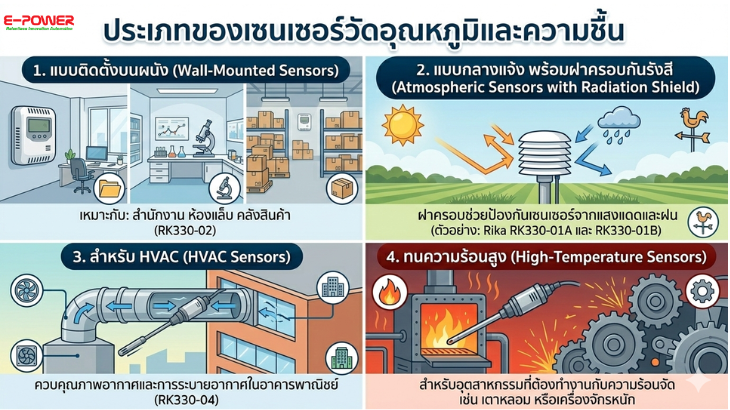
Types of Temperature and Humidity Sensors
- Wall-Mounted Sensors: Ideal for indoor climate measurement, such as in offices, labs, and warehouses (Example: RK330-02).
- Atmospheric Sensors with Radiation Shield: Designed for outdoor use. The shield protects the sensor from sunlight and rain (Example: Rika RK330-01A and RK330-01B, equipped with 11 radiation shield plates).
- HVAC Sensors: Controls air quality and ventilation in commercial buildings (Example: RK330-04).
- High-Temperature Sensors: For industries dealing with extreme heat, such as furnaces or heavy machinery.
Conclusion: The Importance of Temperature and Humidity Monitoring
Monitoring temperature and humidity plays a massive role—from industrial manufacturing processes to large-scale data centers. Maintaining the correct environmental levels serves as a guarantee that equipment and machinery will operate at peak efficiency.
With modern innovations, utilizing IoT temperature devices to build a comprehensive solution is becoming the new standard. By reading on-site values, connecting to a Haiwell PLC for system control, displaying data on an HMI, and transmitting it to the epowercloud IIoT, you create a highly efficient cloud-based monitoring system. This not only reduces manual inspection costs but also sustainably elevates the safety and reliability of your business operations.
Frequently Asked Questions (FAQ)
Q: How does Relative Humidity differ from Absolute Humidity?
Ans: Relative humidity is the ratio of water vapor in the air compared to the maximum amount the air can hold at that given temperature. Absolute humidity is the actual amount of water vapor in the air (g/m³), regardless of the temperature.
Q: How often should I calibrate the sensor?
Ans: Under normal conditions, once a year is sufficient. However, if the working environment is harsh, it should be calibrated every 6 months.
Q: What is the standard accuracy level?
Ans: Temperature deviation should not exceed ±0.2°C to ±1.0°C, and humidity ±2% to ±5% RH. The higher the accuracy, the more reliable the results.
Q: Where can I buy reliable sensors?
Ans: Rika Sensor has over 10+ years of experience in developing sensors, making it an excellent choice for those seeking ultimate precision and durability.