The 3 Main Types of Water Quality Parameters: Key Indicators for Water Treatment Systems and Smart Farming
Water Quality Parameters are indicators used to assess the condition and trends of aquatic environments. Close monitoring is absolutely essential for all types of water sources, ranging from drinking water, groundwater, and plumbing systems, to industrial Water Treatment Systems.
The U.S. Environmental Protection Agency (EPA) has established mandatory limits for over 90 potential contaminants found in water to protect human health and prevent waterborne diseases. Industrial wastewater must undergo proper treatment and be tested for wastewater indicators (such as COD, BOD, TSS) before discharge, while drinking water requires rigorous testing before consumption.
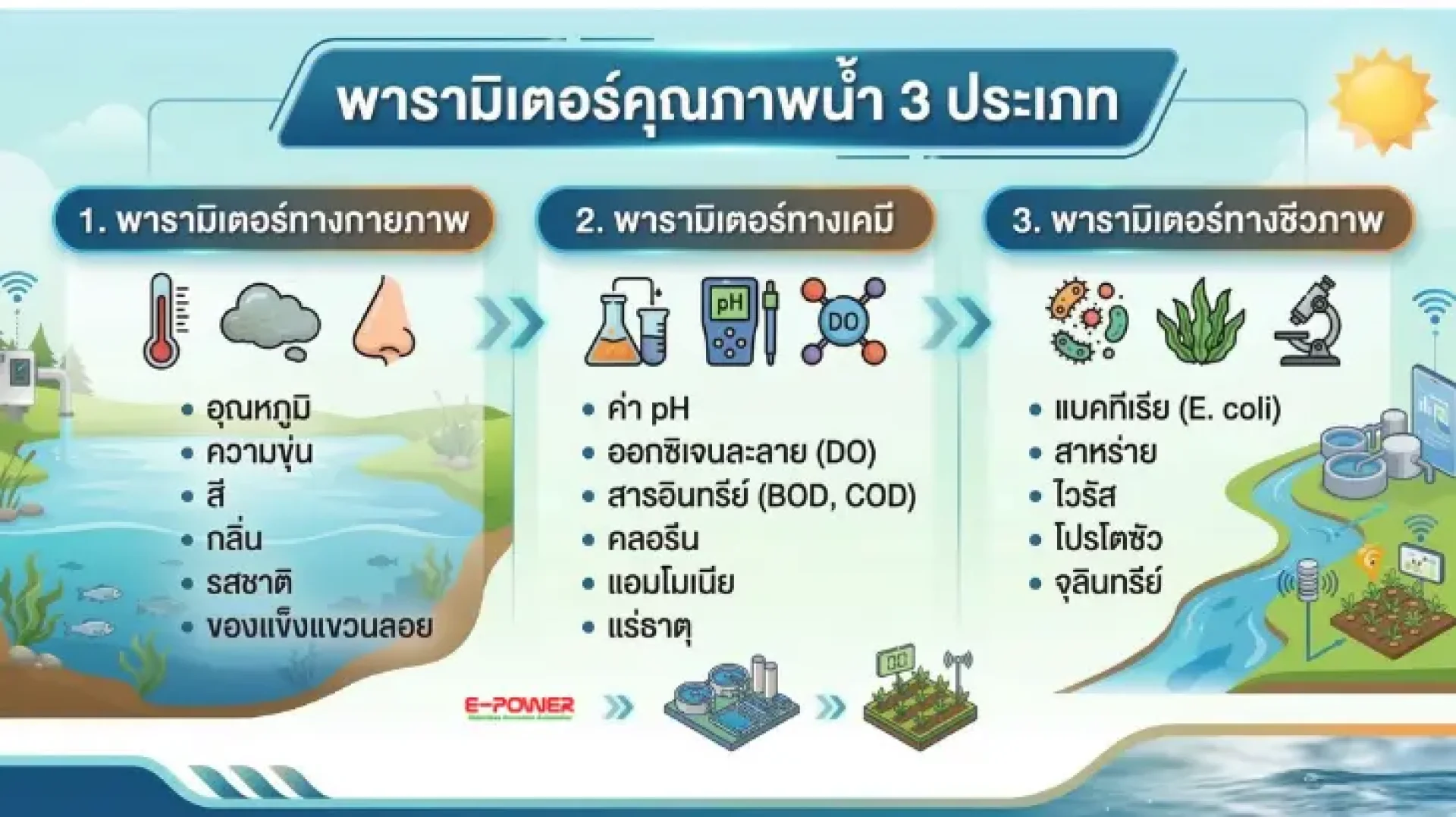
Today, water quality assessment commonly utilizes highly accurate Water Quality Sensors. The parameters used for monitoring are generally classified into 3 main categories: physical, chemical, and biological, as detailed below.
1. Physical Water Quality Parameters
These are indicators evaluated based on external characteristics that can be directly observed or measured:
- Odor and Taste: Abnormal odors and tastes are usually caused by volatile substances, minerals, or dissolved organic matter. While not directly harmful, they often serve as early warning signs of wastewater or pollution contamination.
- Color: Clean water should be colorless and transparent. Darker water often indicates the presence of suspended solids or organic contaminants.
- Temperature: Temperature affects chemical reaction rates, oxygen solubility, and sedimentation processes. Monitoring water temperature can be easily done using a Temp Sensor.
- Turbidity: This relates to the concentration of silt and organic matter in the water. Turbidity above 5 NTU becomes visible to the naked eye, and levels exceeding 50 NTU indicate severe pollution. It can be measured accurately with a turbidity sensor.
- Electrical Conductivity (EC): This reflects the concentration of dissolved ions in the water. The higher the ion concentration, the higher the conductivity. Hydroponics and Smart Farming often use an EC Sensor / Conductivity Probe to precisely control fertilizer levels.
- Total Dissolved Solids (TDS): This refers to the total inorganic salts and organic matter dissolved in water. Good drinking water should have a TDS value between 50-300 mg/L, which can be easily measured with a TDS sensor.
2. Chemical Water Quality Parameters
This group is highly critical for industrial facilities and ecosystems:
- pH Level: Indicates the acidity or alkalinity of the water. The ideal range is 6.5 - 8.5. Abnormal levels can cause pipe corrosion. Accurate control requires an industry-standard pH Sensor.
- Chemical Oxygen Demand (COD) & Biochemical Oxygen Demand (BOD): These are crucial organic pollution indicators in Water Treatment Systems. Industrial wastewater can have COD and BOD levels reaching thousands of mg/L. Continuous monitoring using COD, BOD, TOC, TOD sensors helps ensure discharged water meets regulatory standards.
- Dissolved Oxygen (DO): A good DO level should be ≥ 5 mg/L. Levels below 3 mg/L create hypoxic conditions, which are dangerous for aquatic life. Recirculating Aquaculture Systems (RAS) must use DO sensors to monitor water quality around the clock.
- Chlorine: Used for disinfection. An appropriate amount of residual chlorine indicates clean, pollution-free water.
- Ammonia Nitrogen: Originates from wastewater and agricultural runoff. Excessive amounts can lead to eutrophication (water rotting).
- Other Free Ions: Such as calcium, magnesium, and potassium, which affect water hardness and corrosion potential.
3. Biological Water Quality Parameters
This focuses on detecting microorganisms that pose health risks:
- Bacteria: Such as E. coli and Salmonella, which cause severe waterborne diseases like diarrhea, cholera, and leptospirosis.
- Algae: While algae help maintain ecological balance, excessive nutrients can cause harmful "water blooms." This can be monitored in real-time using chlorophyll sensors.
- Viruses: Tiny microorganisms that contaminate the digestive tract. Most can be effectively neutralized through standard water treatment disinfection processes.
Elevate Water Quality Monitoring with Epower's IoT System
Modern water management no longer requires manual data logging. Epower offers comprehensive water management solutions integrating Automation Systems and Industrial IoT.
- Top-Tier Brands: We provide internationally standardized Water Quality Sensors from SUPMEA and Aqualabo France for maximum accuracy and durability.
- Real-time Monitoring: Track pH, DO, EC, or temperature from anywhere via the Ecloud IoT / E-power IoT Platform, or seamlessly log data into Google Sheets.
- Instant Alerts: Supports immediate LINE Messaging API IoT and Telegram notifications the moment any water parameter falls out of range.
- Comprehensive Automatic Control: Effortlessly route sensor data to control water pumps, aerators, or valves via PLC / HMI or the Epower PAC MC600.