What is a Wind Sensor?
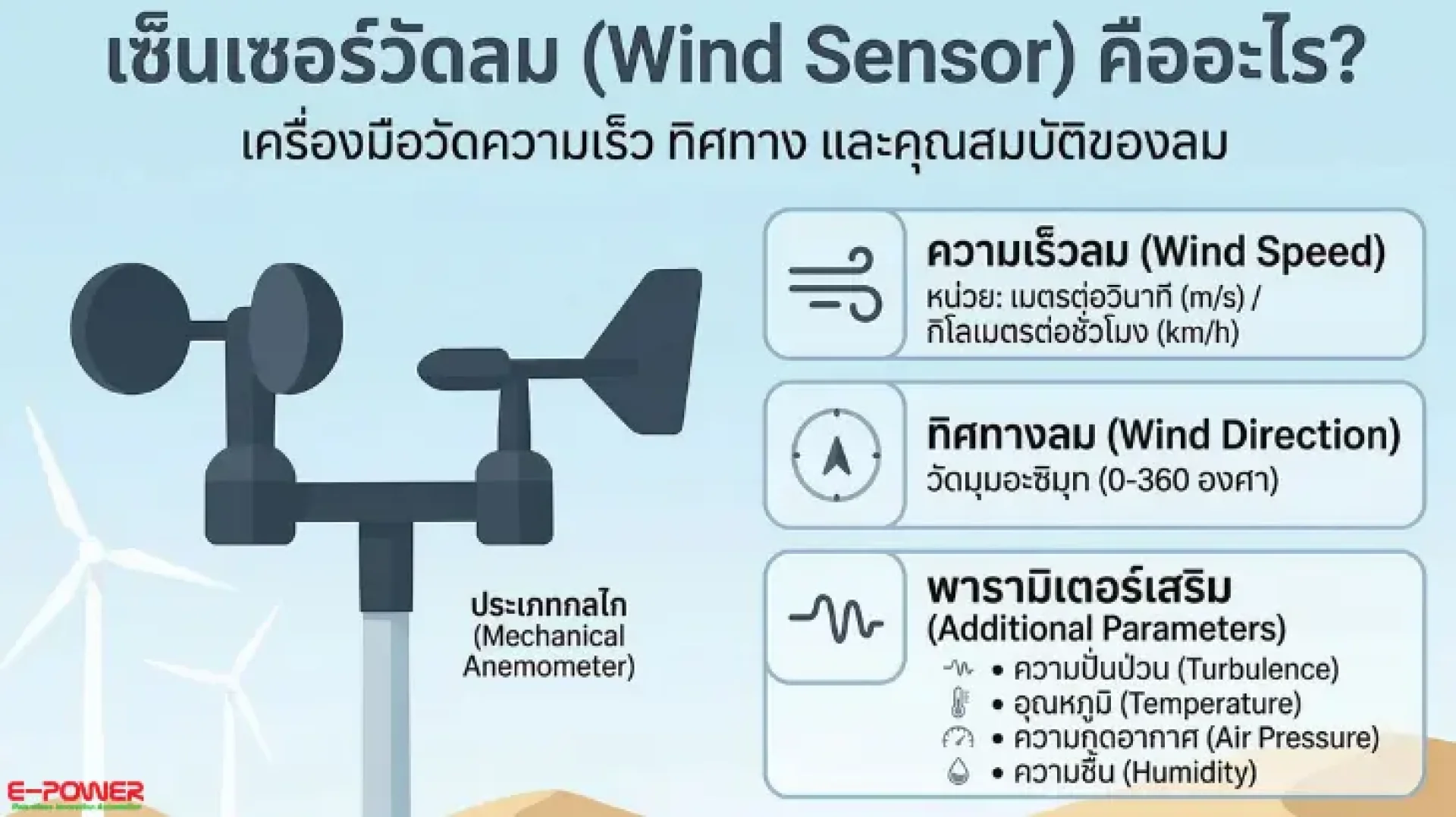
A Wind Sensor, also commonly known as an Anemometer, is a vital instrument used to measure wind properties, including speed, direction, and flow intensity. Ranging from portable handheld devices to high-resolution digital systems, these sensors play a crucial role in meteorology, environmental monitoring, renewable energy, and public safety.
With technological expansion in 2025, the wind sensor market is valued at USD 706.7 million and is projected to grow at a Compound Annual Growth Rate (CAGR) of 8.2% through 2032. This growth is driven by increased adoption in air quality monitoring stations, pollution dispersion studies, construction safety, and high-precision aviation industries.
Key Parameters Measured by Wind Sensors
When selecting or utilizing wind measurement equipment, it is essential to understand the data parameters these sensors provide:
Wind Speed
Measured in meters per second (m/s) or kilometers per hour (km/h). A high-quality sensor features a low Starting Threshold (minimum detectable speed) and a high Upper Limit (maximum measurable speed) to handle everything from light breezes to storm forecasting.
Wind Direction
Measured as an Azimuth Angle (0–360°). Directional data is critical for maritime navigation, pollution modeling, and Smart Farming. Modern sensors often feature integrated digital compasses for enhanced accuracy.
Supplementary Parameters
Modern All-in-one wind sensors can measure Air Temperature, Barometric Pressure, and Humidity in a single unit. These devices support IoT connectivity via RS-485 or Modbus signals for real-time data retrieval.
Popular Types of Industrial Wind Sensors
Choosing the right sensor type reduces maintenance costs and improves accuracy. There are two main categories:
Mechanical Anemometers
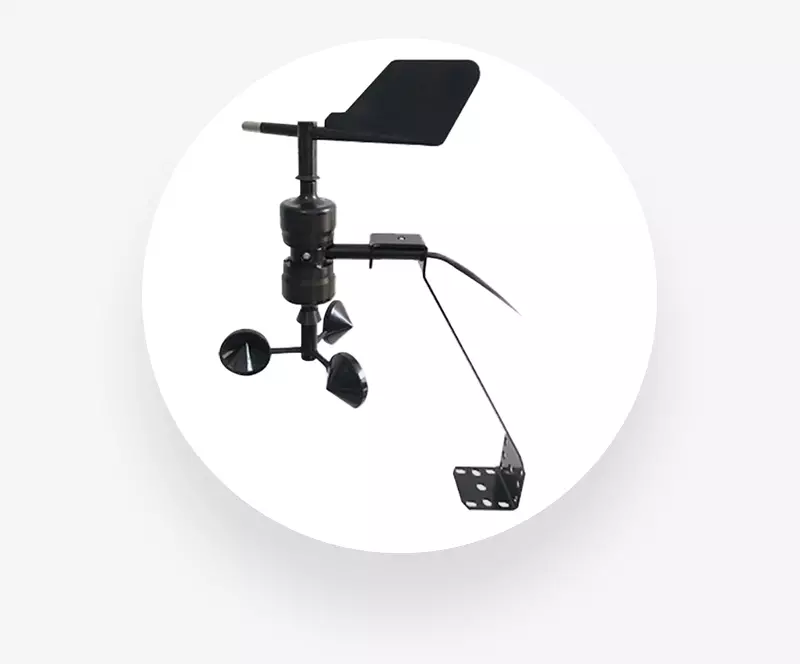
- Cup and Vane: (e.g., Model RK120-01) Uses rotating cups for speed and a vane for direction. Benefits include cost-effectiveness and easy installation.
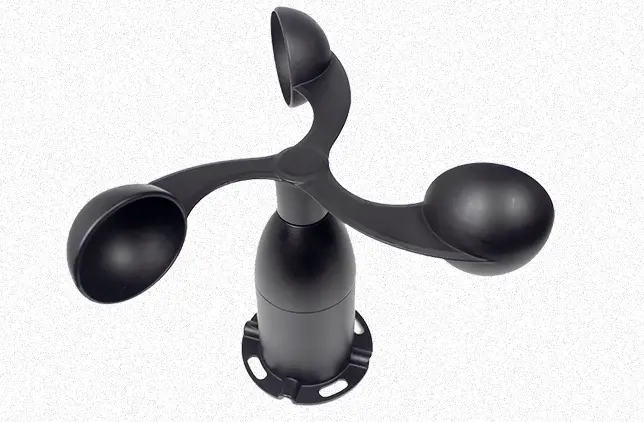
- Cup Anemometers: Focused on precise wind speed measurement, ideal for Wind Farms.
- Vane Anemometers: Focused on stable wind direction, ideal for meteorological stations.
Ultrasonic Wind Sensors
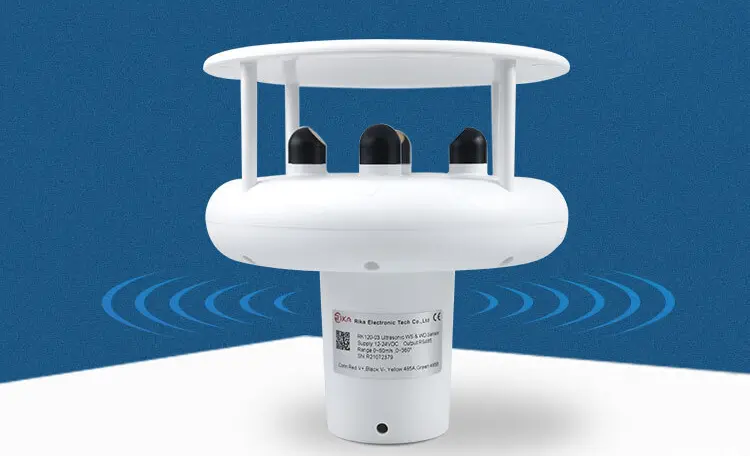
A cutting-edge, non-mechanical technology that uses high-frequency sound waves to calculate speed and direction (e.g., Model RK120-03).
- Advantages: High durability and low maintenance due to no moving parts.
- Applications: Ideal for offshore oil rigs, marine vessels, and Automatic Weather Stations (AWS).
Calibration and Data Stability
To ensure reliable data meeting international standards, wind sensors undergo:
- Standard Calibration: Conducted in wind tunnels to compare and correct deviations.
- Automatic Error Correction: Systems that compensate for distortion caused by temperature and humidity.
- EMI Shielding: Protection against electromagnetic interference for accurate performance in heavy industrial areas.
Industrial Applications of Wind Sensors
Selecting an accurate wind sensor is the foundation of weather data management. Our website specializes in the distribution and consultation of wind measurement instruments across various sectors:
- Renewable Energy: Assessing wind potential and optimizing Wind Turbine performance for cost-effective power generation.
- Meteorology & Environment: Supporting Automatic Weather Stations in forecasting, monitoring dust dispersion, and analyzing urban air quality.
- Construction & Engineering: Installed on Construction Cranes or high-rise buildings to monitor hazardous wind speeds, enhancing site safety.
- Aviation & Maritime: Providing high-precision, real-time data for airport runways, ports, and oil rigs to ensure safe navigation.
- Smart Agriculture: Assisting farmers in planning chemical spraying and controlling greenhouse systems to prevent wind damage.
With our comprehensive Wind Sensor Solutions, you receive accurate, precise, and reliable data for optimal decision-making in any environment.