Smart Farm Automation : Cut Energy Costs with IoT
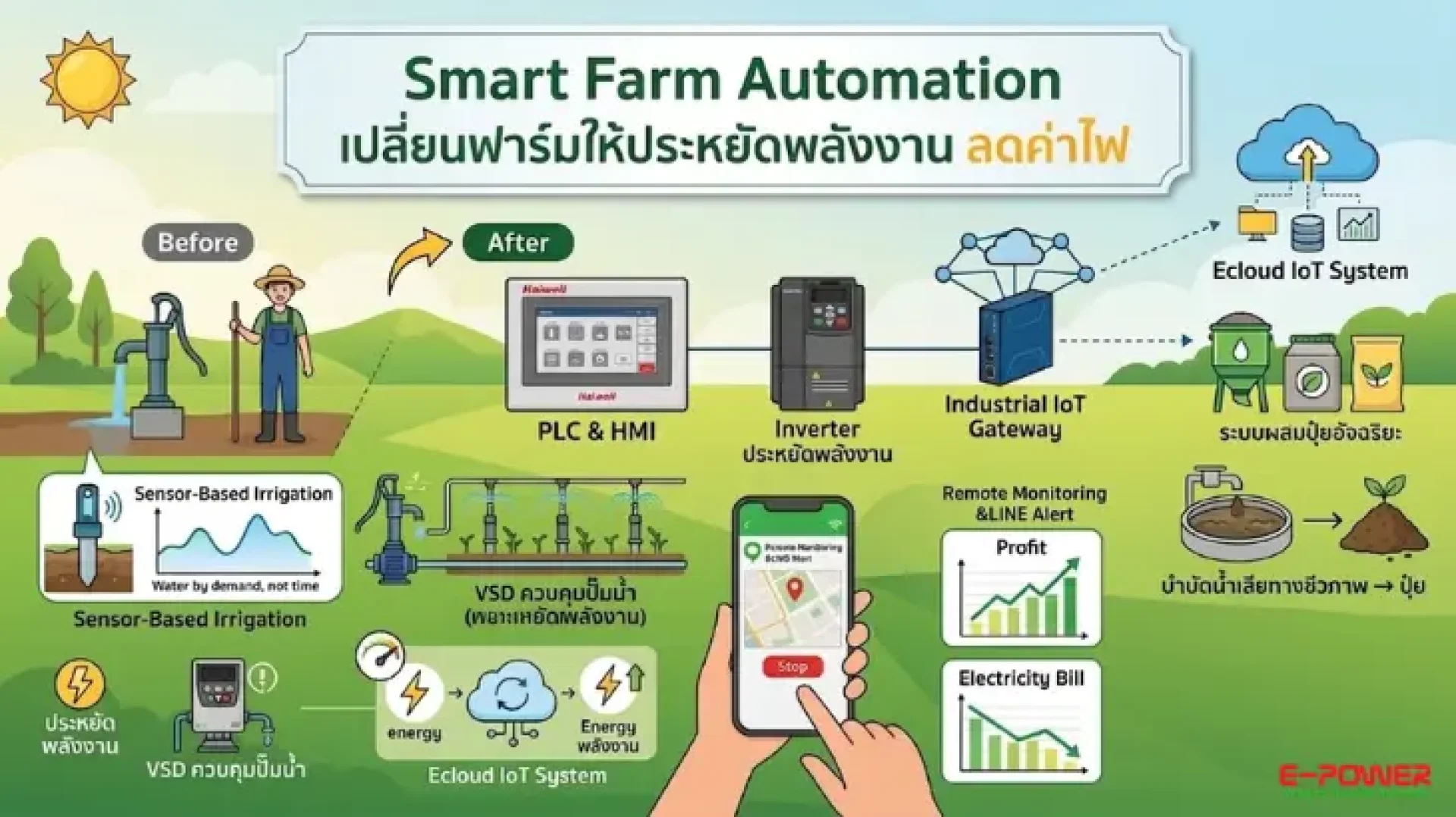
One of the highest costs in modern agriculture isn't just fertilizer or labor—it's "Electricity." This is especially true for large-scale farms that must run water pumps, ventilation fans, or cooling systems in greenhouses all day long. Traditional energy management, which relies on manual switching, often leads to unnecessary energy waste.
Stepping into the era of Smart Farm Automation by adopting IoT (Internet of Things) technology to control various systems on the farm is not just about being modern; it is a vital strategy to cut electricity costs, increase profits, and build sustainability for your agribusiness.
Why Do Traditional Irrigation Systems Cause High Electricity Bills?
In typical farming, farmers usually set irrigation times with analog timers or rely on manual pump operation. The following problems often arise:
- Pumps run at 100% capacity constantly, even when only low water pressure is needed.
- Over-irrigation on rainy days or when soil moisture is already high, wasting both water and electricity.
- Failure to turn off the system due to malfunctions or human error.
Effectively Reduce Pump Electricity Costs with Smart Farm Automation and IoT
Transitioning to a smart farm with solutions from www.epower.co.th allows you to manage energy consumption intelligently through automation:
1. Sensor-Based Irrigation:
Water by Moisture, Not by Time Instead of fixed schedules, IoT systems use Soil Moisture Sensors to send real-time data to a processing unit. If the soil has sufficient moisture, the system will not trigger the pump, saving significant amounts of electricity and water.
2. Inverters for Motor Speed Control (VSD)
This is the heart of electricity savings. An Inverter adjusts the water pump motor's speed to match the actual demand in each zone. Instead of the motor drawing a massive current surge and spinning at full power, reducing the speed even slightly can cut electricity consumption by 20-30%.
3. Integrated Smart Fertilization and Automated Sludge Management
For high-precision farms, automation isn't limited to pumps. It applies to Smart Fertilizer Machines (Fertigation) or even Biological Wastewater Treatment Systems. In large-scale farms, PLC (Programmable Logic Controller) systems manage valves and motors to recycle sludge into fertilizer, coordinating multiple units efficiently without drawing excess current.
4. Remote Monitoring and Control via Smartphone
With an Industrial IoT Gateway, farm owners can monitor pump status, power consumption, and weather conditions from anywhere in the world. If a machine malfunctions or consumes excessive power, you can stop it instantly via your phone and receive LINE Notifications, preventing motor burnouts and reducing losses.
Upgrade Your Farm with Quality Automation Equipment from Epower
Investing in a Smart Farm requires equipment that can withstand the harsh agricultural environment. E Power Service Co., Ltd. offers international-standard smart control solutions proven across industries:
- Smart Controllers (PLC & HMI): Haiwell brand for easy-to-use, complex farm system programming.
- Energy-Saving Inverters: For smooth pump control, reducing power surges and peak demand charges.
- IoT Sensors: High-precision weather, water quality, and soil sensors.
- Ecloud IoT System: A cloud platform for long-term data collection and energy analysis.
Conclusion: Transforming a traditional farm into a Smart Farm is not an expense; it is a high-value long-term investment. Combining Automation and IoT is the best answer to high electricity costs, allowing farmers to manage costs comprehensively and remain competitive in the future market.