What is IoT? An Introduction to 16 Essential IoT Sensors and Their Applications
What is IoT?
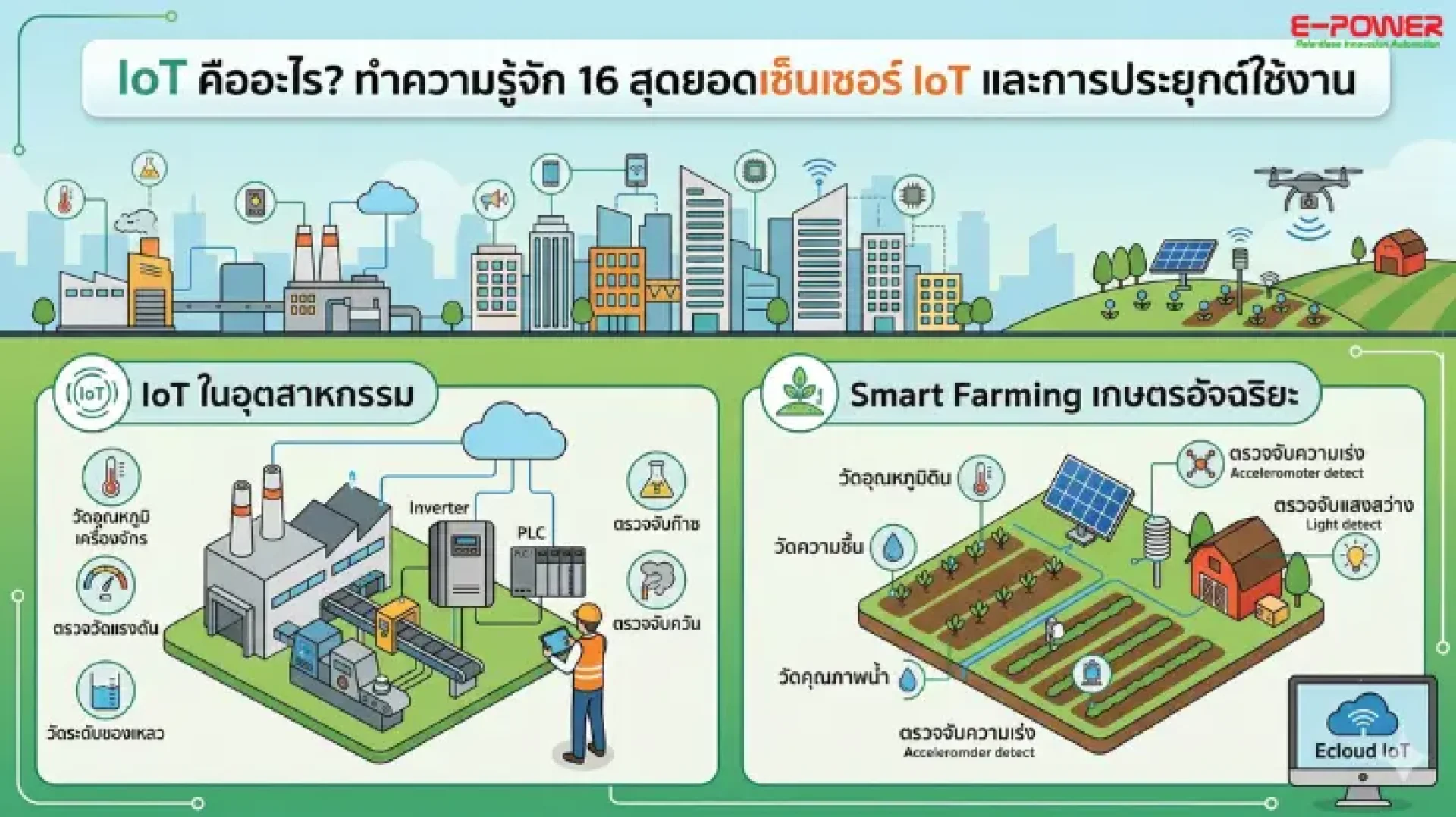
IoT, or the Internet of Things, is a networking innovation that expands the capabilities of traditional internet systems. By connecting sensor devices and measurement tools to a centralized system, it creates a massive intelligent network that seamlessly integrates personnel, machinery, and equipment across all dimensions.
The core of an IoT system lies in the data communication mechanism between "Device to User" and "Device to Device," consisting of three primary functional structures:
- Overall Perception: The ability to detect and perceive data.
- Reliable Transmission: An efficient and stable data transmission network.
- Intelligent Processing: An advanced data processing and analysis system.
The Critical Role of IoT Sensors
In an IoT ecosystem, two components are paramount: the communication network and the connected devices—specifically Sensors and Actuators. Sensors function as the system's "sensory organs" at the base layer, collecting real-time data from the surrounding environment.
Each sensor serves a specific purpose depending on its application. For instance, in Smart Farming, sensors are utilized to monitor cultivation and livestock environments, allowing data to be processed and used to trigger automated commands.
Top 16 IoT Sensor Types and Their Applications
1. Temperature Sensors: Measure heat and convert it into digital data. In industry, they control machinery temperature; in agriculture, soil temperature is a key factor for crop growth.
2. Humidity Sensors: Measure water vapor in the air. Commonly used in HVAC systems, hospitals, and weather stations to report and forecast conditions.
3. Pressure Sensors: Detect changes in gas and liquid pressure. Used in water systems to detect leaks or in manufacturing to monitor pipe pressure anomalies.
4. Proximity Sensors: Detect objects without physical contact. Used in retail to track customer movement or in parking lots to identify vacant spaces and automated assembly lines.
5. Level Sensors: Monitor levels of liquids, powders, or granular materials in tanks. Essential for oil,wastewater treatment, and food and beverage industries.
6. Water Quality Sensors: Critical for monitoring water safety in distribution systems and production. Types include:
- Chlorine Residual Sensors
- Dissolved Oxygen Sensors
- Conductivity Sensors
- pH Sensors (Acidity/Alkalinity)
- Turbidity Sensors
7. Gyroscope Sensors: Measure angular velocity and rotation. Used in vehicle navigation, electronic stability control, and motion-sensing in video games.
8. Gas Sensors: Monitor air quality and detect toxic or flammable gases like $CO_2$, $CO$, Hydrogen, Ammonia, and Methane.
9. IR Sensors (Infrared): Detect infrared radiation and heat. Used in remote controls, medical blood pressure monitoring, or verifying the authenticity of artwork.
10. Optical Sensors: Convert light into electrical signals. Vital for obstacle detection in autonomous vehicles or ambient light adjustment in smartphones to save battery.
11. Smoke Sensors: Part of safety systems that detect smoke concentration in buildings and offices to provide early fire warnings.
12. Image Sensors: Convert optical images into electrical signals for digital cameras and security systems. Common types include CMOS and CCD (CMOS is favored for low power and cost).
13. Chemical Sensors: Acting as digital "noses and tongues," they detect chemical substances in industrial processes, toxic leaks, or pharmaceutical labs.
14. Sound Sensors: Measure sound waves for noise pollution monitoring on roads, construction sites, or urban environments.
15. Accelerometer Sensors: Measure acceleration and movement. They help robots understand their orientation and detect screen rotation or free-fall in smartphones.
16. Light Sensors: Detect light energy from UV to Infrared. Primarily used in intelligent lighting systems and modern electronic measurement.
Conclusion: Transforming IoT Data into Profit with Smart Farm Automation
While IoT sensors are the starting point for data perception, truly transforming your business into a Smart Farm Automation powerhouse requires more than just sensors. Data must be processed through PLC & HMI units to command Inverters, which drastically cut water pump electricity costs, all while connected to the Ecloud IoT platform for worldwide remote monitoring.
Choosing durable, Industrial Grade systems is a strategic move to increase long-term profitability. If you are ready to upgrade your farm or factory, consult with the total automation experts at E Power Service Co., Ltd. at www.epower.co.th.