How Does an Optical Dissolved Oxygen (DO) Sensor Work?
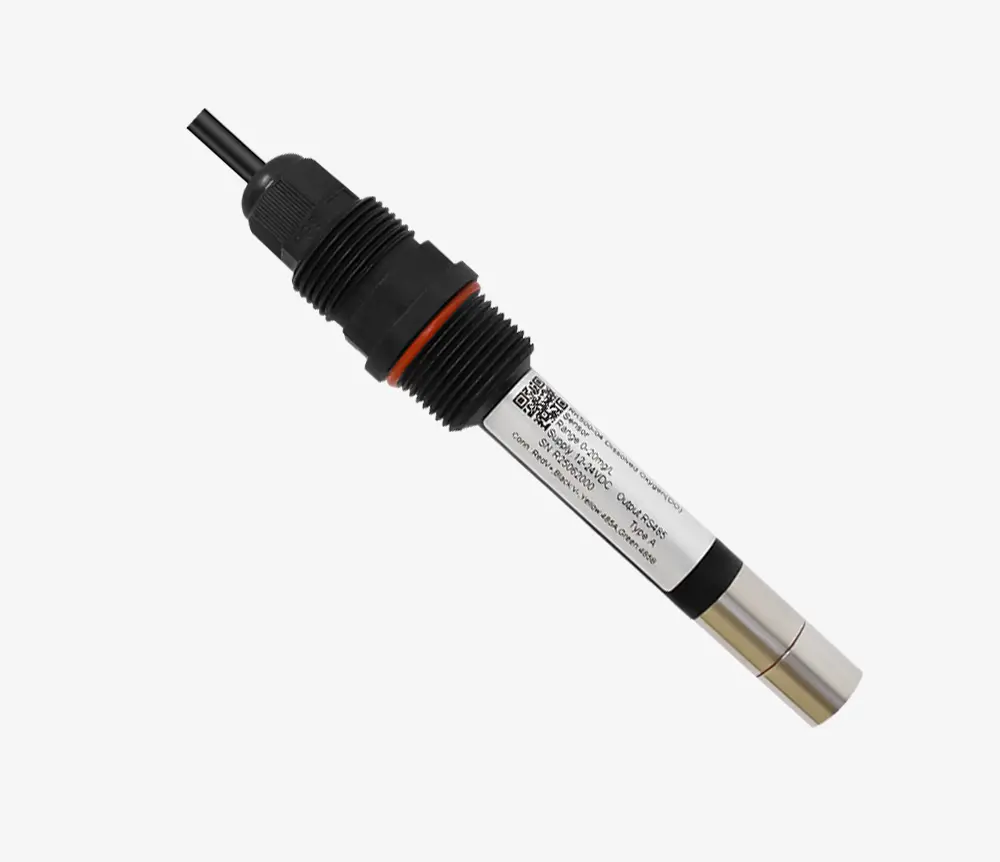
The Optical Dissolved Oxygen (DO) Sensor is an innovative, industrial-grade instrument sensor designed to solve this problem. It functions similarly to a thermometer, but instead of measuring temperature, it measures oxygen concentration. Unlike older technologies, this sensor uses "light" instead of chemical reactions. This results in a longer lifespan, easier maintenance, and the ability to integrate with IoT systems for 24/7 water quality monitoring.
Scientific Principle: How Does Light Measure Oxygen?
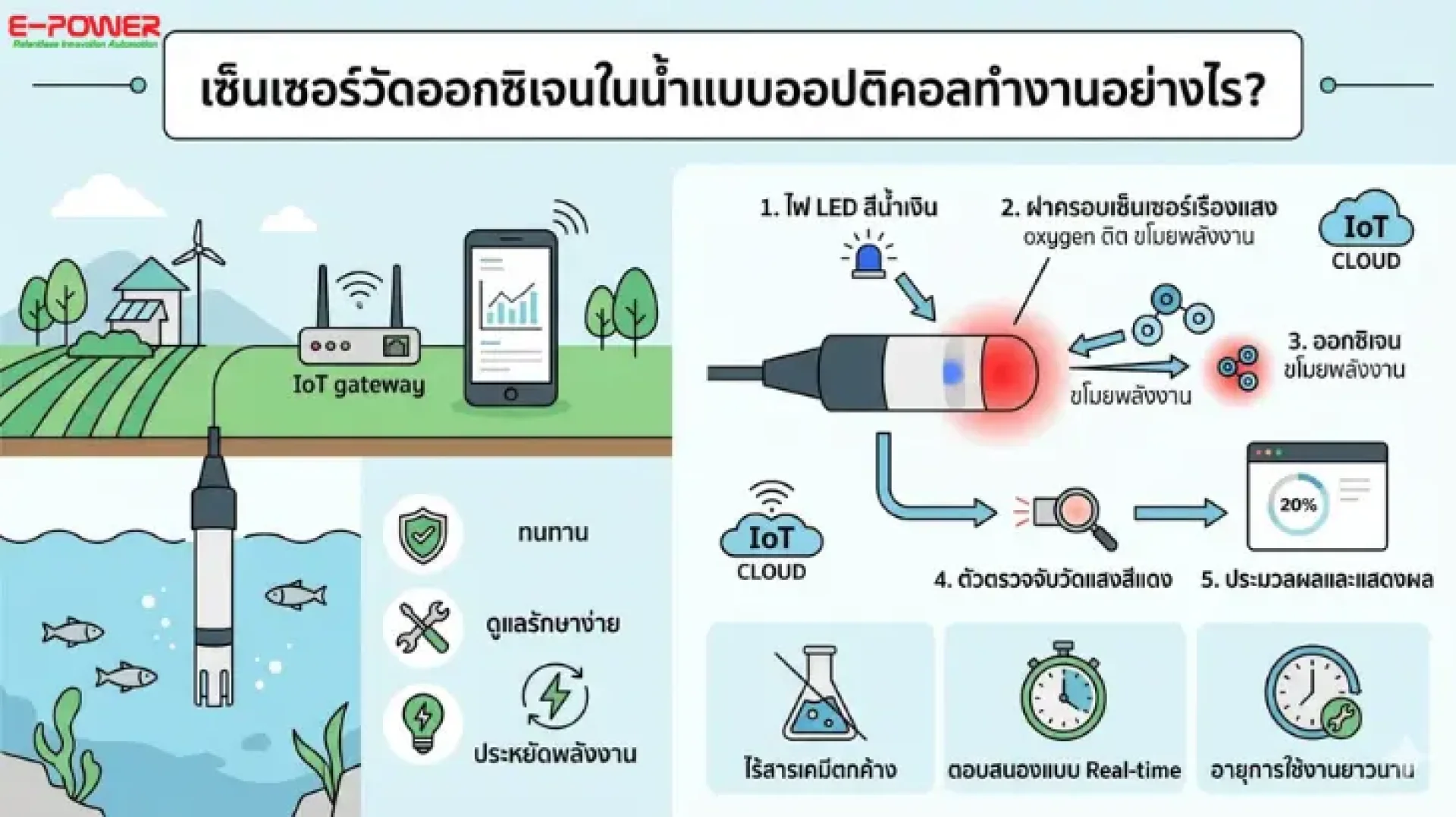
This technology relies on a special scientific technique called Fluorescence Quenching, which works as follows:
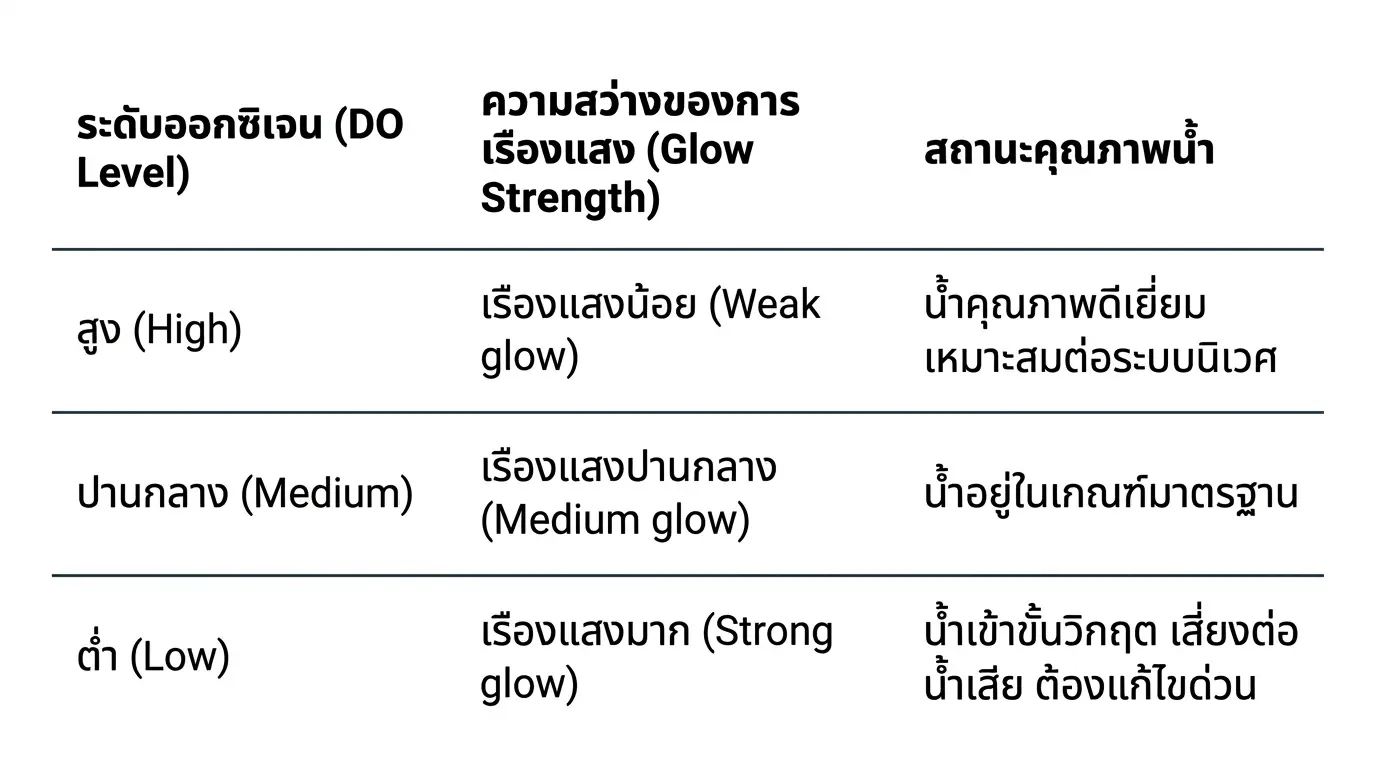
Inside the sensor head, there is a special coating that fluoresces when struck by blue light, emitting a red light in return. When oxygen molecules come into contact with this coating, they "steal" or quench the fluorescent energy. Therefore, the more oxygen there is in the water, the dimmer the reflected red light becomes.
Water Quality Assessment Table from Optical DO Sensors
This entire process occurs in just a few seconds. The intelligent processing chip inside the sensor calculates and delivers highly accurate digital data to the central system instantly.
Key Components of an Optical DO Sensor
Industrial-grade sensors are designed to withstand harsh environments. The main components are as follows:
- Sensing Cap: The primary detection point coated with a fluorescent film, highly durable against dirt and chemicals.
- LED Light: A long-lasting blue light source.
- Detector: Responsible for capturing the reflected red light, possessing high sensitivity to even the slightest changes.
- Computer Chip: A microcontroller that converts light data into accurate numerical oxygen readings.
- Protective Shell: A robust outer casing that is highly resistant to corrosion, capable of being submerged in wastewater or seawater.
Sensor Working Process
- Step 1 - Activation: The blue LED lights up and sends light to the sensing cap.
- Step 2 - Energy Excitation: The coating on the cap absorbs the blue light, causing its molecules to gain energy and move faster.
- Step 3 - Fluorescence: As the molecules begin to relax, they emit a "red light".
- Step 4 - Detection: Oxygen molecules in the water collide with the coating and absorb its energy, causing the red light to weaken.
- Step 5 - Processing: The detector measures the intensity and duration of the reflected red light.
- Step 6 - Data Display: The processing chip calculates the value in mg/L (milligrams per liter).
Temperature Matters: Cold water holds more oxygen than warm water. This sensor features automatic Temperature Compensation to ensure maximum accuracy.
Why Do Smart Farms Choose Optical Sensors? (Advantages Over Traditional Methods)
- No Chemical Residue: Eliminates the need for chemical reagents, reducing maintenance costs and time.
- Longer Lifespan: Provides continuous operation for 2-3 years, compared to older models that degrade within 6-12 months.
- Flexible in All Conditions: Delivers accurate readings in both still and fast-flowing water.
- Real-Time Response: Delivers results in seconds, making it ideal for integration with Automation systems to instantly control aeration pumps.
- Does Not Consume Oxygen: Measures via light without triggering chemical reactions that consume oxygen from the water, ensuring 100% accurate readings.
Applications in Modern Industry and Agriculture
- Smart Farming: Monitoring shrimp ponds and salmon farms to prevent sudden aquatic life mortality caused by oxygen depletion.
- Biological Wastewater Treatment Systems: Controlling oxygen levels to ensure bacteria have enough oxygen to break down sludge at peak efficiency.
- Environmental Monitoring: Continuously tracking water quality in natural water bodies and reservoirs 24/7.
- Industrial Plants: Controlling manufacturing processes in the food, beverage, and pharmaceutical industries, where oxygen levels directly impact product quality.
E-Power Service: Your Trusted Partner in Automation Systems and Water Quality
If you are looking for a professional water quality management solution, E-Power Service Co., Ltd., a leader in Smart Farm and IoT Automation systems, recommends top-tier Industrial Grade water quality sensors like Rika Sensor and other premium brands designed for exceptional durability.
Key Highlights of E-Power Service Solutions:
Sturdy equipment structure, highly durable against harsh environments.
Supports data connectivity via PLC and Industrial IoT Gateways.
Transmits data to cloud platforms like Ecloud IoT for seamless Remote Monitoring & Control.
Frequently Asked Questions (FAQ)
Q1: How is investing in an optical sensor more cost-effective than older models?
A1: Although the initial cost may be higher, it is far more cost-effective in the long run. It requires low maintenance, needs no chemical replacements, and can connect to Automation systems to automatically turn aeration equipment on and off, resulting in massive electricity savings.
Q2: Can it accurately measure very low oxygen levels?
A2: Absolutely. Optical sensors possess high sensitivity for measuring oxygen levels approaching zero (0-20 mg/L), making them highly suitable for research and wastewater treatment systems that demand high resolution.