Water Quality Sensor : Basic Standards and Importance Every Industry Must Know
Water is the lifeblood of the industrial sector, serving as a vital resource for power plants, fertilizer manufacturing, pharmaceuticals, beverages, chemical processing, and wastewater treatment systems. However, each industry operates under vastly different water quality requirements.
Utilizing a Water Quality Sensor is the key to monitoring chemical and physical changes at every stage. This ensures that water usage complies with international standards, increases productivity, reduces equipment damage, and allows for a rapid response to any abnormalities.
Basic Standards of Water Quality
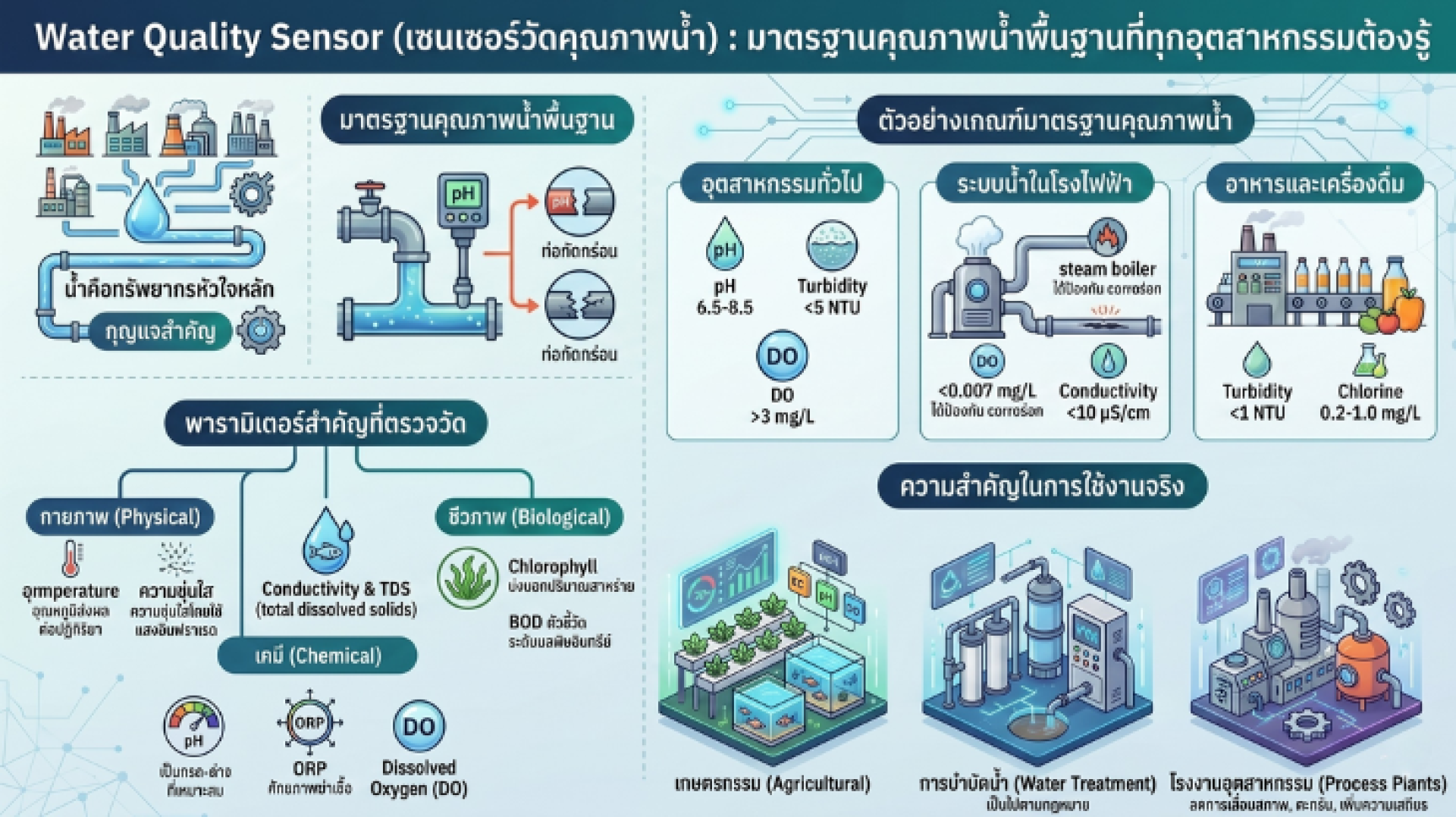
Maintaining water quality is critical not only for consumption but also for engineering integrity. For instance, a low pH value (acidic water), detectable via a Water Quality Sensor, can corrode carbon steel piping and cause catastrophic damage to a factory's water distribution system.
Examples of Water Quality Standards (WQS):
General Industry:- pH: 6.5 – 8.5
- Turbidity: <5 NTU
- DO (Dissolved Oxygen): >3 mg/L
Power Plants:
- Conductivity: <10 µS/cm (Ultrapure water for high-pressure boilers)
- Dissolved Oxygen: <0.007 mg/L (To prevent pipe and boiler corrosion)
Food & Beverage Industry:
- Turbidity: <1 NTU
- Chlorine Residual: 0.2 – 1.0 mg/L (For effective disinfection)
Key Parameters Measured by Water Quality Sensors
Professional water management requires controlling three primary dimensions:
1. Physical Parameters
- Temperature: Influences chemical and biological reactions within the water.
- Turbidity: Measures water clarity using infrared light technology.
- Conductivity & TDS: Indicates the volume of contaminants and total dissolved solids, crucial for aquatic life and manufacturing quality.
2. Chemical Parameters
- pH: Monitors the acidity or alkalinity levels required for specific operations.
- ORP (Oxidation Reduction Potential): Indicates the water's potential for disinfection or oxidation.
- Dissolved Oxygen (DO): Maintains appropriate oxygen levels for aquaculture or extremely low levels for boiler operations.
3. Biological Parameters
- Chlorophyll: Indicates algae formation and nutrient contamination.
- BOD (Biochemical Oxygen Demand): A metric for organic pollution in wastewater that factories must regulate by law.
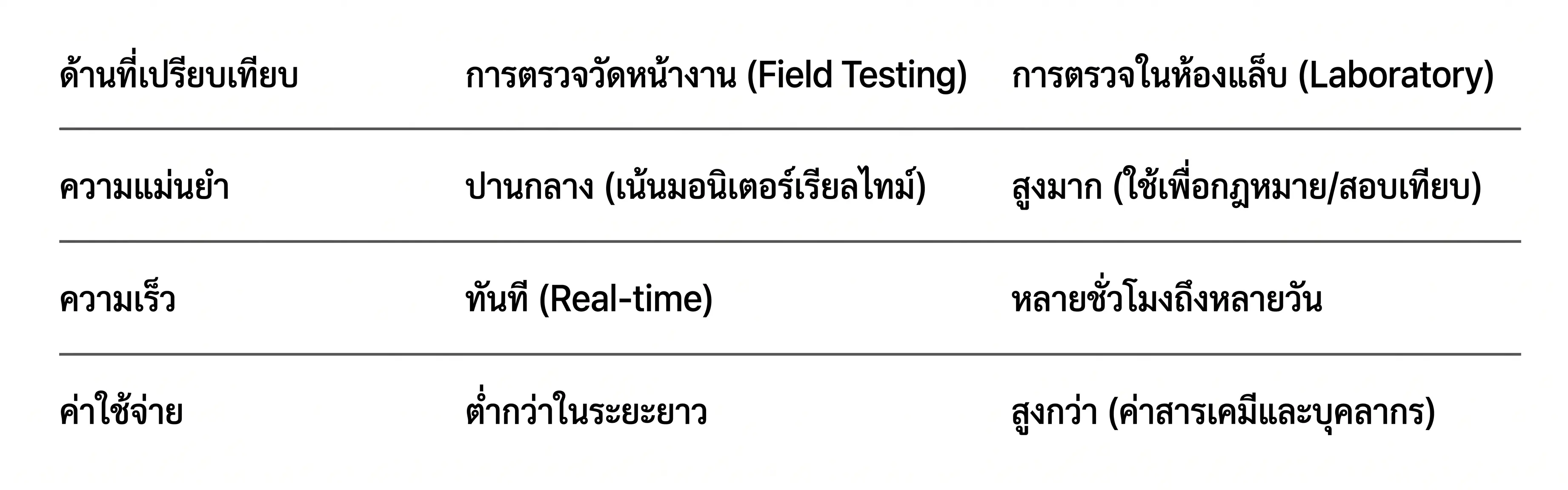
Water Quality Measurement: Lab Testing vs. Field Testing
The Importance of Water Quality Sensors in Practice
- Agriculture: In Smart Farm or hydroponic systems, controlling EC, pH, and DO increases yields and reduces loss in crops and livestock.
- Water Treatment: Helps regulate chlorine, ammonium, and nitrate levels to meet environmental regulations before discharging water into natural sources.
- Process Plants: Utilizing an online Water Quality Sensor reduces equipment degradation, prevents scale buildup, and enhances process stability.
Conclusion
We cannot guarantee water quality without modern Water Quality Sensors . These devices have become an integral part of Industry 4.0, empowering operators to make precise decisions and prevent risks before they escalate into major issues.
If you are looking for an industrial-grade Water Quality Sensor—durable, accurate, and IIoT-ready—E-Power Service is ready to provide consultation and solution designs featuring RIKA SENSOR products trusted by engineers worldwide. Explore our products at www.epower.co.th.