PAR Sensor : What Is It? Get to Know the Plant Light Sensor That Every Modern Farm Needs
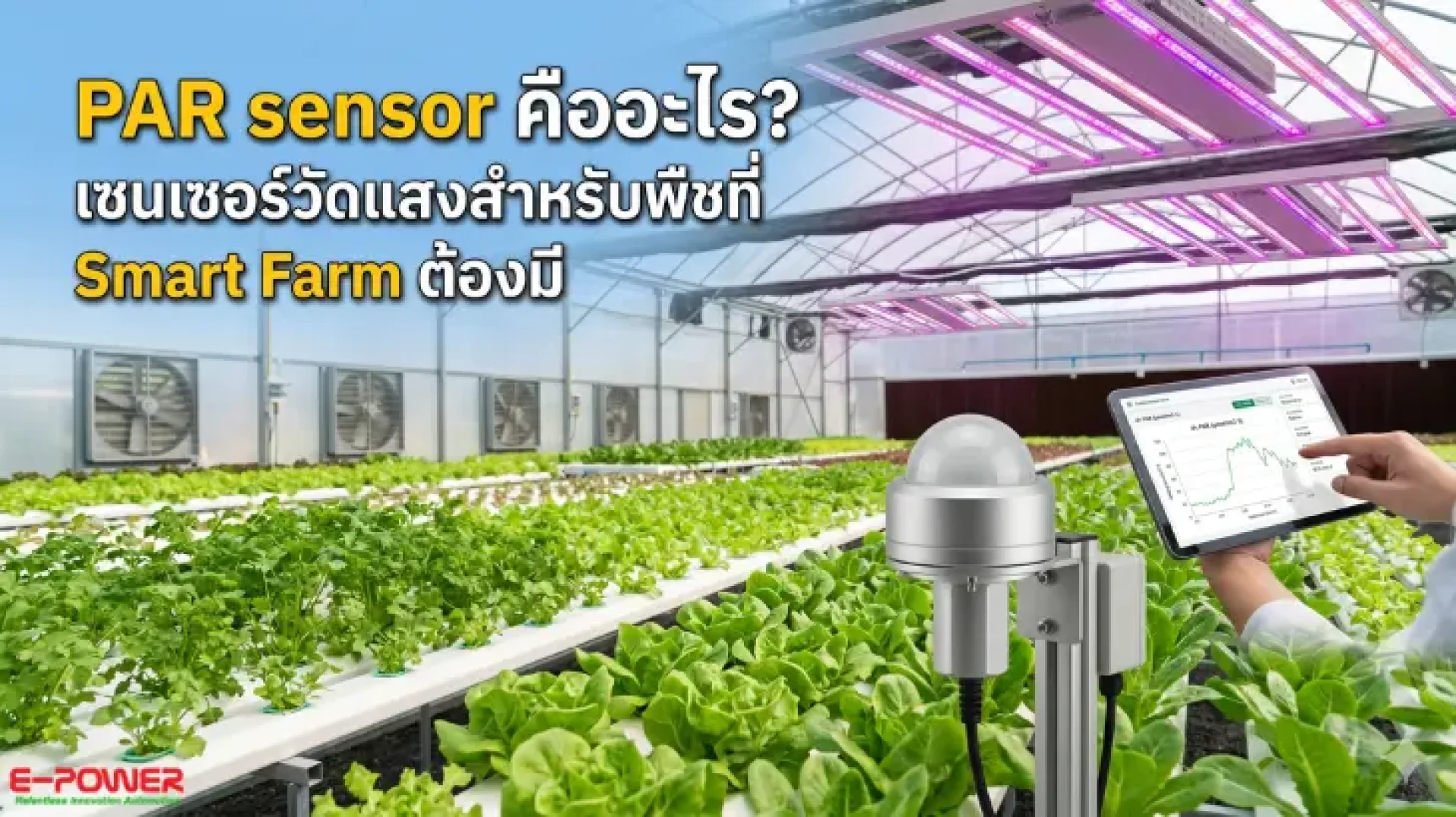
For modern farmers or anyone studying a Smart Farm, you might have heard the term PAR sensor thrown around. It usually comes with questions like: What is this device anyway? Why do we even need it when we already have standard light sensors?
First, we need to clarify that the sunlight our human eyes see is very different from the light that "plants" actually use to grow. Relying on standard sunlight sensors might not support your plants' growth 100%. Today, we will take a deep dive into what a PAR sensor (plant light sensor) is and why it has become an essential tool that commercial farms and modern greenhouses simply cannot live without.
What Is a PAR Sensor?
PAR sensor stands for Photosynthetically Active Radiation Sensor. In simple terms, it is a "sensor that measures the specific waveband of light that plants use for photosynthesis."
Its job is to filter out everything else and measure only the exact light wavelengths that plants need to make food and grow. This occurs within the 400 to 700 nanometer range (covering everything from blue light to red light). It measures this intensity in the unit: μmol/m²·s (micromoles per square meter per second).
Why Use a PAR Sensor Instead of Standard Light Sensors?
Standard light intensity sensors (like Lux Meters or Pyranometers) measure all the light shining down, including wavelengths that plants do not care about. This is why a regular light reading can look very high, yet plants still do not grow well because they lack the specific light waves they need. Using a PAR sensor lets farmers know the "actual useful light" for their crops, making it easy to plan care with total accuracy—no more guessing.
High-Quality PAR Sensors Recommended on the E-Power Website
If you are looking for a plant light sensor that is highly accurate, durable, and cost-effective, E-Power Service Co., Ltd. recommends this industrial-grade popular model chosen by leading farms:
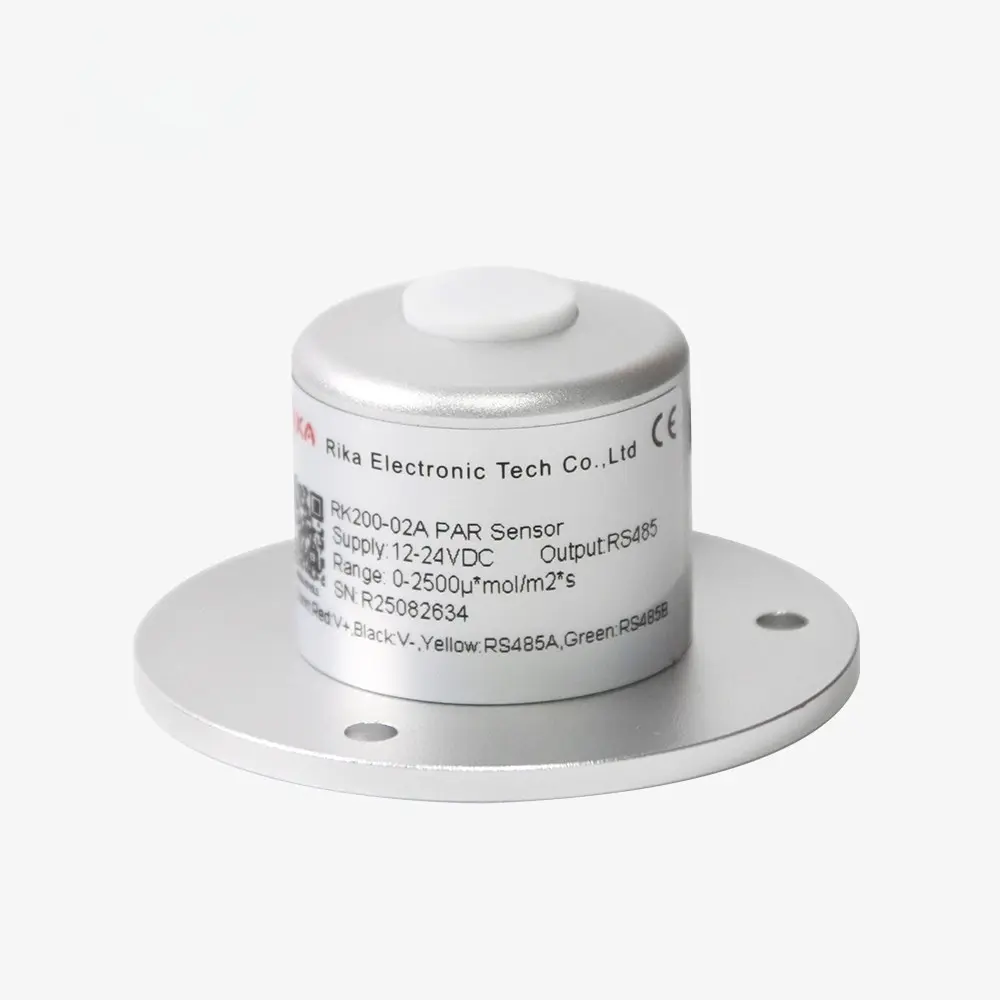
Recommended Model: Rika RK200-02 PAR Sensor
This is a highlight product from the global instrumentation brand Rika, explicitly engineered to answer the needs of Smart Farms and smart greenhouses.
- Accurate and Fast Response: The sensor utilizes a premium silicon photoelectric detector paired with a sharp filter that targets the 400–700 nm waveband, delivering highly accurate and stable readings.
- Heavy-Duty and Weatherproof: The outer body is made from high-grade anodized aluminum. It is incredibly strong, boasts a high waterproof and dustproof rating, and resists UV rays and harsh outdoor elements over the long haul.
- Easy Industrial Integration: It supports popular industrial outputs, especially the RS485 (Modbus RTU) system. This factory-grade wiring standard lets you run cables for a kilometer without any data drops while remaining highly resistant to electrical noise from heavy water pump motors.
FAQ: PAR Sensors
Q: What can we automate in a farm using data from a PAR sensor?
A: In closed greenhouses or smart farms, you can route data from this sensor to trigger multiple automatic systems. For example, if natural sunlight falls below the required PAR threshold (like on heavily overcast days or late afternoons), the system can immediately turn on artificial grow lights. Conversely, if the midday sun is too intense and the PAR value shoots past a safe limit, the system can autonomously trigger motors to pull shading nets over the crops to keep leaves from burning.
Q: What is the difference between a Solar Radiation Sensor and a PAR Sensor?
A: To put it simply: a Solar Radiation Sensor (like the Rika RK200-03 model) measures the total heat energy from all sunlight. It is commonly used to calculate evaporation rates for an automatic irrigation system. On the other hand, a PAR Sensor (the Rika RK200-02 model) focuses purely on the light band that plants use to make food and grow, making it the perfect choice for controlling grow lights and shading nets inside a greenhouse.
Expanding Your Smart Farm Ecosystem End-to-End
Deploying a precise sensor like the Rika RK200-02 is a great first step. However, getting your farm to run on autopilot 100% requires a smart control system behind the scenes and that is exactly where E-Power Service shines.
Our engineering team specializes in automated system integration. We can take live data from your PAR sensor and combine it with other instruments, such as soil moisture sensors or smart weather stations. Everything feeds directly into a central control unit driven by world-class CODESYS PLC software to create complex, ultra-safe automation loops. Best of all, you can check your live sunlight dashboard, switch grow lights on or off, and review historical trend graphs on your smartphone from anywhere in the world via the E-power IoT Platform .
Transform traditional agriculture into data-driven digital precision farming. Reduce your risks of crop loss and unlock sustainable profits for your business. Explore our full lineup of industrial instrumentation and consult with our systems design team today at www.epower.co.th.