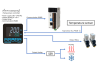
Smart Greenhouse Yield Optimization : Real-Time Temperature and Humidity Control
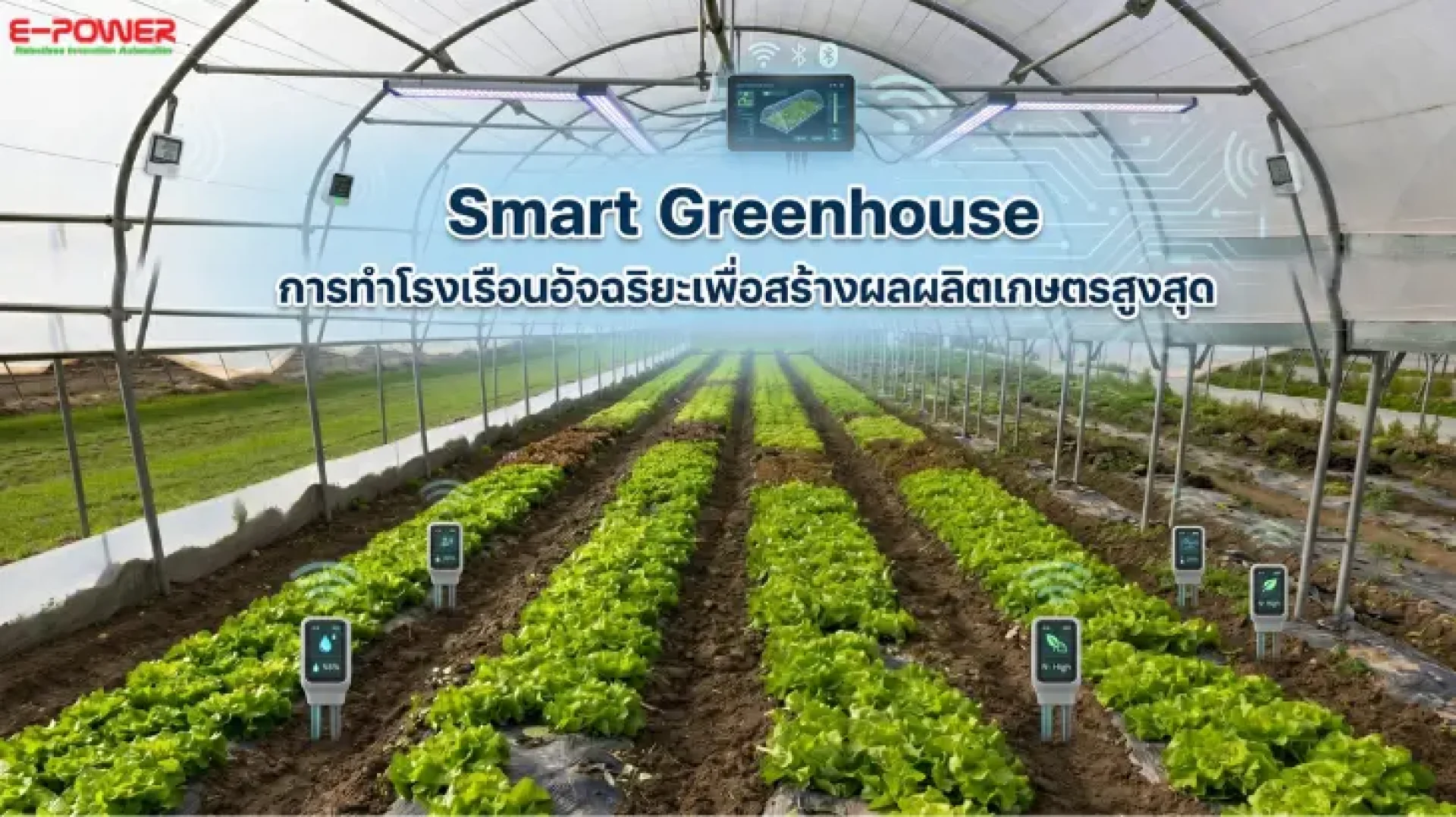
A Smart Greenhouse and its internal climate control systems serve as the core framework for elevating agricultural productivity in the digital era. This advanced agricultural management setup aims to engineer an optimized microclimate, allowing crops to thrive completely independent of external volatile weather conditions. The critical factor in driving greenhouse potential to achieve maximum volume and premium-grade quality is the precise, real-time control of temperature and humidity. Neglecting these parameters—allowing environments to become excessively hot or trapped with high relative humidity—directly triggers severe crop damage, ranging from downy mildew and leaf blight to complete stagnation of plant growth. E-Power Service Co., Ltd. will provide a deep dive into advanced environmental instrumentation and automation frameworks designed to transform standard greenhouses into highly profitable, sustainable plant factories.
Why is Real-Time Temperature and Relative Humidity Monitoring Critical to Crops?
Every plant species possesses distinct capabilities for nutrient absorption and photosynthesis, heavily driven by air temperature and relative humidity through the process of transpiration. If these two variables are imbalanced, plant stomata will close, preventing the roots from drawing water and vital fertilizers up into the plant structure.
Relying on standard, consumer-grade weather meters that require manual daily logging prevents timely intervention. Conversely, integrating industrial-grade temperature and humidity sensors that stream live, real-time data allows farm managers and agricultural engineers to identify microclimatic crises instantly. For instance, during peak noon hours when heat accumulation threatens to exceed 35°C, the automation system detects the spike and triggers cooling mechanisms in a matter of seconds.
Environmental Optimization and Automation Integration
To establish effective precision agriculture, the table below outlines the optimal temperature and humidity parameters for popular greenhouse crops, alongside respective automated control system workflows:
Greenhouse Climate Optimization & Automation Matrix
| Crop Type | Optimal Temperature (°C) | Optimal Relative Humidity (%RH) | Greenhouse Automation Solutions |
| Salad Greens / Leafy Vegetables (Hydroponics) | 20 – 28 | 60% – 70% | If temperature thresholds are exceeded, activate industrial exhaust fans paired with automated shading screen systems. |
| High-Value Cash Crops (Tomatoes / Strawberries) | 18 – 26 | 65% – 75% | If humidity drops below optimal levels, activate high-pressure misting / fogging systems to increase ambient moisture. |
| Specialty Crops & Floriculture (Hemp / Orchids) | 22 – 30 | 50% – 60% | During evening spikes in relative humidity, engage internal air circulation fans to mitigate fungal and mold infection risks. |
Premium Industrial Temperature and Humidity Sensors
To secure a sustainable return on investment (ROI) for your Smart Greenhouse, field-level instrumentation must offer exceptional accuracy and durability against saturated humidity inside the enclosure. E-Power Service Co., Ltd. recommends heavy-duty sensor assemblies trusted by leading commercial farms:
Preferred Brands: Rika and Remond Industrial Sensors
Available through our official platform at epower.co.th, these specialized smart farming sensors offer distinct industrial advantages:
- Lab-Grade Data Accuracy: Rika RK330-01 Equipped with advanced processing microchips ensuring minimal margin of error ($pm0.3^circtext{C}$ and $pm3%text{RH}$), delivering flawless reporting of microclimatic shifts.
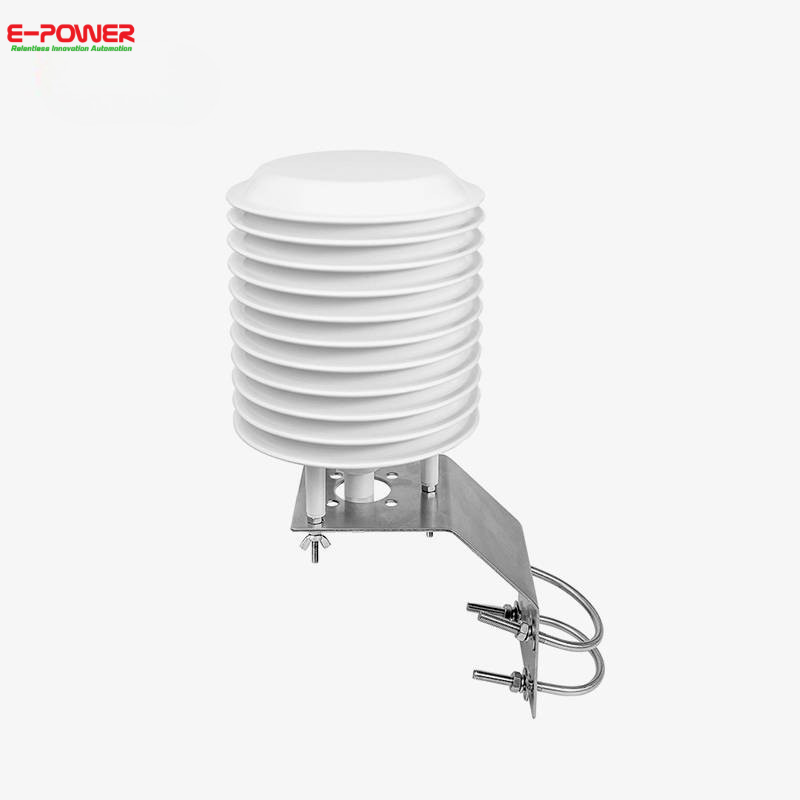
- Innovative Filter Sintered Sleeve: The delicate sensor probe is housed inside a high-tech sintered filter sleeve. This allows air to pass through freely for measurement while completely blocking water droplets, dense fog, soil dust, and micro-insects, preventing electrical shorts.
- Industrial Standard Signaling Interfaces: Supports standard analog 4-20mA outputs and digital RS485 (Modbus RTU) communications. These protocols are highly resilient against electromagnetic interference (EMI) generated by greenhouse water pumps and motors, allowing long-distance cabling without data degradation.
Frequently Asked Questions Regarding Smart Greenhouse Management (FAQ)
Q: What is VPD, and how does it relate to temperature and humidity sensors?
A: VPD, or Vapor Pressure Deficit, represents the difference between the pressure exerted by water vapor inside the leaf versus the surrounding air. It is the most accurate metric to evaluate plant transpiration and nutrient uptake. Because VPD is calculated directly from concurrent air temperature and relative humidity data, installing high-precision sensors enables the greenhouse controller to compute real-time VPD values. This allows the system to actuate exhaust fans or misting pumps far more accurately than relying on basic humidity readouts alone.
Q: Beyond internal monitoring, what sensors should be installed outside the greenhouse?
A: Implementing a compact external weather station is highly recommended—specifically integrating Photosynthetically Active Radiation (PAR/PPFD) sensors alongside wind speed and direction meters. This external data allows internal automation mechanisms to execute proactive, predictive workflows. For instance, if external sensors detect a sudden surge in solar radiation, the system deploys shading sails ahead of time, preventing internal heat spikes and drastically minimizing crop stress.
Scale Your Advanced Smart Farm Architecture with E-Power Service
Selecting accurate environmental sensors is only the initial step; converting that raw data into automated action is the true core of optimizing yield and reducing labor dependencies.
E-Power Service Co., Ltd. operates as your expert automation engineering and system integrator partner. We specialize in aggregating field data from weather instrumentation and agricultural sensors directly into high-performance control panels managed by international-standard CODESYS PLC architectures. This allows us to program reliable, customized control logic for automated irrigation, fertigation, and climate adjustment. Furthermore, operators can seamlessly monitor real-time farm dashboards, control machinery manually, or audit historical climate graphs from anywhere in the world via the centralized E-Power IoT Platform. Explore our complete engineering solutions at www.epower.co.th.