What is a Chlorophyll & Blue-Green Algae Sensor? Real-Time Algae Bloom Monitoring for Water Sources and Aquaculture Ponds
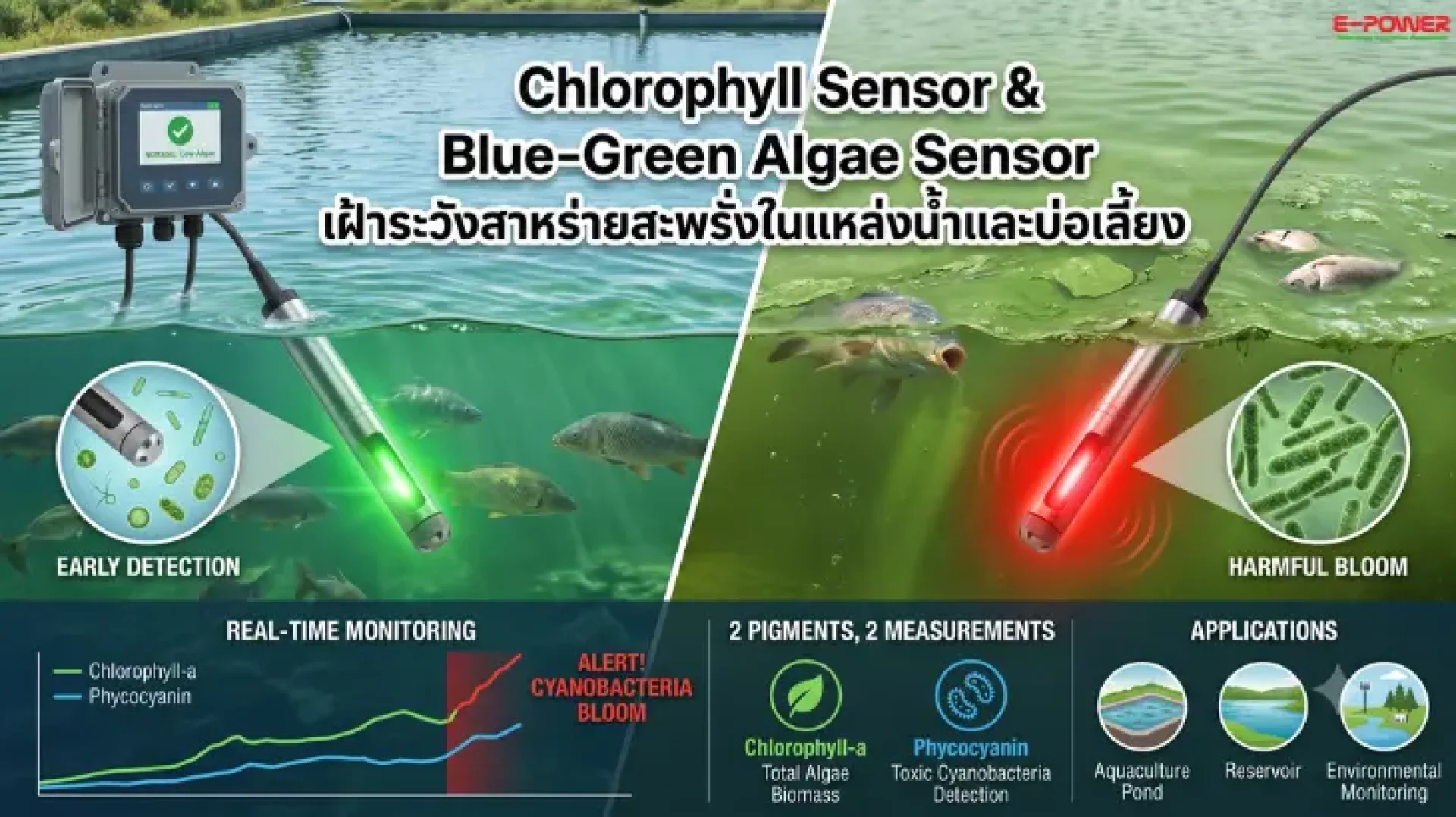
Chlorophyll Sensor & Blue-Green Algae Sensor: What are they, how do they detect harmful algae blooms via fluorescence, and why are they critical early-warning systems for aquaculture ponds and raw water sources? When agricultural runoffs or unconsumed aquaculture feeds accumulate, water bodies experience nutrient overloading—specifically excessive nitrogen and phosphorus. Paired with warm weather and sunlight, this triggers an explosion of cyanobacteria and phytoplankton growth known as an algae bloom. Algae blooms deplete dissolved oxygen (DO) levels heavily at night due to respiration, clog aquatic gills, and release dangerous biotoxins, causing sudden mass die-offs of fish and shrimp. Installing an online Chlorophyll and Blue-Green Algae Sensor provides continuous monitoring to catch algae population spikes at the earliest stage before visual signs appear, giving operators a critical window to take corrective action. This article details how these optical sensors operate, what pigments they track, and how to deploy them successfully.
Measuring Two Pigments to Solve Two Specific Environmental Issues
The operational core of these advanced optical probes relies on tracking two distinct fluorescent pigments, each providing an entirely different dataset for water safety:
- Chlorophyll-a: This pigment is present in virtually all types of algae and phytoplankton. It serves as the primary scientific indicator for total, overall algae biomass in the water column.
- Phycocyanin: This is a specific accessory pigment exclusive to freshwater blue-green algae (cyanobacteria). It acts as a dedicated indicator to identify the presence of potentially toxin-producing species in freshwater.
In short, Chlorophyll-a measures "how much total algae is in the water," while Phycocyanin determines "if the algae consists of dangerous, toxic strains." In marine or saltwater environments, the sensor tracks Phycoerythrin instead of Phycocyanin.
How Does a Fluorescent Algae Sensor Work?
Modern industrial algae sensors utilize the In-Vivo Fluorescence measurement principle. The probe emits a high-intensity LED light at a highly specific wavelength into the water column. The targeted pigments contained within the living algae cells absorb this light energy and instantly re-emit a lower-energy light at a different wavelength, a physical phenomenon known as fluorescence. The optical sensor measures the exact intensity of this emitted fluorescent light, translating it into a relative concentration value.
Because this measurement takes place instantly inside the water body, it requires zero chemical reagents and eliminates manual sample extraction. This relative trend-tracking capability serves as an excellent early-warning sentinel, alerting operators to population changes far faster than traditional quantitative laboratory text results.
The Algae Bloom Cycle: Where the Sensor Steps In
- Nutrient Loading: High nitrogen and phosphorus levels build up from feed leftovers and organic waste.
- Initial Algae Multiplication: Total chlorophyll levels begin to climb steadily. At this exact point, an online sensor detects the growth days before it becomes visible to the human eye.
- Full Bloom Peak: The water undergoes discoloration, and Phycocyanin spikes aggressively if the bloom consists of hazardous cyanobacteria.
- Oxygen Depletion and Toxicity: Nighttime DO crashes and biotoxins stress or kill aquatic crops if left unmanaged.
Online Fluorescence Sensors vs. Manual Laboratory Testing
Online Fluorescence Sensors:
- Delivers instant, real-time data tracking 24 hours a day.
- Operates completely chemical-free, eliminating reagent costs.
- Acts as an early-warning trigger prior to full visual blooms.
- Connects seamlessly with IoT systems for instant smartphone alerting.
Manual Laboratory Testing:
- Requires days to return results, which is often too late to save crops.
- Incurs repetitive operational testing fees per sample.
- Captures a single snapshot in time rather than a continuous trend.
- Ill-suited for emergency preventative environmental monitoring.
Ideal Industrial and Environmental Applications
- Commercial Fish and Shrimp Ponds: Safeguards operations against sudden nighttime dissolved oxygen crashes caused by rapid phytoplankton growth.
- Municipal Water Reservoirs and Waterworks Intakes: Monitors raw water sources for cyanobacteria spikes that cause bad taste, odor, or dangerous toxins.
- Rivers, Canals, and Lakes: Provides public environmental protection agencies with live data tracking for urban ecological health.
- Industrial Cooling Towers: Detects early biofilm and bio-fouling build-up on heat exchangers to prevent system efficiency losses.
How to Choose the Right Algae Monitoring Sensor
- Targeted Pigments: Ensure the sensor configuration covers Chlorophyll-a, Phycocyanin, or both, based on your freshwater or marine needs.
- System Bus Protocols: Look for standard digital RS485 Modbus or SDI-12 outputs to interface natively with your automation backbone.
- Integrated Anti-Fouling: Select models equipped with automated mechanical wipers to prevent bio-fouling on optical lenses during long-term immersion.
- Deployment Durability: Opt for rugged, heavy-duty housing materials designed to withstand prolonged deployment in outdoor environments.
Recommended Industrial Sensor Models
Online Multi-parameter Water Quality Sensor
An advanced digital sensor hub that connects up to 6 digital sensors simultaneously. It allows you to configure a dedicated Chlorophyll optical probe alongside fluorescent DO, 4-electrode conductivity, turbidity, pH, and ORP sensors for complete, single-point water quality monitoring.
AQUALABO Probe TRIPOD
A modular, heavy-duty digital multi-parameter probe designed to mount up to 3 optical or electrochemical sensors concurrently. It natively supports RS485 and SDI-12 outputs, making it the perfect choice for field research, natural river tracking, and professional aquaculture deployment.
Remond RMD-1008A Multiparameter Controller
A rugged, 24-hour online monitoring controller capable of handling up to 12 digital parameters simultaneously. It aggregates chlorophyll logs alongside baseline water parameters, providing built-in RS485 serial outputs and onboard hardware relays to automate aeration or feeding equipment.
Building a Complete Protective Automation Loop: To maximize safety, data from these optical probes can be routed into industrial PLCs and HMI systems, or streamed to web-based platforms like the ecloud cloud architecture by E-POWER SERVICE. This allows farm managers and municipal operators to track algae trends, cross-reference oxygen levels, and receive automated phone notifications the moment a threshold is breached.