What is ORP? ORP vs pH and How to Use It for Water Quality Control
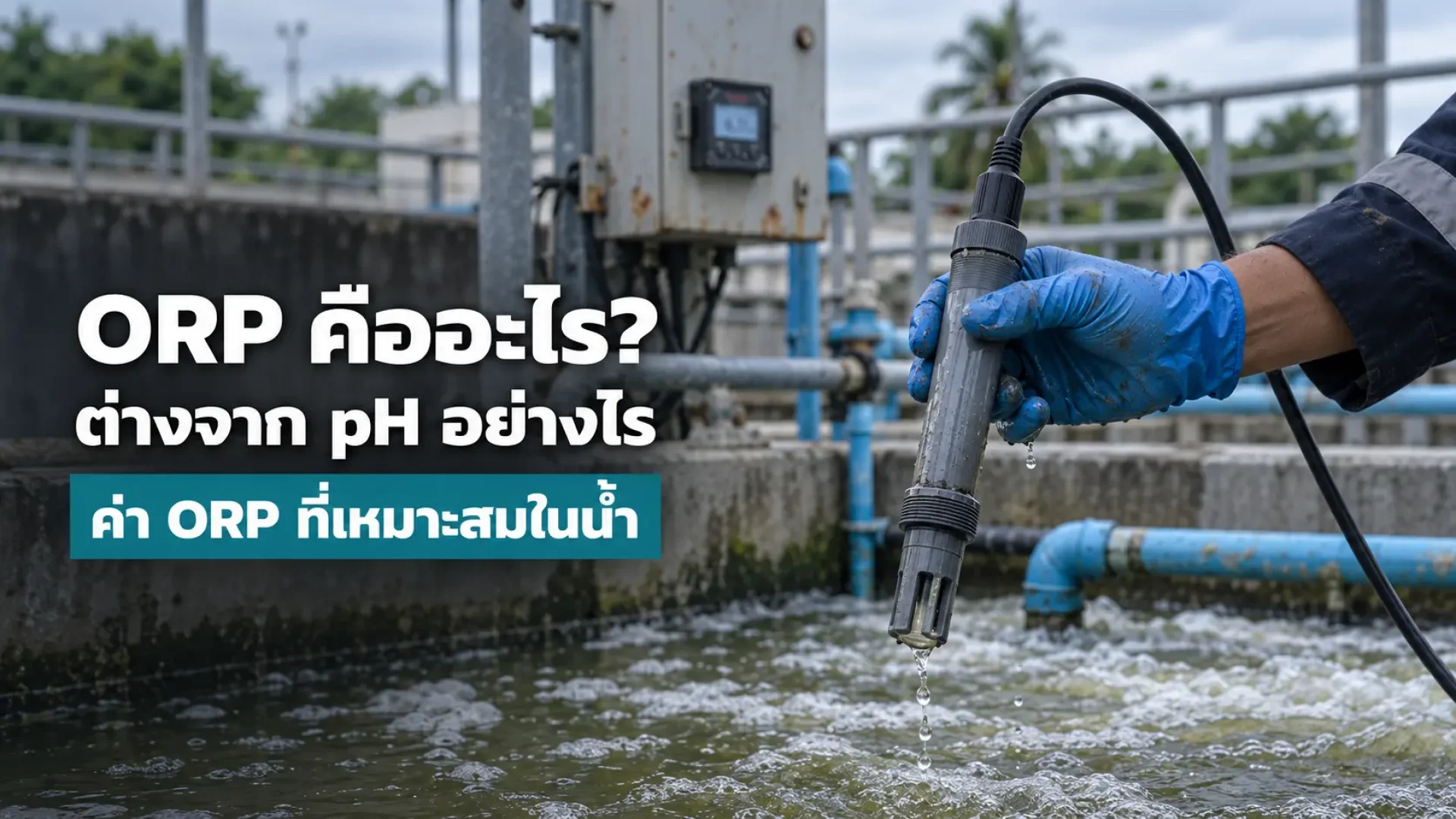
Most people who manage shrimp ponds, wastewater treatment plants, or swimming pools know pH well. But when an ORP reading appears on the meter, it is often unclear what the number means, whether it is good or bad, and how to respond. This guide explains what ORP is, the ideal ORP levels for each application, and how to use an ORP sensor with an IoT system for real-time water quality monitoring.
What is ORP? (Quick answer)
ORP (Oxidation-Reduction Potential), also called redox potential, measures the ability of water to oxidize or reduce other substances. It is expressed in millivolts (mV). A high positive ORP means the water contains plenty of oxidizers such as chlorine or oxygen, so it can disinfect and break down organic matter effectively. A negative ORP means the water is oxygen-depleted and rich in reducing agents such as hydrogen sulfide (H2S).
| -400 mV | -200 | 0 | +200 | +400 | +600 | +800 mV |
| Negative: low oxygen, H2S risk | High positive: strong disinfection |
What does ORP tell you about water?
Water contains two competing groups of chemicals. Oxidizers such as dissolved oxygen, chlorine, and ozone pull electrons from other substances, which destroys pathogens and contaminants. Reducers such as H2S, ammonia, and decaying organic matter give up electrons and typically build up when water lacks oxygen. ORP is the net result of this balance, so it reveals several important conditions.
- Disinfection effectiveness in chlorine or ozone systems, showing whether the disinfectant is actually working
- Oxygen conditions in biological systems, distinguishing aerobic, anoxic, and anaerobic zones in wastewater treatment
- Toxic gas risk, since a strongly negative ORP at the pond bottom signals possible H2S buildup
- Chemical reaction completion in industrial wastewater treatment, such as chromium reduction or cyanide destruction
ORP vs pH: What is the difference?
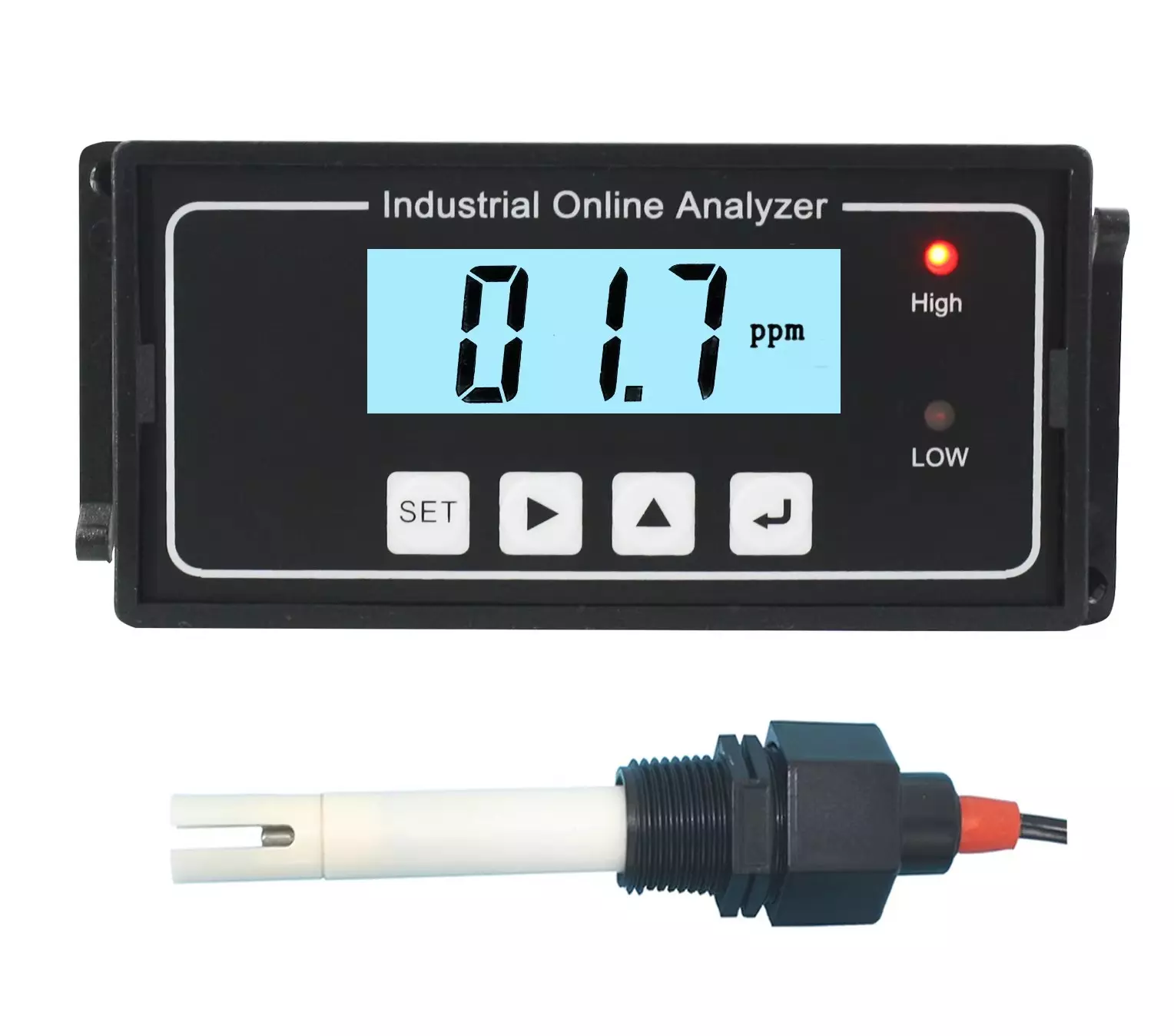
Both values are often measured together with similar electrode-type probes, but they answer different questions.
| Comparison | pH | ORP |
|---|---|---|
| Measures | Hydrogen ion concentration (acidity/alkalinity) | Oxidation-reduction potential (disinfecting/decomposing power) |
| Unit | Unitless, 014 scale | Millivolts (mV), roughly -2000 to +2000 |
| Probe | Glass electrode | Noble metal electrode (platinum or gold) |
| Answers | Is the water acidic or alkaline? | How strong is its disinfecting power, or how anaerobic is it? |
| Response time | Relatively fast | Slower, may take several minutes to stabilize |
| Calibration | pH 4, 7, 10 buffers | ORP standard solution, e.g. 220 mV or 470 mV |
Why measure ORP together with pH?
Because pH directly affects ORP. When chlorine is added to water, it forms hypochlorous acid (HOCl), a strong disinfectant. As pH rises, HOCl converts to hypochlorite ions (OCl), which are far weaker. So even with the same measured chlorine level, ORP drops and disinfection weakens. Measuring pH + ORP together gives a much more complete picture of water quality.
What is a good ORP level?
| Application | Typical ORP range | Meaning |
|---|---|---|
| Swimming pools / chlorinated water | +650 to +750 mV | 650 mV and above is commonly used as the threshold for rapid disinfection |
| Drinking / treated tap water | +400 to +700 mV | Sufficient residual disinfectant |
| Aquaculture ponds (water column) | +200 to +400 mV | Adequate oxygen, good waste breakdown |
| Aeration tank (nitrification) | +100 to +350 mV | Bacteria convert ammonia to nitrate efficiently |
| Denitrification zone | -50 to +50 mV | Anoxic conditions for nitrogen removal |
| Anaerobic zone (phosphorus release) | -100 to -250 mV | Oxygen-free conditions |
| Pond bottom with sludge buildup | Below -200 mV | H2S risk, dangerous for shrimp and fish |
These are general reference ranges. Actual values depend on water conditions and equipment, so always use ORP alongside other parameters.
How is ORP used to control water quality?
Chlorine and ozone disinfection
ORP drives a dosing pump automatically, adding chemicals when the reading falls below target and stopping once it recovers. This prevents overdosing and is ideal for swimming pools, community water supplies, and cooling towers.
Shrimp and fish ponds
A steadily falling ORP warns of waste buildup or low oxygen, so farmers can run aerators or exchange water before problems occur. Pairing ORP with DO and dissolved CO2 gives even better control.
Biological wastewater treatment
In activated sludge systems, ORP controls blower on/off cycles to keep each zone in the right condition, cutting electricity, the largest operating cost of a treatment plant.
Industrial wastewater treatment
Metal plating and electronics plants use ORP to detect reaction endpoints, such as chromium reduction, so chemicals are dosed precisely and effluent meets discharge standards.
How to choose an industrial ORP sensor
- Output signal: RS485 Modbus RTU sensors can share one cable and also report temperature, while 4-20mA sensors connect easily to existing PLCs
- Electrode material: platinum suits most applications, while gold is better for water with strong oxidizers such as ozone
- Installation type: immersion probes for ponds and open tanks, or flow cell mounting for pipelines
- Maintenance: choose models that are easy to clean and refill, since grease or scale causes slow and inaccurate readings
ORP sensor calibration tips
Check the sensor against a standard solution every 13 months depending on water conditions, and clean the metal surface regularly. After installing a new probe, wait for the reading to stabilize before using it for control, because ORP probes need a longer conditioning period than pH probes.
Upgrade ORP monitoring with IoT and Smart Monitoring
Manual readings once a day can miss rapid changes, such as oxygen drops in ponds at night. An online water quality monitoring system provides continuous 24/7 data. Here is a typical system E-POWER designs for customers.
| 1 | ORP, pH, DO, and EC sensors with RS485 Modbus RTU output installed in ponds or treatment tanks |
| 2 | IoT Edge Gateway / FlowPLC reads the sensors, runs control logic in Node-RED, and commands dosing pumps or aerators instantly |
| 3 | Cloud data transfer via MQTT or Modbus TCP over 4G or LoRaWAN for sites without WiFi |
| 4 | Dashboard and alerts with historical trends and LINE or Telegram notifications when ORP leaves the set range |
The result: lower risk of livestock loss, less wasted chemicals and energy, and historical data ready for regulatory reporting.
Frequently asked questions about ORP (FAQ)
What does ORP stand for?
ORP stands for Oxidation-Reduction Potential, or redox potential. It indicates the ability of water to oxidize or reduce other substances and is measured in millivolts (mV).
Is a high ORP good or bad?
It depends on the application. In swimming pools and drinking water, an ORP of about +650 mV or higher means effective disinfection. In anoxic or anaerobic zones of wastewater treatment, a low or negative ORP is required.
What does a negative ORP mean?
It means the water lacks oxygen and contains many reducing agents. In aquaculture ponds, a strongly negative ORP at the bottom signals a risk of hydrogen sulfide (H2S) formation.
Can ORP replace chlorine measurement?
Not entirely. Chlorine readings show the amount of disinfectant, while ORP shows its actual effectiveness as affected by pH and contaminants. Measuring both gives the best results.
How do I connect an ORP sensor to a PLC or IoT gateway?
Most industrial ORP sensors output RS485 Modbus RTU or 4-20mA signals, which connect directly to a PLC, FlowPLC, or IoT gateway. Data can then be sent to the cloud via MQTT for viewing on mobile devices.
Summary
ORP indicates the disinfecting power and oxygen condition of water, while pH indicates acidity or alkalinity. The two are closely linked and should always be measured together. Connecting an ORP sensor to an IoT water quality monitoring system enables automatic, accurate, and cost-effective control of disinfection, aeration, and chemical dosing.
Need real-time water quality monitoring?
E-POWER engineers design Smart Monitoring systems for aquaculture ponds, wastewater treatment, and industrial water systems, from sensor selection to dashboards and alerts.
Talk to our engineers