What is a Smart Factory?
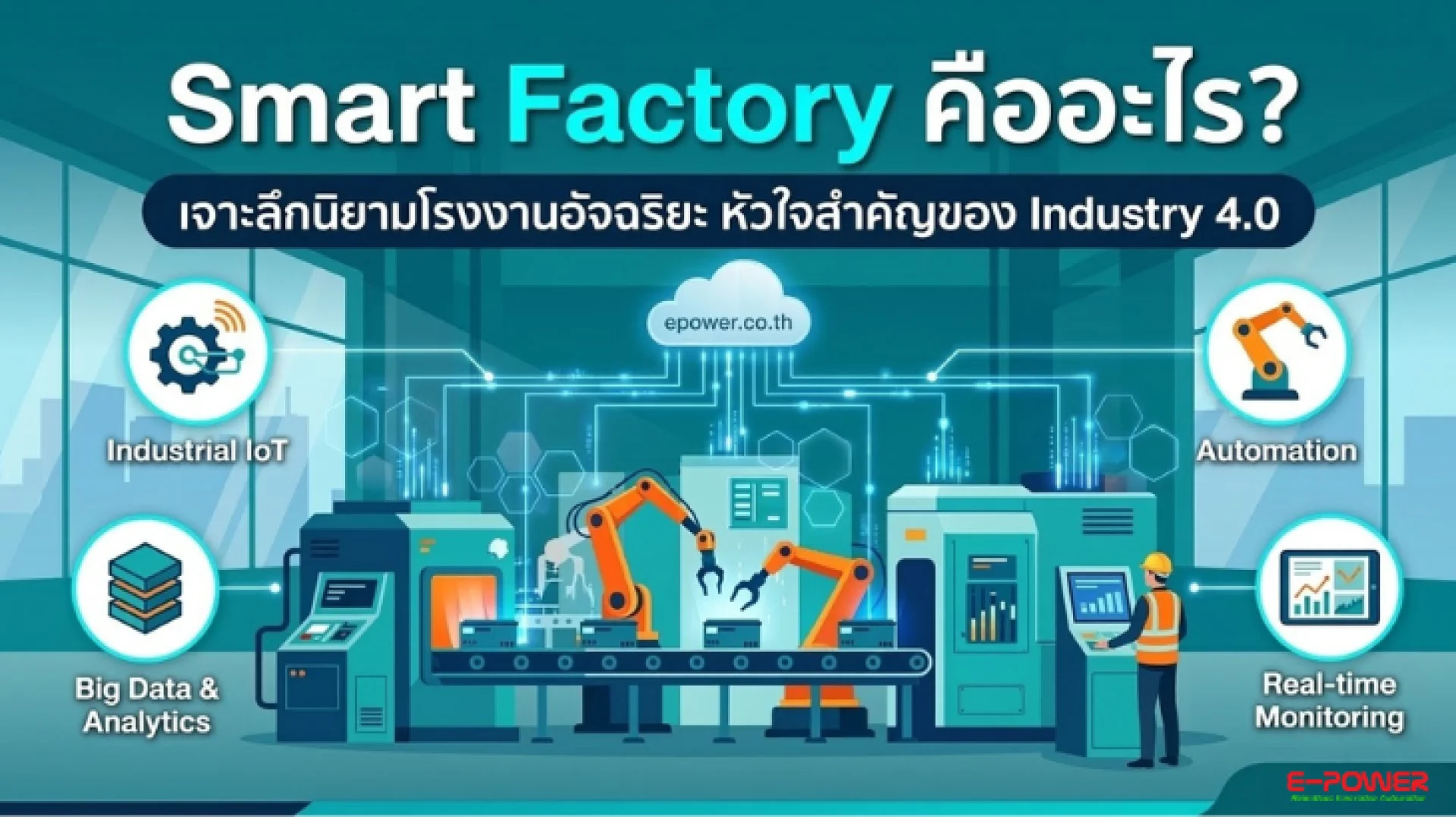
A Smart Factory is a manufacturing system that integrates Information Technology (IT) with operational processes (OT) through Industrial IoT (IIoT) connectivity. This allows machinery and electrical equipment to exchange data and work together systematically. This process provides factories with high flexibility and enables real-time monitoring of production status.
Core Technologies and Equipment of a Smart Factory
Driving a factory toward "Smart" status requires the procurement of high-quality equipment that supports international protocols, as follows:
- Industrial Automation Systems The command center relies on PLC and HMI models that support Ethernet or Wi-Fi connectivity, enabling Remote Monitoring of operations from anywhere.
- Smart Sensors High-quality sensors act as the factory's nervous system. Whether they are Pressure Sensors, temperature sensors, or proximity sensors, these devices collect real-time data from the field for system analysis.
- Energy Management A primary goal of a smart factory is energy efficiency. Installing Digital Power Meters and Energy Monitoring systems helps operators identify excessive power usage and plan electricity cost reductions accurately.
- Precision Drives & Inverters Using an Inverter or Variable Speed Drive is essential for controlling motor speeds to match actual workloads. This not only protects the machinery but also directly results in long-term energy savings.
Business Advantages of Upgrading to a Smart Factory System
Transitioning to a Smart Factory is more than just adding technology; it creates a sustainable competitive advantage through intelligent solutions:
- Predictive Maintenance: Moving from reactive repairs to data analysis via Smart Sensors allows for pre-emptive equipment assessment. This effectively reduces unexpected Downtime and extends the lifespan of industrial electrical equipment.
- Increased Production Capacity: Maximize OEE (Overall Equipment Effectiveness) through real-time monitoring, allowing for the precise identification and resolution of production bottlenecks, reducing waste, and increasing profit per unit.
- Sustainable Energy Management: Accessing precise electricity usage data via Digital Power Meters enables the analysis and control of energy consumption for Inverters and large motors, which is vital for reducing fixed costs.
- Flexibility and Rapid Response: Modern PLC and HMI systems allow for faster product changeovers, meeting frequently changing market demands in a timely manner.
- Data-Driven Decision Making: Shift from guesswork to analyzing raw data from the field to plan production strategies and future business expansion with accuracy.
Summary
A Smart Factory is the key to increasing competitiveness through Industry 4.0 technology. By integrating IIoT with standard control equipment like PLC, HMI, and Inverters, businesses can maximize OEE and achieve sustainable energy savings. Utilizing Smart Sensors and Digital Power Meters not only facilitates Predictive Maintenance to reduce downtime but also empowers operators to manage costs and make Data-Driven decisions effectively. If you are looking for industrial electrical solutions to upgrade your production line, investing in modern automation is the answer to staying ahead of the competition.