Soil Moisture, Temperature, and EC Sensors: Why Are They Indispensable for Smart Farms?
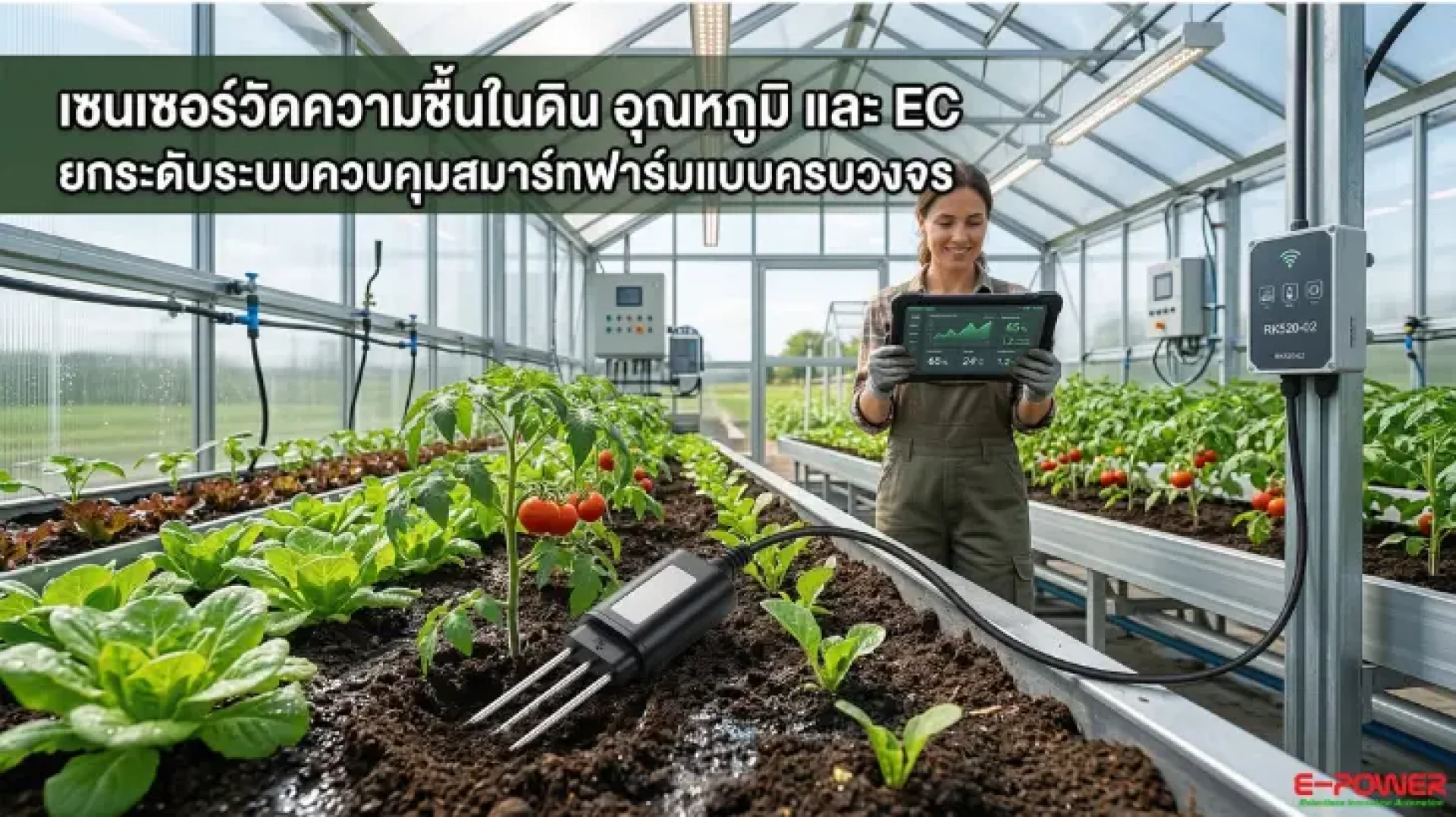
Soil moisture, temperature, and electrical conductivity (EC) sensors are the heart of modern agriculture, helping to increase yields and promote sustainability. These devices are the core components driving Smart Agriculture or Smart Farms by integrating IoT technology and new innovations to elevate cultivation efficiency. They act as the primary network for a comprehensive soil monitoring system, continuously sending real-time data that empowers farmers to make informed decisions and precisely control various systems within the farm.
Precise Water Management with Soil Moisture Sensors
Soil moisture sensors, such as the popular RK520-02 model, are indispensable for modern farming. They can measure soil moisture across a wide range of 0 - 100% (m³/m³) with high accuracy. Real-time moisture level awareness allows farmers to connect to automated irrigation systems to avoid watering errors:
- Over-irrigation: Wastes water resources, leaches nutrients, and causes plant roots to rot due to waterlogging.
- Under-irrigation: Causes water stress in plants, stunting growth and reducing yields.
Assessing Soil Fertility with Soil EC Sensors
Besides moisture, measuring nutrient levels is equally important. The RK520-02 sensor can measure Soil Electrical Conductivity (Soil EC) in the range of 0 - 10 mS/cm. This EC value directly correlates with the amount of dissolved salts and nutrients in the soil. A high electrical conductivity value indicates sufficient nutrient levels, but if it is too high, it can be a warning sign of soil salinity. Using a Soil EC sensor helps farmers accurately calculate and apply fertilizer, preventing over-fertilization, which not only reduces costs but is also environmentally friendly.
Highlights and Features of the RK520-02 Sensor
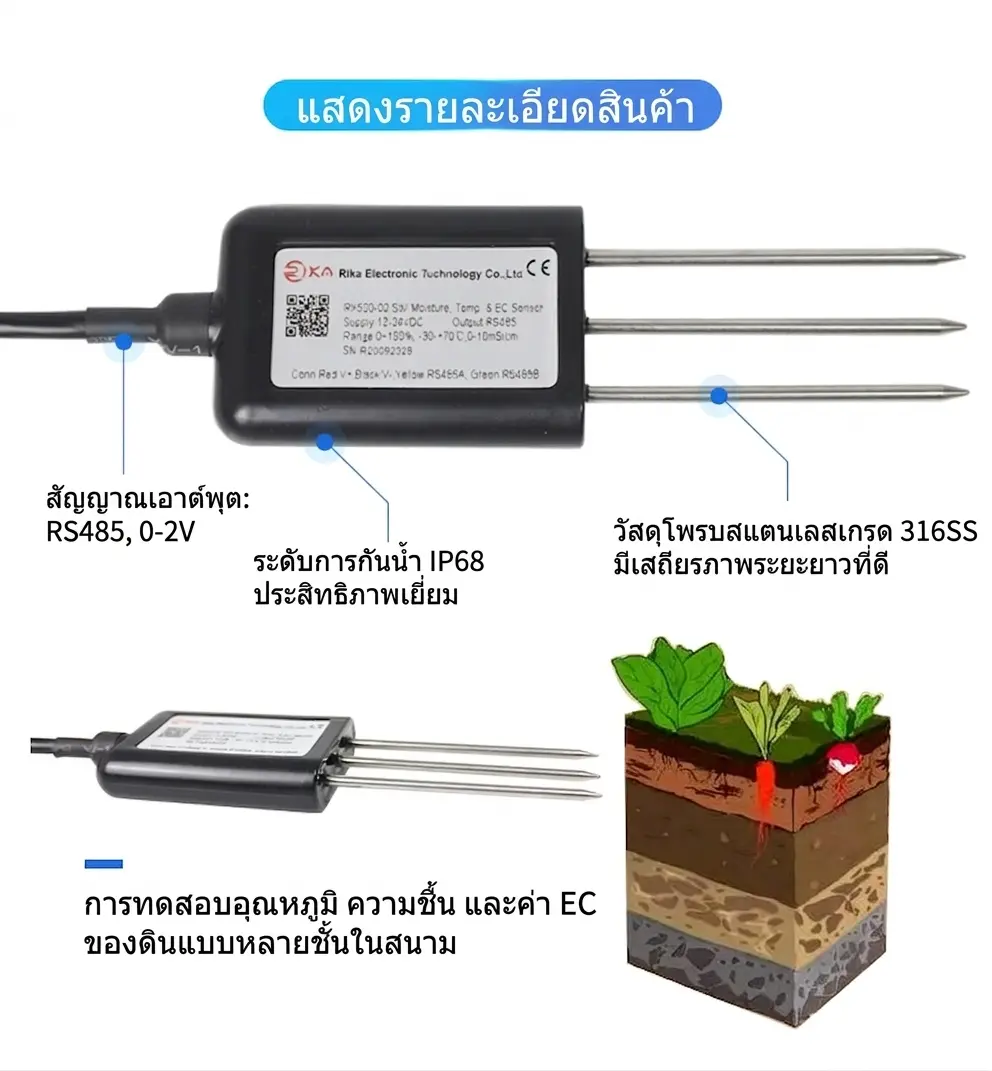
- High Precision and Fast Response: Processes and detects changes in soil conditions in less than 1 second, enabling the system to immediately command water and fertilizer controls to maintain the optimal environment for crops.
- Durable in All Environments: The probe is made of corrosion-resistant 316L stainless steel, coupled with an IP68 standard waterproof and dustproof housing. It can be permanently buried in the soil for long-term monitoring without worrying about moisture or chemical damage.
- Easy Monitoring System Connection: Supports industry-standard output signals such as RS485 and 0-2V, allowing seamless connection to Data Loggers, control cabinets, or smart farm software dashboards for advanced data analysis.
Applications of Soil Sensors in Agriculture
Greenhouse Cultivation: In smart greenhouse systems, soil sensors are mandatory equipment. Maintaining the 24/7 balance of moisture, temperature, and EC helps growers control quality and maximize crop yield potential.
Precision Agriculture in Open Fields: For large areas, deploying a network of RK520-02 sensors helps create an accurate "soil data map." This allows farmers to manage variable-rate water and fertilizer applications based on the actual needs of each zone, concretely reducing resource waste and lowering costs.
Conclusion
The 3-in-1 soil moisture, temperature, and electrical conductivity sensor is a crucial innovation in the transition from traditional farming to full-scale Smart Agriculture. The high-resolution data obtained from measuring Soil EC to assess nutrients and monitoring moisture to manage water empowers farmers to make data-driven decisions. Investing in the RK520-02 sensor network alongside an efficient monitoring system not only directly increases yields in both quantity and quality but also lays a vital foundation for sustainable agriculture, reducing resource waste, and promoting long-term production cost savings.