PLC vs PAC : What’s the Difference? Choosing the Best Value for Your Factory
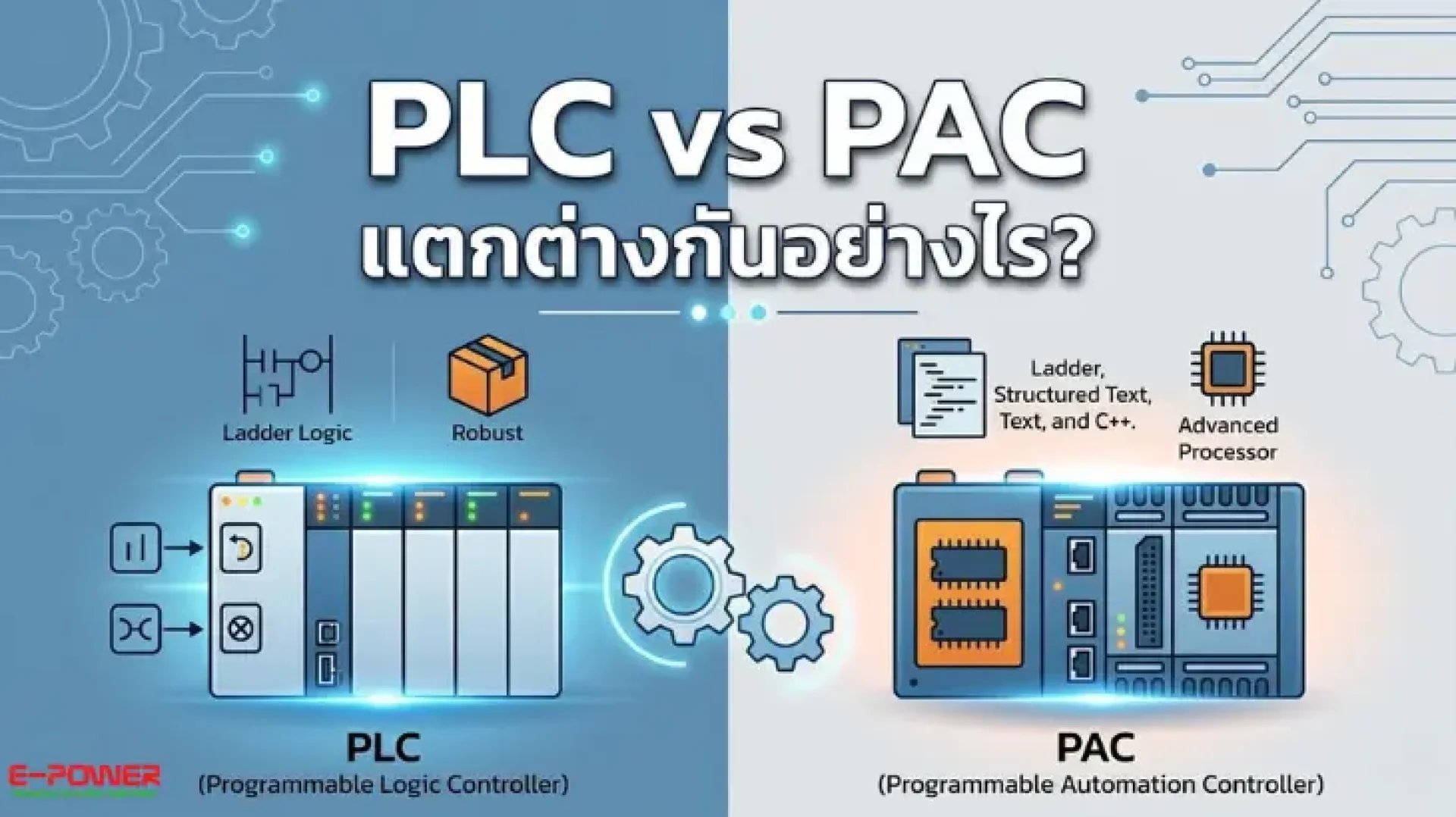
When designing an automation system, a common question for project owners and engineers is: PLC vs PAC – which one should I choose? Although both devices control machinery, they differ significantly in technical specifications and long-term "cost-effectiveness."
This article will dive deep into the differences between PLC and PAC, providing expert guidance on how to choose a PLC or PAC that fits your budget and system requirements.
PLC vs PAC: Key Differences and Highlights
1. PLC (Programmable Logic Controller)
The PLC is the traditional industrial standard, originally designed to replace relay control systems. It focuses on durability and high-speed digital I/O processing.
- Programming Language: Primarily uses Ladder Diagram (LD), which is familiar to electricians and field engineers.
- Applications: Ideal for standalone machinery or less complex systems, such as conveyors, packaging machines, or water pump controls.
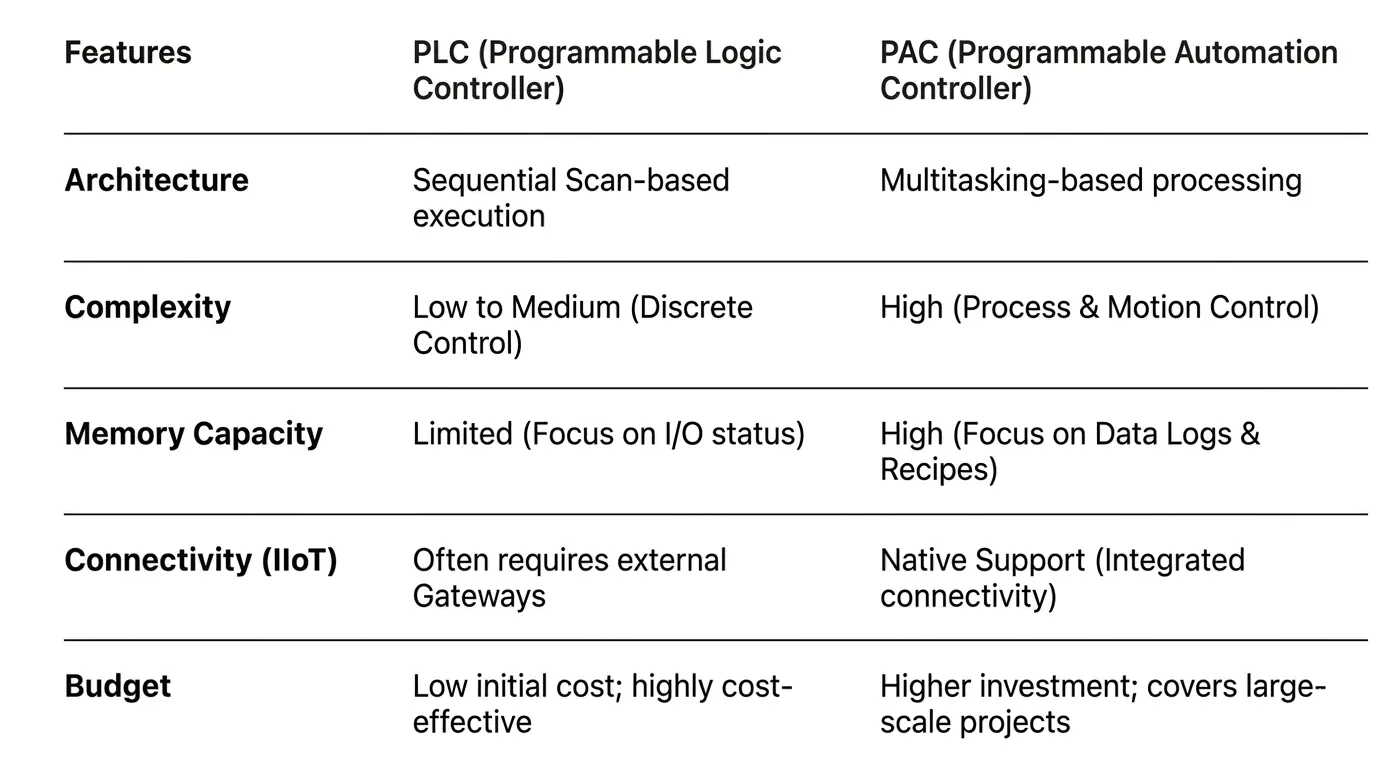
- Highlights: Cost-effective, extremely stable, and easy to maintain.
2. PAC (Programmable Automation Controller)
The PAC is a step up from the PLC, offering PC-based capabilities. It supports complex processing and larger data storage.
- Programming Language: Supports multiple languages under the IEC 61131-3 standard (e.g., Structured Text, C, C++).
- Applications: Best for complex, large-scale systems requiring advanced calculations, multi-axis motion control, or seamless integration with IT/Cloud databases.
- Highlights: High memory capacity, native support for multiple protocols, and efficient multitasking.
Comparison Table: PLC vs PAC
Choosing the Right Solution for Your Factory Scale
To maximize your ROI, consider these three key factors when deciding to buy a PLC or PAC:
- I/O Count and Complexity: If you need to control standalone machines with 100–200 I/O points, high-quality PLC brands like Xinje or Haiwell are sufficient and budget-friendly.
- Scalability: If you plan to implement a Smart Factory with Cloud data integration or ERP/MES connectivity, choosing a PAC or a modern PLC that supports CODESYS (like LicOS PLC) will make integration much easier.
- Team Expertise: If your maintenance team is comfortable with Ladder Logic, a PLC will ensure faster and simpler troubleshooting on the shop floor.
Summary: Which is right for you?
Choose PLC: For cost-effectiveness, general logic control, and high durability in harsh environments.
Choose PAC: For complex systems, multi-axis servo control, or full-scale Data Analytics and IIoT.
Expert Advice: If you are unsure which technology fits your project, our engineering team at E-Power Service is ready to provide consultations and solutions that match both your performance needs and budget.