What is a PAR Sensor? The Importance of PPFD in Precision Agriculture
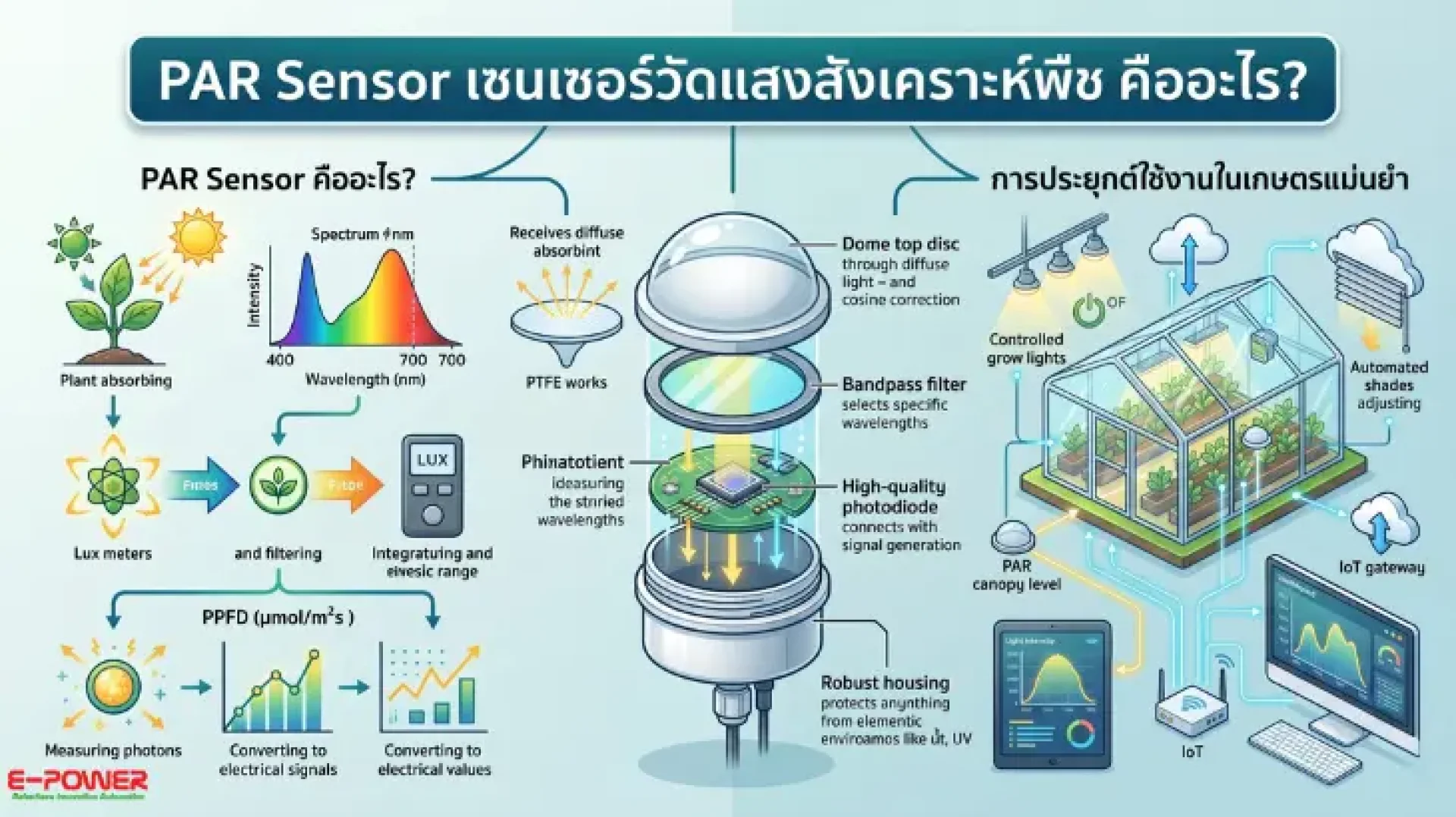
A PAR Sensor (Photosynthetically Active Radiation) is a specialized light sensor designed to detect wavelengths between 400 and 700 nanometers (nm). This specific range is precisely what plants utilize for photosynthesis. Unlike a standard Lux Meter, which measures brightness as perceived by the human eye, a PAR Sensor measures the actual number of photons absorbed by the plant. This data is then processed into a value known as PPFD (Photosynthetic Photon Flux Density).
Core Components and Working Mechanism
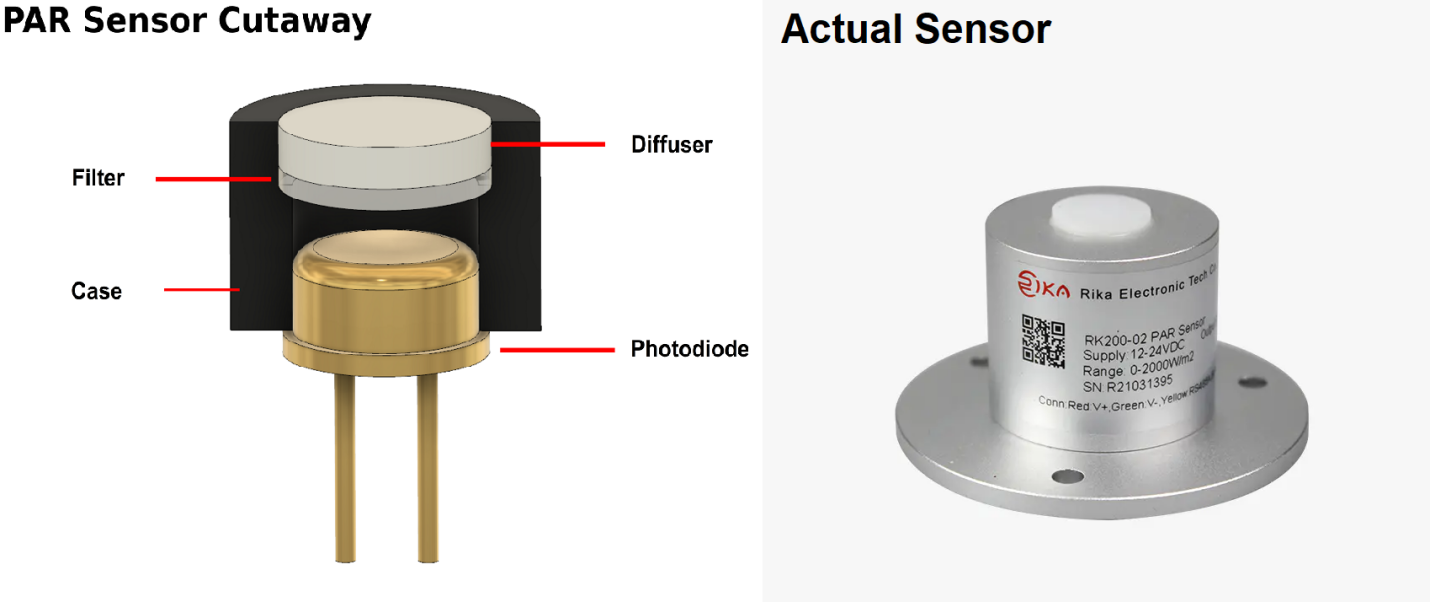
To achieve maximum accuracy, high-end sensors such as those from RIKA SENSOR utilize a sophisticated internal structure:
- Diffusing Disc: Typically made from PTFE (Teflon), it facilitates Hemispherical Integration and features Cosine Correction. This ensures precision even as the sun's angle changes throughout the day.
- Visible Bandpass Filter: An optical filter that strictly isolates the 400-700 nm wavelength range required for plant growth.
- Photodiode: The component that converts light into electrical signals. Higher quality photodiodes ensure stable and accurate data transmission.
- Housing: Engineered for durability, UV resistance, and Ingress Protection (IP rating) to withstand harsh outdoor environments.
Popular Types of PAR Sensors
- Silicon Photodiode Sensor: The standard version widely used for general monitoring, generating an electric current proportional to light intensity.
- Quantum Sensor: The most accurate and stable category. It measures the number of photons directly in PPFD ($mu mol/m^{2}s$), which is the global standard for plant science.
- Fixed-Mount vs. Portable: Options include permanent installations for Smart Greenhouses or handheld units for on-site field surveys.
Applications Across Industries
- Smart Farming: Monitoring light intensity to automate Smart Greenhouse systems, including shading net adjustments or supplemental Grow Lights via IoT.
- Climate Studies: Analyzing atmospheric changes and cloud cover, which directly affect solar radiation reaching the surface.
- Plant Research: Enabling researchers to keep light variables constant during fertilizer or pesticide trials for highly reliable results.
- Space Exploration: Controlling plant growth environments to maximize oxygen and food production for astronauts on long-term missions.
Professional Installation Steps
- Equipment Selection: Opt for a Quantum PAR Sensor for high-precision tasks and select the appropriate output signal, such as RS485 Modbus.
- Strategic Placement: Install in an unobstructed area at the Canopy Level (crop height). Ensure the sensor is perfectly leveled and facing 180° upward.
- System Integration: Utilizing RS485 (Modbus-RTU) allows for direct connection to a PLC or IoT Gateway, significantly reducing signal interference over long distances.
- Data Analysis: Connect to a Data Logger or the E-Power IoT Platform to monitor real-time PPFD and generate trend reports.
Conclusion
A PAR Sensor is the key to success in modern Precision Agriculture, enabling data-driven decision-making. Investing in high-quality sensors protects your yield and reduces long-term maintenance costs.
If you are looking for a PAR Sensor or an intelligent weather station for your farm, the engineering team at E-Power Service is ready to provide consultation and supply international-standard equipment to elevate your operations. Explore RIKA SENSOR products at www.epower.co.th.