How pH Controllers Optimize Wastewater Treatment: Reducing Chemicals and Protecting the Environment
In both industrial and municipal wastewater treatment systems, controlling the pH (Potential of Hydrogen) is a critical factor directly affecting treatment efficiency. If pH levels fall outside the optimal range, biological processes may be impaired, and chemical precipitation efficiency can significantly decrease.
Implementing a pH Controller provides a precision solution for water quality management, reducing chemical usage and ensuring the wastewater treatment system operates at peak performance.
What is a pH Controller?
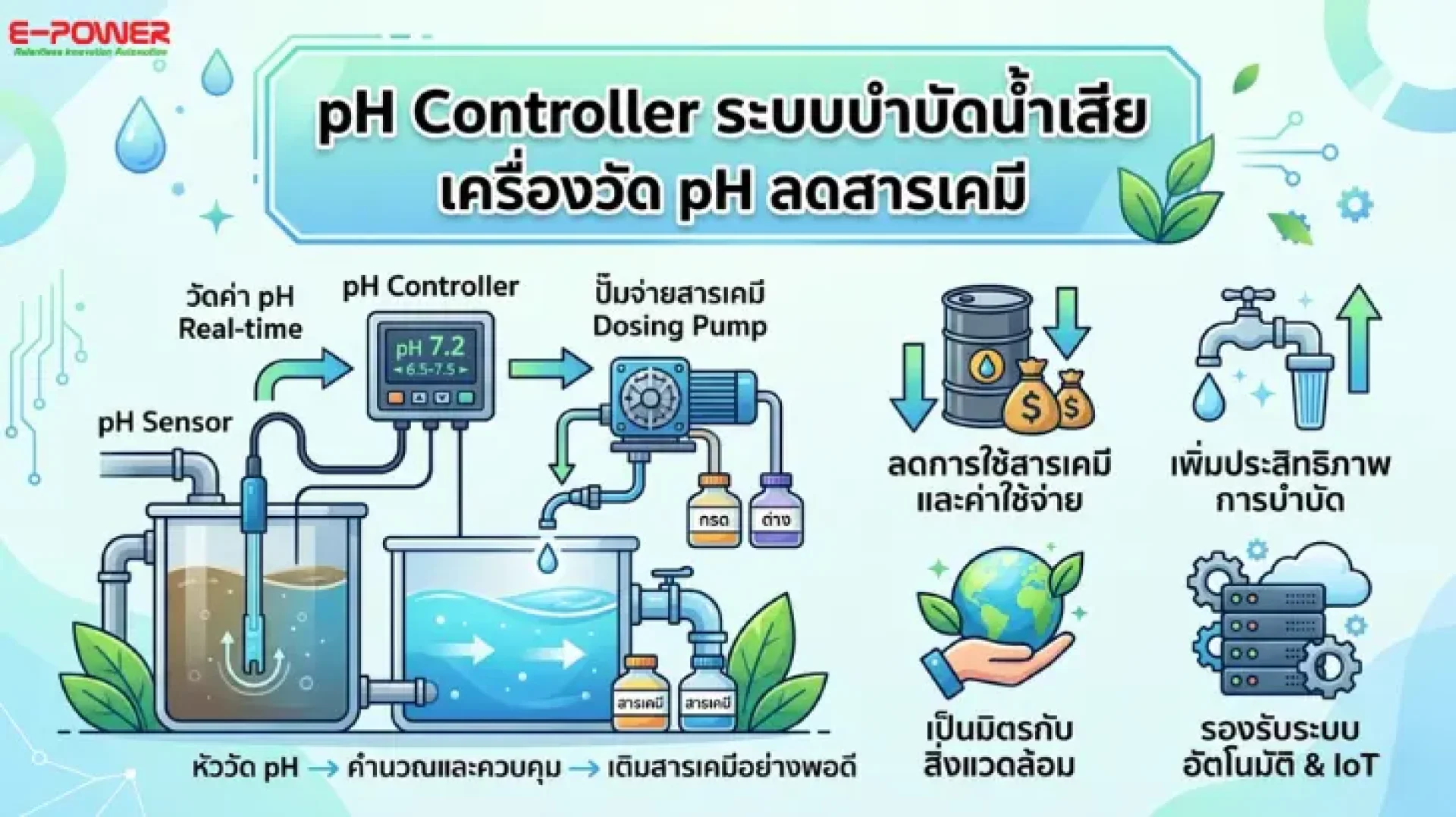
A pH Controller is a device used to measure and regulate the acidity or alkalinity of water. it functions in conjunction with:
- pH Sensor: The sensing probe for measurement.
- Dosing Pump: The pump responsible for chemical delivery.
The system monitors pH levels in real-time and automatically triggers chemical dosing to maintain the pH within a predefined range.
Benefits of pH Controllers in Wastewater Treatment
- Reduced Chemical Consumption: Automated control ensures precise dosing of acids or alkalis, preventing overdosing.
- Improved Treatment Efficiency: Optimal pH levels allow precipitation and biological decomposition processes to function at full capacity.
- Lower Operating Costs: Reduces expenditures on chemicals and maintenance while decreasing sludge volume.
- Automation Support: Can be integrated with PLC, SCADA, or IoT systems for real-time monitoring and control.
Applications
- Industrial and municipal wastewater treatment systems.
- Water treatment and production.
- Food, beverage, chemical, and pharmaceutical industries.
Featured pH Controllers and Sensors
Selecting the right equipment is vital for system stability. E-Power Service offers comprehensive solutions, including:
pH Controllers
- Support for ON/OFF and PID control.
- Relay outputs for dosing pump command.
- Communication via 4-20 mA or RS485 (Modbus).
- Recommended Models: SUP-pH Controller Series and Online pH Transmitters .
pH Sensors (Probes)
- Chemical-resistant designs for industrial use.
- Built-in Temperature Compensation.
- Support for submersible or inline installation.
- Featured Products: Industrial pH Electrodes and Submersible pH Sensors.
Solution Highlights
- High Accuracy: Ensuring precise water quality standards.
- IoT & Automation Ready: Seamless integration with modern control systems.
- Long-term Cost Savings: Significant reduction in chemical and operational waste.
Conclusion
Utilizing a pH Controller not only ensures compliance with water quality standards but also promotes sustainable environmental protection by reducing chemical waste and operational costs. Investing in an efficient pH control system is key to modernizing wastewater treatment for today's industrial demands.