CO2 and PM2.5 Transmitters in HVAC Systems: Elevating Indoor Air Quality (IAQ)
In the modern era, where people spend over 90% of their daily lives indoors, Indoor Air Quality (IAQ) has become a critical factor directly impacting human health, work concentration, and overall cognitive performance. However, conventional HVAC (Heating, Ventilation, and Air Conditioning) systems often face energy inefficiency due to excessive ventilation rates, or conversely, cause stuffy indoor environments due to insufficient outdoor air exchange.
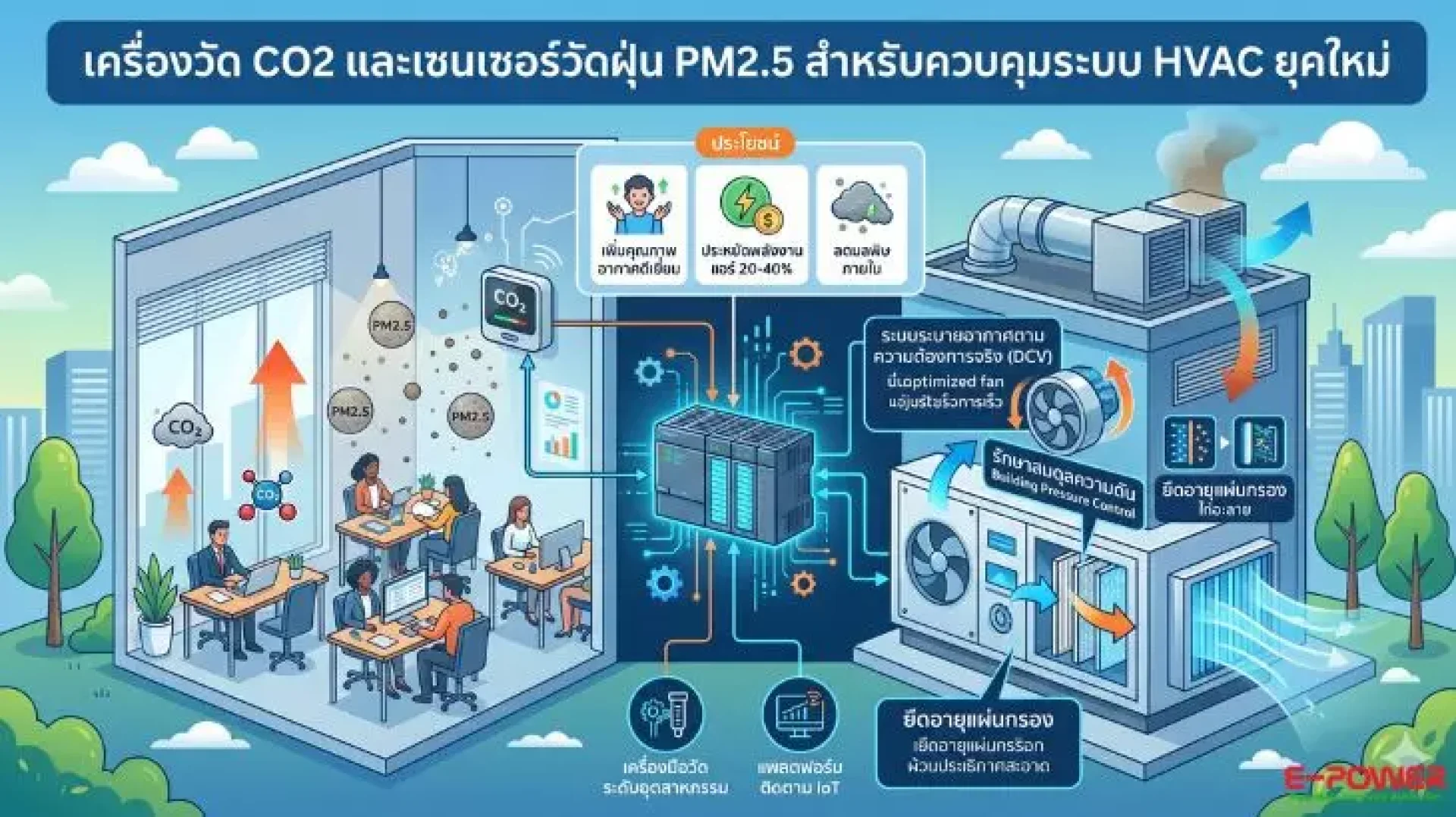
Integrating a CO2 Transmitter and a PM2.5 Sensor into an HVAC system delivers an intelligent "Demand-Controlled Ventilation (DCV)" solution. This modern approach seamlessly balances fresh air intake with optimal energy conservation.
Why Measuring Indoor CO2 and PM2.5 is Critical
- Carbon Dioxide ($CO_2$): A clear indicator of stale, stuffy air. When people gather in closed spaces, $CO_2$ levels rise rapidly. Concentrations exceeding 1,000 ppm can lead to drowsiness, headaches, and mental fatigue. Installing a CO2 transmitter detects these spikes in real-time, signaling the HVAC system to bring in fresh outdoor air only when needed.
- Fine Particulate Matter (PM2.5): A silent hazard to human respiratory health. On days with high outdoor pollution, introducing fresh air without proper filtration brings harmful PM2.5 indoors. A dedicated PM2.5 sensor allows the controller to temporarily close the air intake valves or accelerate high-efficiency filtration (HEPA filters) instantly.
Engineering Mechanisms for Energy Savings
Connecting smart air quality sensors to your HVAC control network drives substantial energy savings through:
- Demand-Controlled Ventilation (DCV): Instead of running ventilation fans at a fixed, maximum rate, the system dynamically calculates the required airflow based on actual $CO_2$ levels. If occupancy is low, the system curtails the intake of hot, humid outdoor air. This drastically reduces the cooling and dehumidification load on the air conditioning compressor, cutting HVAC energy costs by 20% to 40%.
- Building Pressure Control: The system manages intake and exhaust airflow rates dynamically to maintain optimal building pressure, reducing cold air leakage and preventing outdoor dust infiltration.
- Extended Filter Lifespan: Adjusting fan speeds based on real-time dust concentrations prevents premature dust loading on air filters, lengthening maintenance cycles and saving on filtration costs.
Smart Solutions & Sensors by E-Power Service
To transform your HVAC system into an intelligent, Green Building-compliant asset, E-Power Service offers high-quality sensors and control platforms tailored for industrial and building automation:
- Air Quality Sensor Series (Rika Sensor): High-precision, durable industrial-grade transmitters by Rika Sensor, offering versatile signal outputs for both duct-mount and wall-mount installations.
- SUP-DC2000 Digital Analyzer / Smart Multi-Parameter Transmitter: A centralized hardware solution to collect, display, and transmit multi-channel sensor data to your main controller.
- Automation Control Systems (PLC & CODESYS): Comprehensive engineering services to design, program, and commission HVAC logic using CODESYS to control variable frequency drives (VFDs) and fans dynamically.
- E-power IoT Platform : A cloud-based platform allowing facility managers to track $CO_2$, PM2.5, temperature, humidity, and real-time HVAC power consumption from any device.