Control Panel Design for Moisture and Chemical Resistance
In harsh operating environments—such as chemical manufacturing plants, wastewater treatment facilities, or even modern Smart Farms—the "Control Panel" (Electrical Enclosure) serves as the core heartbeat. It houses high-value electronic components like PLCs, inverters, and circuit breakers. Neglecting control panel design for moisture and chemical resistance can lead to short circuits, component corrosion, and costly system downtime in production lines or automation systems, resulting in massive economic losses.
What are the Key Principles of Moisture and Chemical-Resistant Control Panel Design?
Designing a control panel for humid and chemically aggressive areas requires careful consideration of three core factors:
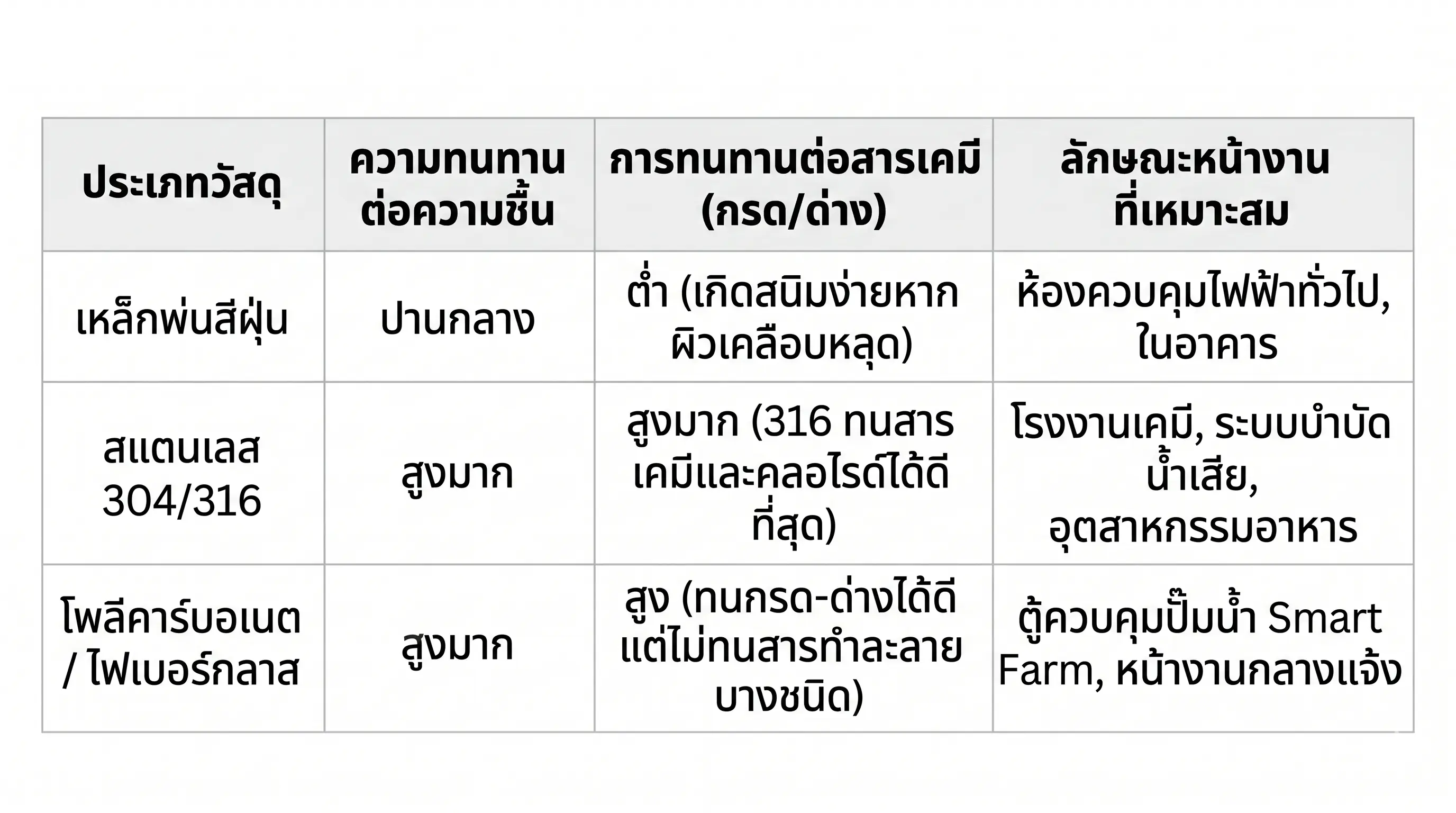
- Corrosion-Resistant Structural Materials: Utilizing materials such as Stainless Steel (Grade 304/316) or fiberglass-reinforced plastic.
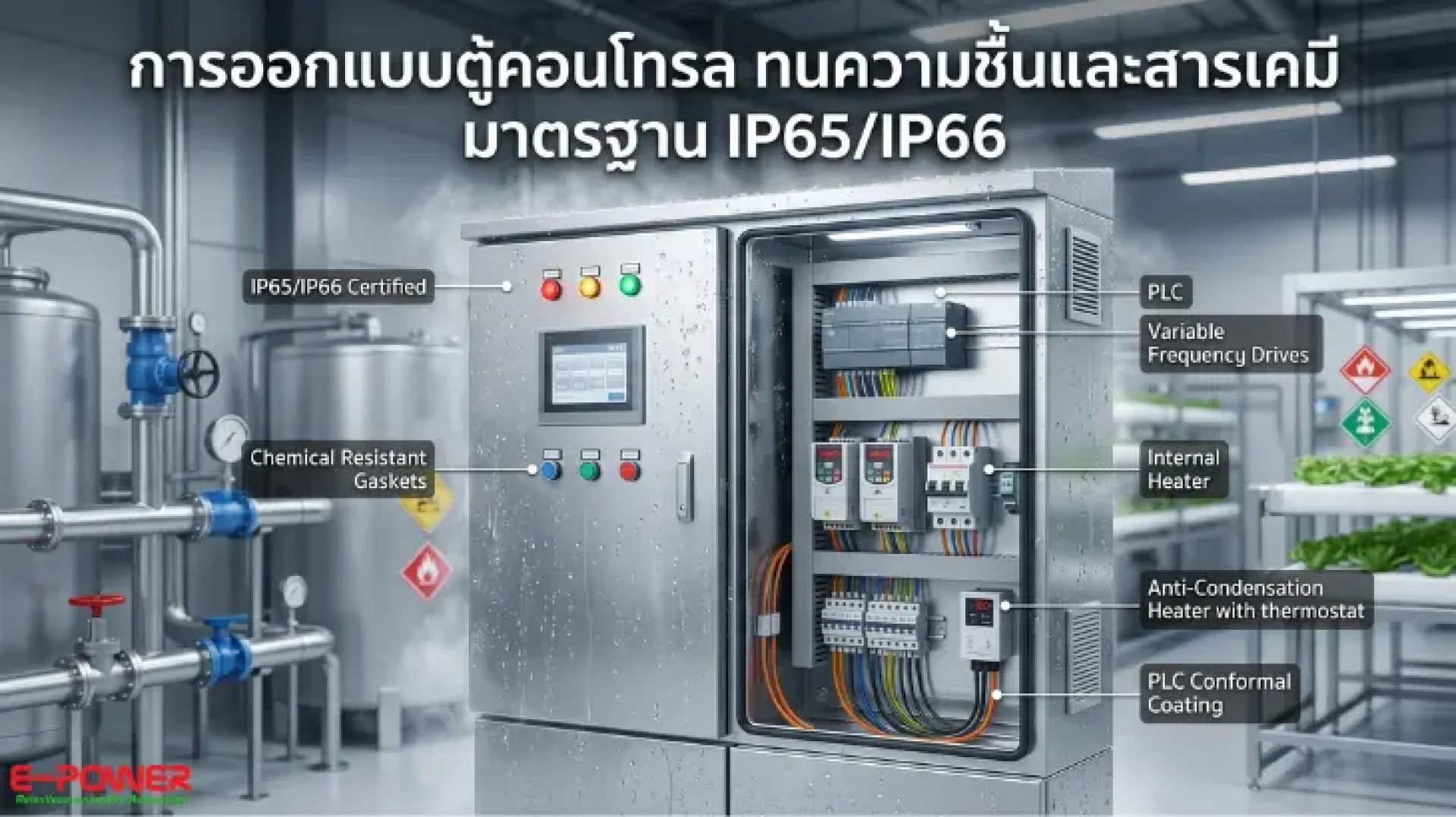
- IP Rating Certification Seals: Implementing high-standard seals (such as IP65 or IP66) to completely block out water and chemical vapors.
- Thermal and Humidity Management: Installing enclosure air conditioners or anti-condensation heaters to control the internal microclimate.
4 Critical Considerations for Enclosure Design in Harsh Environments
The engineering team at E-Power Service Co., Ltd., specialists in automation systems and control panel assembly, has summarized the industry-standard design guidelines as follows:
1. Enclosure Material Selection
- Powder-Coated Steel Enclosures: Suitable for indoor spaces with low humidity. They are not recommended for areas exposed to acidic or alkaline chemical vapors.
- Stainless Steel (Grade 316) Enclosures: The ultimate choice for chemical plants and wastewater treatment systems due to their superior resistance to heavy chemical corrosion and rust.
- Fiberglass / Polycarbonate Enclosures: Ideal for small-scale control boxes in farming or outdoor applications. They are lightweight, highly chemical-resistant, and entirely rust-proof.
2. Ingress Protection Standards (IP Rating)
Control panels deployed in high-moisture environments or areas subjected to washdowns must strictly adhere to at least IP65 (dust-tight and protected against water jets) or IP66 (protected against powerful water jets). Furthermore, door gaskets must be made of specialized materials like EPDM or Silicone, which resist chemical degradation and do not deteriorate easily.
3. Thermal & Moisture Management
When an enclosure is hermetically sealed, the heat generated by internal components like inverters or power supplies rises. When it meets the cooler external ambient air, condensation forms inside the panel.
Solutions include:
- Installing an Anti-Condensation Heater paired with a thermostat to keep relative humidity below critical levels.
- Utilizing an Enclosure Air Conditioner (closed-loop type). This regulates temperatures and strips out moisture without exchanging air with the outside environment, ensuring harmful chemical vapors never enter the cabinet.
4. Internal Components & Wiring
Wiring and cable ducts must be made of flame-retardant, chemical-resistant laminated materials. Additionally, applying a Conformal Coating to the circuit boards of primary electronic components, such as the PLC, adds an essential extra layer of defense.