Agriculture Sensors : Smart IoT Tools that Cut Costs and Turn Your Land into a Smart Farm
Agriculture Sensors (เซนเซอร์การเกษตร) and IoT technology are the ultimate solutions to easily upgrade your old-school farm setup into a highly efficient Smart Farm. These tools pave the way for precision agriculture, making it simple to maintain the perfect environment for crops and aquatic livestock while sustainably boosting your profits. Today, farming and animal husbandry face massive hurdles like unpredictable weather, skyrocketing operating costs, and severe labor shortages. Managing a farm the old way—by sticking to rigid calendars, watering purely by fixed timers, or relying on a worker’s gut feeling—is simply no longer enough to maintain stable harvests or healthy profit margins.
Stop Guessing and Let Agriculture Sensors Track Your Farm Data in Real-Time
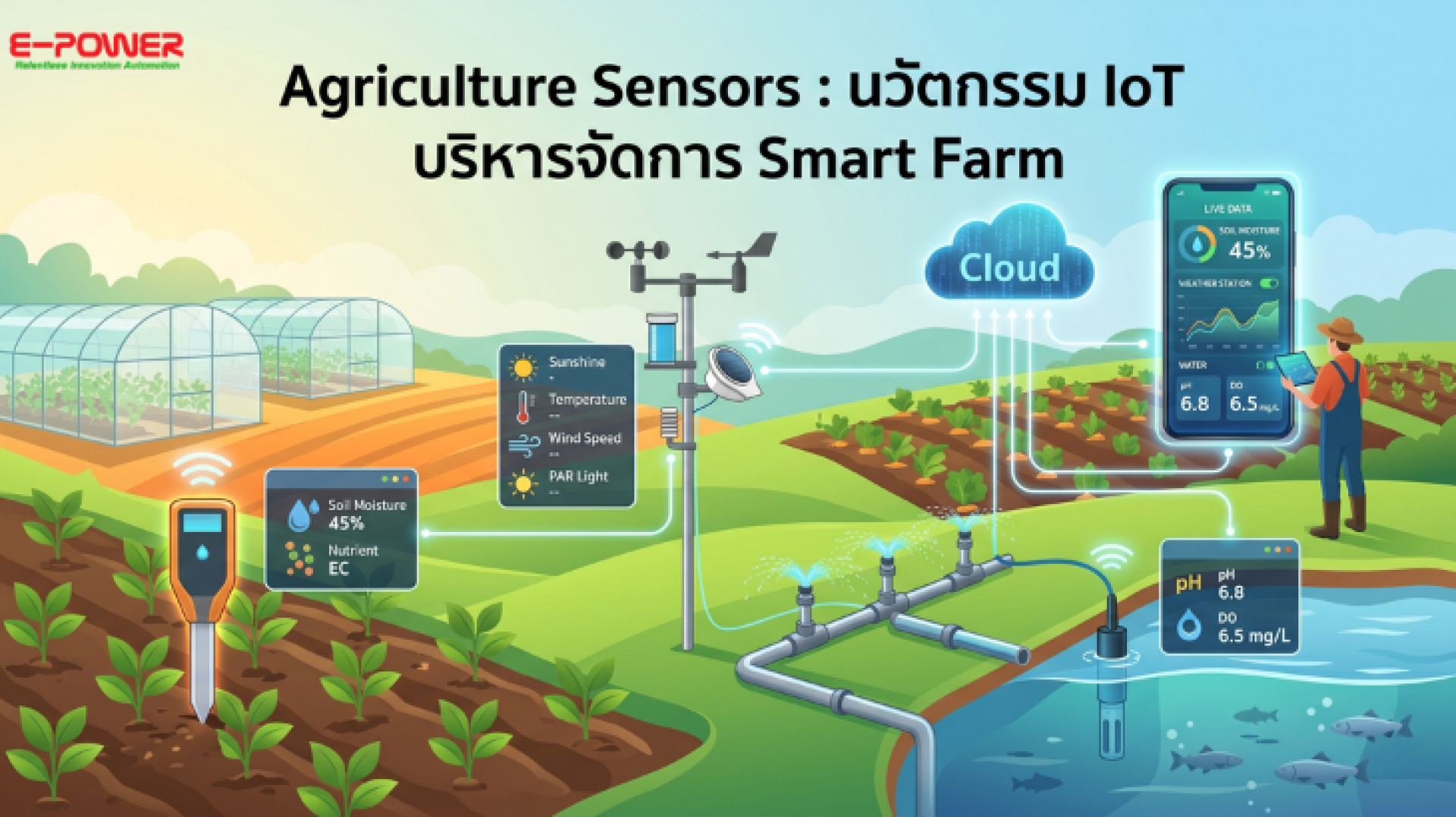
Precision farming today is no longer about taking risks or playing guessing games; it is completely driven by 24/7 accurate data. Think of Agriculture Sensors as the smart "eyes and ears" buried in critical spots around your farm. They constantly collect data on your soil, water, and weather, streaming it directly to a central control unit. This allows farm owners and managers to make instant, pinpoint decisions on when to toggle water valves, adjust fertilizer dosing, or run air aerators down to the exact minute.
3 Essential Agriculture Sensor Setups That Every Modern Smart Farm Needs
To get your farm running smoothly on autopilot, here are 3 industrial-grade sensor systems you should install:
1. Soil & Nutrient Monitoring
- How well your crops grow depends directly on the moisture and nutrients sitting right at their roots. Installing a multi-parameter soil probe like the Rika RK520-02 allows the system to read exactly how wet the soil is, what the temperature is, and how much fertilizer or salt content (EC) is in the root zone. This live data signals a diaphragm pump to dose water and nutrients based on what the plants actually need right then. This stops over-watering entirely, putting an end to wasted water and drastically cutting down your fertilizer bills.
2. Weather & Solar Monitoring
- Sunlight and rainfall dictate how much water your plants drink and how fast they grow. Setting up an all-in-one Weather Station (such as the Rika RK900 Series ) alongside a solar radiation sensor (Rika RK200-03) and a PAR sensor lets the system calculate exactly how much water has evaporated under the sun today. The control panel can then automatically adjust watering times or signal motors to open and close greenhouse shading cloths based on real-time sun and rain, preventing withered crops or waterlogged roots.
3. Water Quality Monitoring
- For commercial fish and shrimp farms (Smart Aquaculture), water quality is everything—it determines whether your livestock thrives or perishes. Installing heavy-duty water quality sensors to monitor crucial levels like pH (using the Supmea SUP-PH5011) and dissolved oxygen (using optical DO sensors like the Renke RS-DO-* or Supmea SUP-DM2800) provides an early warning before your fish shock or face toxic ammonia buildup. The system can immediately trigger paddlewheels and air pumps to fix the water, preventing devastating mass die-offs.
Build a Complete Smart Farm Ecosystem with E-Power Service
Picking out high-accuracy sensors is just the first step; getting all your equipment to talk to each other and react intelligently is where the real magic happens. E-Power Service Co., Ltd. is ready to act as your expert guide and system integrator to design and install the perfect automated layout for your farm business.
Our engineering team can pull live digital streams from your soil probes, water sensors, and weather stations from world-class brands you trust (like Rika, Supmea, and Renke) and link them directly into high-speed control boxes running on industrial-standard CODESYS PLC software. This lets us build ultra-reliable, automated watering and fertilizer loops. On top of that, we utilize advanced AI technology to support our PLC programming and analyze farm data trends. Everything is pushed safely to the cloud and displayed on the E-power IoT Platform, letting you check your environmental dashboard, receive urgent emergency alerts on your smartphone, and manage your entire farm from anywhere in the world.
Upgrade your farm to precision digital standards. Lower your risks, increase your yields, and keep your operating costs fully under control. Explore our industrial instrumentation lineup and chat with our automation design engineers today at www.epower.co.th.
FAQ: Agriculture Sensors
Q: Why is an RS485 Modbus RTU wiring system better than standard wiring for farms?
A: RS485 Modbus RTU is a factory-grade communication standard that allows you to run sensor wires for up to a kilometer without any data drops. It is highly resistant to electrical noise coming from large water pump motors, making it perfect for wide farmlands, and lets you daisy-chain multiple sensors into a single controller port easily.
Q: Can real-time sensor data actually lower my farm's monthly expenses?
A: Yes, absolutely. When sensors report data around the clock, you can program the automation system to run water pumps, aerators, or fertilizer injectors only when absolutely necessary. You no longer have to leave machines running all day long like before, which saves a massive amount of water and electricity while eliminating the need for manual labor to turn valves.
Q: Why are Optical-type dissolved oxygen sensors a better investment than old chemical probes?
A: Optical DO sensors (which use a fluorescence light method to read oxygen) are incredibly durable. They easily resist dirt, slime, and harsh pond gases like hydrogen sulfide. Most importantly, they do not require constant chemical refills or frequent membrane replacements like old systems do, saving you a fortune in maintenance cash and hours of cleanup time in the long run.