Automatic Weather Station vs. Manual Station: What Is the Difference?
An Automatic Weather Station and a manual station serve as critical tools for gathering environmental data that influences almost every activity in our daily lives. Whether it is farmers relying on precise forecasts to schedule crop planting, pilots monitoring wind conditions for aviation safety, or scientists analyzing long-term climate records to study global warming—both systems collect crucial data, yet they operate through entirely different methodologies. This article provides a comprehensive comparison of their differences and explains why weather station data collection methods matter to your organization.
What Is a Manual Weather Station?
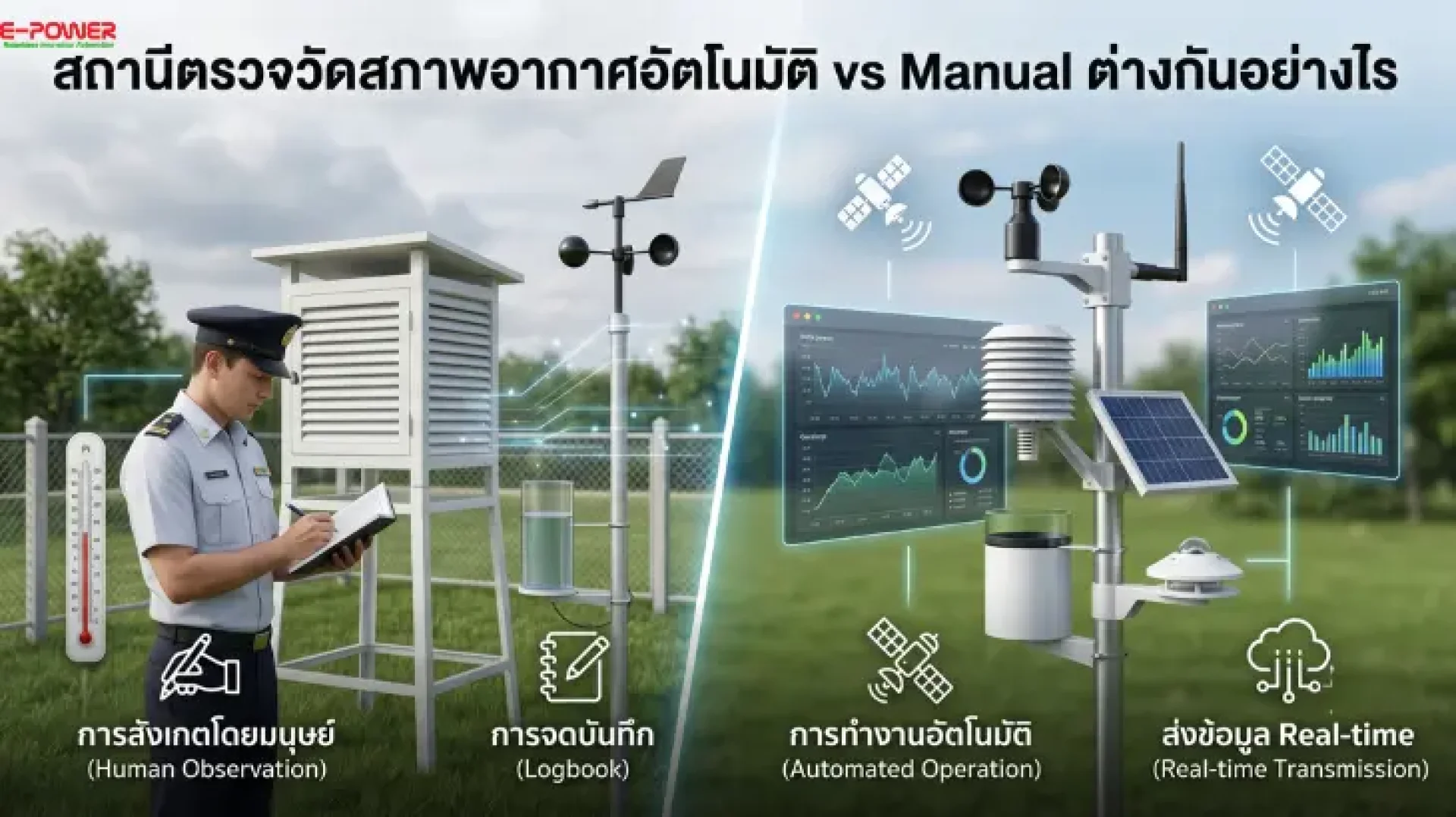
A manual weather station is a designated area where meteorological instruments are read by trained personnel who physically inspect and record measurements at specific times, day and night. They log several key variables, including temperature, rainfall, wind speed, and cloud cover. These manual readings are then forwarded to national meteorological agencies or archived for scientific research.
Manual stations have been in service for over a century and remain in use globally today. According to the World Meteorological Organization (WMO), tens of thousands of manual weather stations continue to operate worldwide. Their usage is particularly widespread in rural areas or developing regions where electrical grids and stable internet infrastructure are limited.
The primary instruments at a manual station include thermometers sheltered within a Stevenson screen, rain gauges, wind vanes, and barometers. Observations are typically conducted at standard intervals, such as 6:00 AM, 12:00 PM, and 6:00 PM, which inherently introduces data gaps during the unmonitored hours between readings.
What Is an Automatic Weather Station?
An Automatic Weather Station (AWS) (also referred to as an automatic meteorological station) is an integrated assembly of automated weather sensors that monitor environmental conditions autonomously without requiring an on-site human operator. The connected sensors feed digital data directly into a central data logger, which stores the variables. In modern setups, this data is instantly transmitted in real time to a remote central computer or a secure cloud server.
An automatic meteorological station samples and captures environmental data at fixed, high-frequency intervals—ranging from every few seconds to every 1 minute as configured. This continuous tracking delivers a highly detailed, high-resolution view of diurnal weather variations for meteorologists and analysts.
These automated stations are extensively deployed across diverse sectors, including commercial airports, agricultural farmlands, solar power plants, research installations, and highway networks. Operating 24/7 in all weather extremes without requiring human presence makes them uniquely suited for remote or hazardous locations, such as high-altitude mountains, deserts, and offshore platforms.
Typical Sensors Found in an Automatic Weather Station
- Anemometer: Measures wind speed.
- Wind Vane: Measures wind direction.
- Temperature and Humidity Sensor: Measures ambient atmospheric conditions.
- Tipping Bucket Rain Gauge: Measures precise rainfall accumulation.
- Solar Radiation Sensor: Measures sunlight intensity and solar irradiance.
- Barometric Pressure Sensor: Measures atmospheric pressure.
How Weather Station Data Collection Works
Reliable weather station data collection is the absolute foundation of meteorology. Whether a station is automated or manual, the ultimate goal remains identical: capturing accurate, consistent, and dependable environmental data over extended periods.
- In a Manual Station: A trained observer manually inspects each instrument at designated hours, recording numbers onto a physical logbook or data sheet. This data is then communicated to a central database, typically via telephone, radio, or manual internet logging. The accuracy of the dataset heavily relies on the observer's attentiveness and the baseline quality of the legacy instruments.
- In an Automatic Weather Station: Electronic sensors actively scan and read environmental variables around the clock. An industrial data logger aggregates and preserves these figures, with most loggers capable of buffering weeks or months of data internally. The system automatically routes the logged files to a central server via GSM, satellite link, or internet connections. Furthermore, advanced systems can be programmed to trigger automated alerts if parameters breach pre-set safety thresholds—proving highly effective for flood routing and severe storm monitoring.
According to data published by the WMO, automatic meteorological stations now comprise the vast majority of the global surface observation network. Recent evaluations indicate that over 11,000 land-based synoptic stations worldwide incorporate automation, marking a definitive global transition away from purely manual observations.
Pros and Cons of Each Type
- Automatic Weather Station – Advantages
- Captures weather data continuously 24 hours a day, 7 days a week.
- Can be deployed in dangerous, remote, or highly inaccessible terrain.
- Lowers long-term operational expenditures (OPEX) by minimizing staff reliance.
- Enables instantaneous, real-time data streaming over the internet.
- Eliminate human error and subjective discrepancies in dataset readings.
Automatic Weather Station – Disadvantages
- Higher initial upfront capital expenditure (CAPEX) for instrumentation.
- Sensors mandate routine calibration cycles to guarantee ongoing field precision.
- Total power grid failures can disrupt data tracking if backup systems fail.
Manual Weather Station – Advantages
- Low initial equipment and procurement costs.
- Human observers can note local anomalies or qualitative weather events visible nearby.
- Operates independently of local electrical grids or cellular internet availability.
Manual Weather Station – Disadvantages
- Strictly limited to a few data points per day.
- Inherent risks of human error or inconsistency between different observers.
- Cannot be deployed in extreme, hazardous, or hyper-isolated areas.
- Carries high, ongoing operational staffing costs over its lifespan.
Why Are Automatic Weather Stations Becoming More Popular?
Industrial and agricultural operations mandate precise environmental intelligence now more than ever, as climate change accelerates weather volatility and unpredictability. Consequently, highly granular data logging must be deployed across broader networks.
In smart agriculture, online sensors provide farmers with actionable insights regarding optimized irrigation windows or early warning signs of crop-damaging frost. Similarly, real-time solar radiation data is heavily utilized in solar energy plants to help facility operators accurately predict and manage power generation outputs. For highway monitoring networks, automated stations track critical roadway criteria—such as black ice formation, dense fog, or crosswinds—allowing highway departments to broadcast rapid safety alerts to commuters.
The implementation of the Internet of Things (IoT) has made automatic weather stations significantly smarter. Modern sensors integrate natively with cloud-based management software, empowering operators to monitor field assets seamlessly via a smartphone dashboard or PC from any location worldwide. This technological progression has democratized professional-grade weather station data collection, making high-precision environmental analytics accessible to small businesses, educational institutions, and local municipalities.
Conclusion
Both automatic and manual weather stations have contributed significantly to our historical understanding of global atmospheric patterns. Legacy manual stations preserve decades of invaluable climate records. However, as modern industry demands faster data delivery, tighter polling intervals, and broader geographic tracking, the automatic meteorological station has established itself as the global standard for modern industrial telemetry.
Whether managing an agricultural asset, a utility-scale solar facility, a transport network, or a river basin—an automatic weather station provides the toolset required to log dependable data 24/7/365 without demanding expensive on-site labor. As advanced sensor technology matures and hardware costs decline, the operational efficiency gap will continue to shift decisively in favor of automated systems. If your organization is ready to engineer, specify, or deploy an intelligent environmental instrument network, contact the expert automation engineering team at E-Power Service for professional consultation and deployment support.