What is a Multiparameter Water Quality Probe? Single-Head Multi-Value Sensor Perfect for River and Canal Monitoring
Multiparameter Water Quality Probe: What is it, how does it measure multiple water quality parameters in a single head, and why is it ideal for monitoring rivers and canals? In the past, water quality monitoring required separate sensors for each individual parameter, leading to complex installations, high maintenance costs, and difficult upkeep. Today, multiparameter water quality sensor technology has revolutionized this process by integrating multiple sensor types into a single probe. By submerging just one device into the water, you can gather complete real-time data. This article will explain what this device is, how it operates, its ideal applications, and how to choose the right model.
What is a Multiparameter Water Quality Probe and How Does It Work?
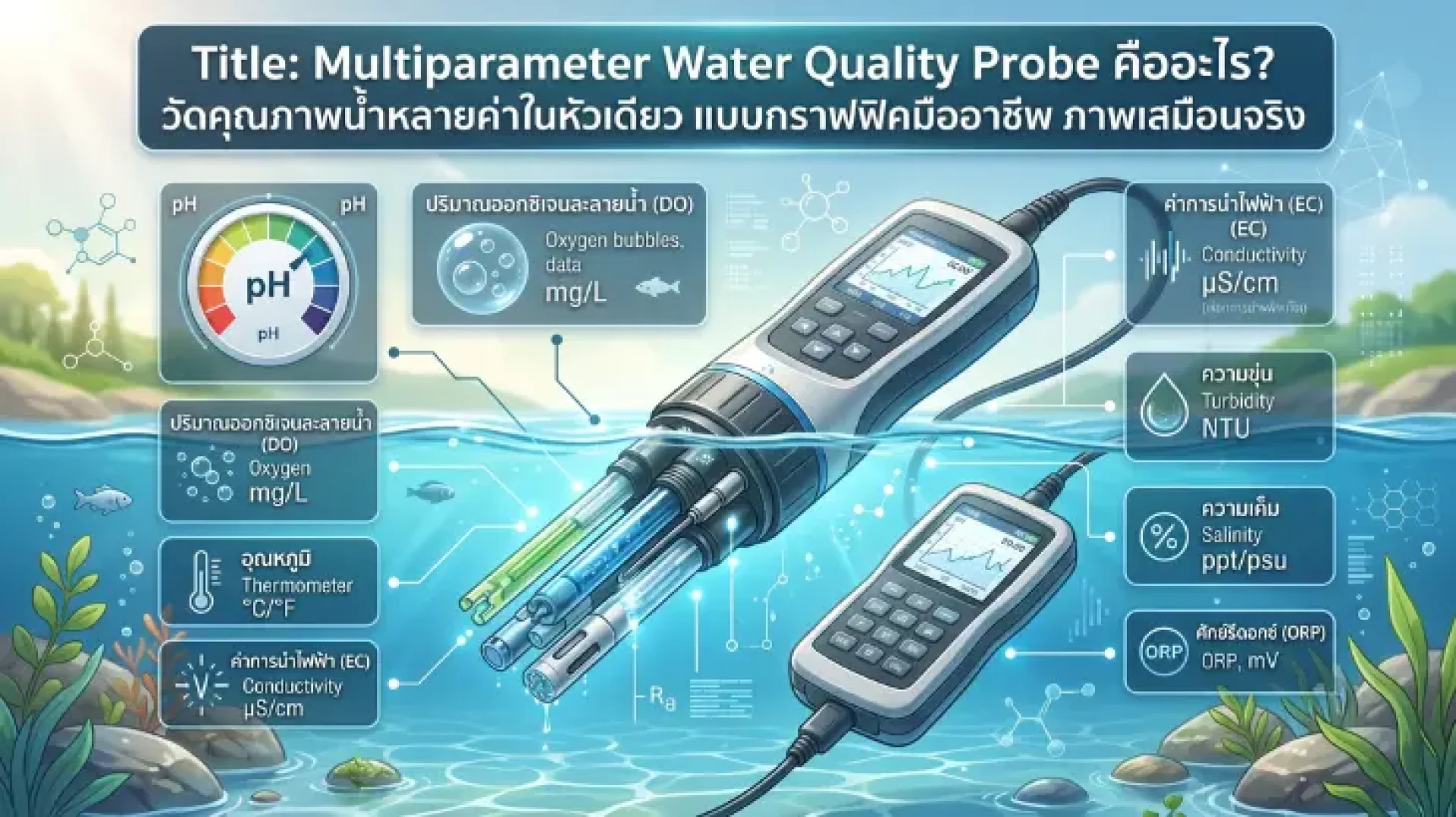
A Multiparameter Water Quality Probe is an advanced digital sensor that combines multiple water quality measurements into a single probe head. It can simultaneously measure critical parameters such as pH, Dissolved Oxygen (DO), Conductivity, Turbidity, ORP, Temperature, and Salinity in real time.
The probe is designed with individual slots to house multiple mini-sensors within a unified structure. When submerged, each sensor takes simultaneous readings and converts them into digital signals. These signals are transmitted via protocols like Modbus RS485 or SDI-12, allowing direct connection to Data Loggers, PLCs, HMI screens, or cloud-based IoT platforms for remote, real-time tracking.
A major advantage of this digital technology is that calibration data is stored directly inside the sensor head. This allows for convenient field calibrations or sensor replacements, minimizing user errors and saving maintenance time.
What Parameters Can It Measure?
Depending on the specific model and selected sensor configuration, a multiparameter probe typically measures the following foundational parameters:
- pH: Measures the acidity or alkalinity of the water.
- Dissolved Oxygen (DO): Measures the amount of oxygen dissolved in water, a vital indicator of aquatic ecosystem health.
- Conductivity / Salinity / TDS: Measures electrical conductivity, salt content, and total dissolved solids.
- Turbidity: Measures suspended sediment levels, crucial for raw water and wastewater quality assessment.
- ORP (Oxidation-Reduction Potential): Indicates the sanitizing or oxidizing capability of the water.
- Temperature: Used for automatic temperature compensation and general environmental evaluation.
Some advanced probe models can also measure Chlorophyll, Blue-Green Algae (BGA), Ammonium Nitrogen, or organic indicators such as COD, BOD, and TOC.
Why Choose a Single-Head Multiparameter Probe?
Simple Installation: Submerge a single probe to get all readings without drilling or mounting multiple separate sensors.
- Total Cost Efficiency: More economical compared to purchasing multiple individual sensors, cables, and transmitters.
- Easy Maintenance: Clean and calibrate everything at one single point, drastically reducing operational downtime.
- Consistent, Accurate Data: All parameter readings originate from the exact same water pocket at the exact same moment.
- IoT Ready: Direct RS485/SDI-12 output seamlessly integrates into online cloud monitoring platforms.
Ideal Applications
1.River, Canal, and Natural Water Resource Monitoring
Used to track the overall health of natural aquatic ecosystems, detect sudden environmental changes, and provide data support for water resource management and environmental protection agencies.
2. Aquaculture (Shrimp and Fish Farming)
Tracks real-time DO, salinity, temperature, and pH levels in commercial ponds. This helps farmers reduce aquatic mortality risks and maximize feeding and growth efficiency.
3. Wastewater Treatment and Municipal Tap Water Systems
Monitors influent and effluent water quality in treatment plants, tracks open reservoirs or raw water sources, and ensures precise process control.
How to Choose the Right Multiparameter Probe
Number and Type of Parameters: Select a probe head that supports the exact parameters required for your specific project.
- Communication Protocols: Ensure compatibility with Modbus RS485 or SDI-12 to match your existing PLC, HMI, or IoT systems.
- Power Consumption: For remote field setups running on solar or battery power, opt for low-power consumption models.
- Durability: Check the body materials and waterproof ratings (e.g., IP68) designed for long-term submersion.
- Monitoring System Integration: Confirm cloud compatibility for remote smartphone monitoring and alert notifications.
Recommended Industrial Sensors
AQUALABO Probe TRIPOD
A digital multiparameter probe that allows you to install up to 3 sensors simultaneously. Choose from pH, ORP, Temperature, DO, Turbidity, Conductivity, Salinity, and TDS. It supports RS485 and SDI-12 protocols, making it perfect for portable field testing or permanent online monitoring in rivers, canals, and aquaculture ponds.
Online Multi-parameter Water Quality Sensor
An advanced digital sensor hub that connects up to 6 digital sensors simultaneously. It supports optical fluorescent DO, 4-electrode conductivity, turbidity, pH, ORP, chlorophyll, and ammonium nitrogen.
AQUALABO Digital Sensor PHEHT
A heavy-duty digital sensor measuring pH, ORP, and temperature. Built with long-life electrodes and Modbus RS485 communication, it can be used standalone or integrated into the Tripod platform.
Explore premium digital water quality sensors for your automation systems at: www.epower.co.th
Frequently Asked Questions
Q: What is a Multiparameter Water Quality Probe?
A: It is an integrated water quality sensor that combines multiple parameters—such as pH, DO, conductivity, and turbidity—into a single probe head to deliver real-time, digital data concurrently.
Q: How many parameters can a single probe measure?
A: It depends on the model. For example, the AQUALABO Tripod holds up to 3 sensors at once, while certain advanced online models can support up to 6 sensors simultaneously.
Q: Is it suitable for river and canal water testing?
A: Yes, it is highly suitable. It is specifically engineered for long-term immersion, provides real-time data tracking, and connects easily with IoT telemetry for remote environmental monitoring.
Q: How does the sensor transmit data to a PLC or Cloud platform?
A: Most professional sensors utilize Modbus RS485 or SDI-12 protocols, allowing them to connect directly to PLCs, HMI systems, Data Loggers, or cloud-based IoT controllers.