What is an Ammonia and Nitrate Sensor? Real-Time Nitrogen Waste Monitoring for Aquaculture Ponds
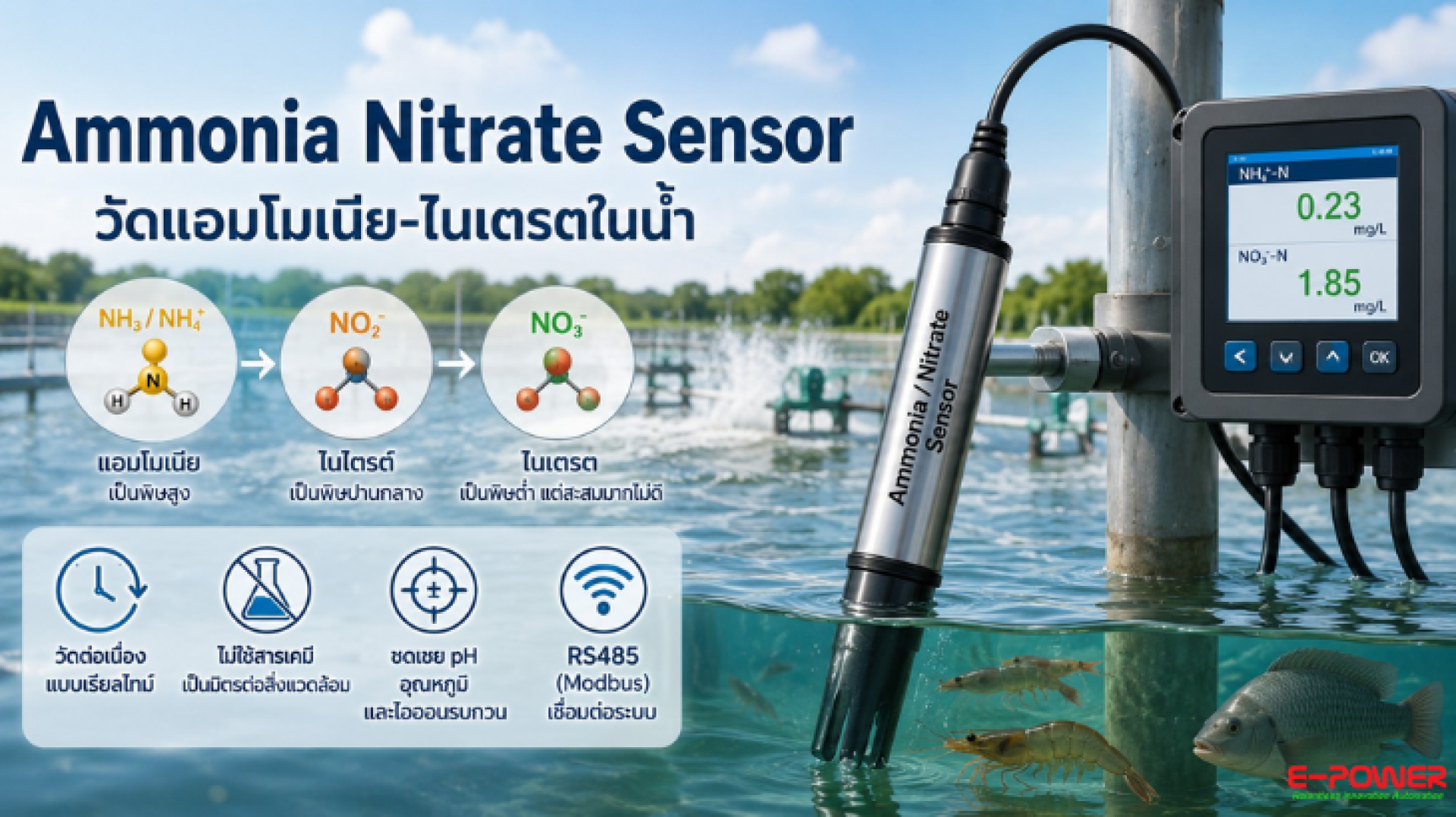
Ammonia / Nitrate Sensor: What is it, how does it track toxic nitrogen waste, and why is it essential for aquaculture pond management? In fish and shrimp farming ponds, unconsumed feed and organic waste decompose into ammonia, which is highly toxic to aquatic life even at low concentrations. Specialized bacteria then convert this ammonia into nitrite and eventually nitrate through a process called nitrification. If this biological system loses balance, these toxic chemical compounds accumulate rapidly, threatening your entire yield. Installing a continuous online Ammonia/Nitrate Sensor is the key to modern water quality management, allowing farmers to prevent toxic spikes, lower aquatic stress, and eliminate mortality risks. This article covers how these sensors work, safe target levels, and the best industrial models for your farm.
Why Are Ammonia and Nitrate Levels Critical for Aquaculture?
Un-ionized ammonia (NH3) is extremely toxic to fish and shrimp because it directly damages their gills and disrupts their oxygen exchange capabilities. On the other hand, nitrate (NO3-) is significantly less toxic, but its long-term accumulation can stunt aquatic growth and trigger harmful algae blooms. Monitoring both parameters in real time allows farm operators to make precise, data-driven decisions on when to exchange water, reduce feeding rates, or optimize biological filtration systems.
Summary of the Nitrogen Cycle in Aquaculture Ponds:
- Ammonia (NH3/NH4+): Generated from waste and uneaten feed. Highly toxic, especially the un-ionized NH3 form.
- Nitrite (NO2-): The middle stage of nitrogen decomposition. Moderately toxic.
- Nitrate (NO3-): The final stage of the nitrification cycle. Low toxicity, but harmful if allowed to accumulate heavily.
How Does an Ammonia/Nitrate Sensor Work?
Modern industrial Ammonia/Nitrate Sensors primarily utilize the Ion Selective Electrode (ISE) testing principle. This technology directly measures the concentration of ammonium ions (NH4+) or nitrate ions (NO3-) in the water column. Because it operates completely online without using hazardous chemical reagents, it is highly eco-friendly and perfectly suited for continuous, real-time data collection.
Premium-grade sensors feature automatic interference compensation—such as adjusting for potassium ions, pH shifts, and temperature fluctuations—to ensure maximum data accuracy. They output data via the Modbus RS485 digital protocol, making it incredibly simple to connect the probe directly to PLCs, HMI screens, or cloud-based IoT networks for remote monitoring and instant mobile alerts.
Safe Baseline Standards for Aquaculture Ponds
Safe water parameters depend on the specific aquatic species, water pH, and temperature. The following values serve as general industry reference points:
- Total Ammonia Nitrogen (TAN): Should be kept as low as possible, generally recommended under 1.0 mg/L.
- Un-ionized Ammonia (NH3): Must be kept below 0.05 mg/L due to its high toxicity.
- Nitrate (NO3-): Low toxicity, but should be monitored closely to prevent excessive accumulation.
Note: The percentage of highly toxic un-ionized ammonia (NH3) increases as water pH and temperature rise. Therefore, measuring ammonia alongside pH and temperature provides the most accurate assessment of water safety.
Core Benefits of Installing Ammonia-Nitrate Sensors
- Real-Time Monitoring: Instant tracking of toxic wastes without waiting for slow laboratory test results.
- Precision Water Exchange: Exchange water only when strictly necessary, significantly lowering water and pumping energy costs.
- Optimized Feed Management: Easily adjust daily feed portions to minimize uneaten food, the root cause of ammonia build-up.
- Biofilter Health Check: Verify that your system's biological nitrification process is functioning normally.
- Reduced Mortality Risks: Prevent sudden mass die-offs caused by unexpected toxic chemical accumulation.
Other Ideal Industrial Applications
Beyond commercial shrimp and fish farming ponds, Ammonia/Nitrate sensors are heavily utilized in Recirculating Aquaculture Systems (RAS), municipal wastewater treatment plants to verify nitrogen removal efficiency, river and canal environmental monitoring, and water purification plant source control.
How to Choose the Right Ammonia Nitrate Sensor
- Target Parameters: Determine whether your system requires standalone ammonia tracking, nitrate tracking, or a dual-monitoring solution.
- Interference Compensation: Always choose sensors with integrated pH, temperature, and ion compensation to guarantee precise data.
- Reagent-Free Operation: Opt for ISE or optical designs that run continuously without chemical reagents to minimize long-term operational costs.
- Digital Signal Output: Verify RS485 Modbus compatibility for seamless integration into existing PLC, HMI, or IoT networks.
- Maintenance Simplicity: Look for rugged sensor designs that allow for easy field cleaning and calibration.
Recommended Industrial Sensor Models
Online Ammonia Nitrogen Sensor
An advanced ISE-based sensor designed to measure ammonium ions with automatic pH, temperature, and optional potassium ion compensation. Provides continuous, real-time tracking entirely without chemical reagents.
Online Nitrate Sensor
An eco-friendly, chemical-free nitrate sensor engineered for direct immersion. Delivers reliable, continuous online readings for long-term field deployment.
Remond RMD-1008A Multiparameter Controller
A heavy-duty, 24-hour online monitoring controller that supports up to 12 digital sensors simultaneously. Compatible with both ammonium and nitrate ISE probes, alongside pH, DO, and conductivity sensors. Features built-in RS485 outputs and physical relays for automated equipment control.
Find professional water automation and nitrogen sensors for your farm at: www.epower.co.th
Frequently Asked Questions
Q: How does an Ammonia/Nitrate Sensor measure water quality?
A: It utilizes Ion Selective Electrode (ISE) technology to directly measure ammonium or nitrate ion concentrations in real time without chemicals, using built-in pH and temperature compensation for accuracy.
Q: What is the safe ammonia level for an aquaculture pond?
A: Total ammonia should be kept minimal, and highly toxic un-ionized ammonia (NH3) must remain below 0.05 mg/L, depending on your specific species, water pH, and temperature.
Q: What is the main difference between ammonia and nitrate?
A: Ammonia is the primary, highly toxic waste product generated by aquatic life. Nitrate is the final, much less toxic byproduct of the nitrogen cycle, though it can still cause harm if allowed to accumulate.
Q: Do these online sensors require chemical reagents?
A: No, industrial ISE and optical online sensors operate entirely without chemical reagents, enabling continuous monitoring while being highly cost-effective and environmentally friendly compared to lab testing.