What is a Noise Sensor? Real-Time Decibel Monitoring for Factory Environmental Compliance
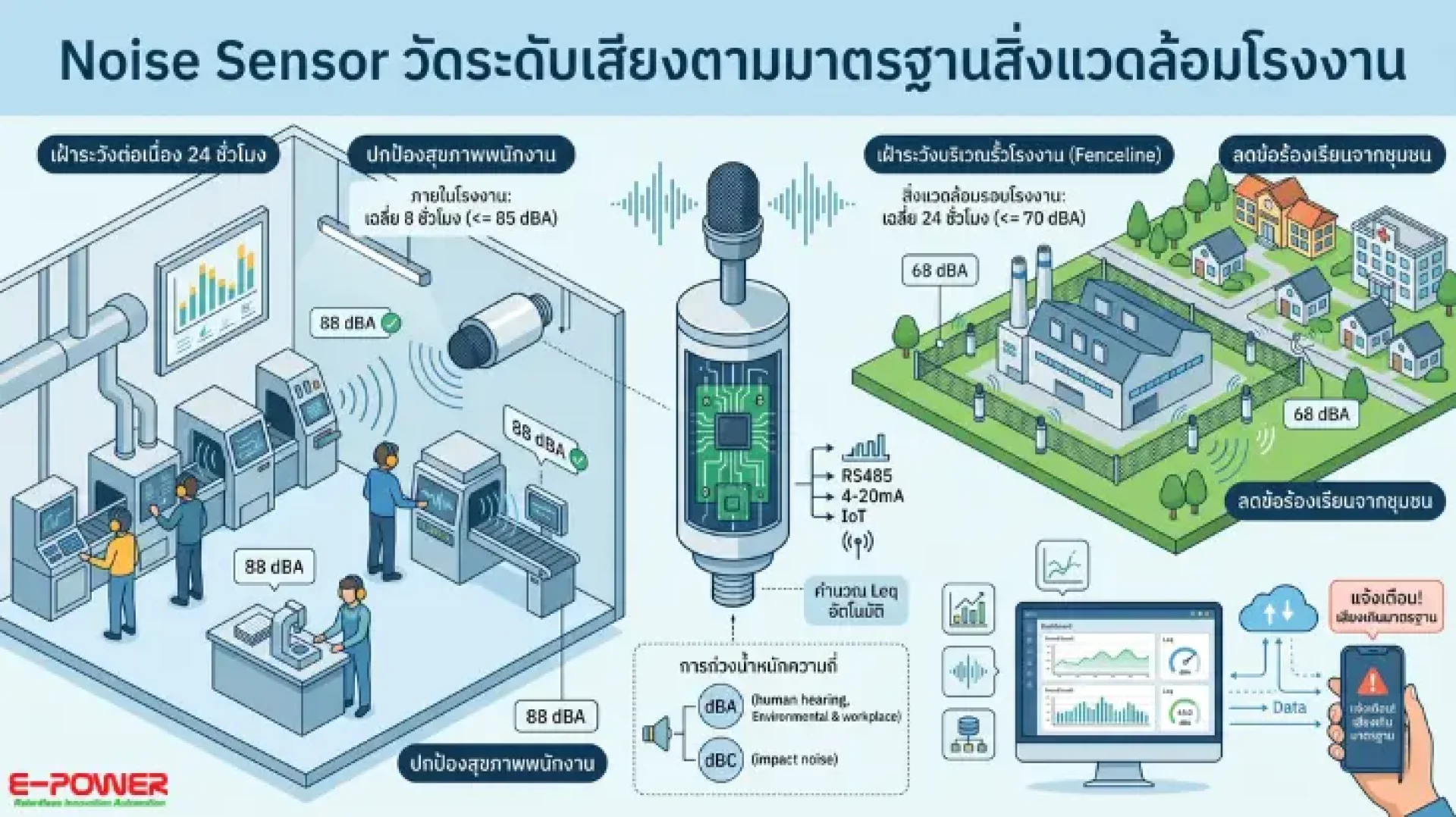
Noise Sensor: What is it, how does it track decibel levels continuously, and why is it essential for factory environmental and occupational health compliance? In industrial facilities and manufacturing plants, excessive noise levels pose a serious threat to workers' health and often lead to community complaints or legal penalties. While periodic testing with handheld sound level meters offers a temporary snapshot, it fails to provide continuous proof of regulatory compliance. Installing an online noise sensor enables 24-hour, real-time monitoring of sound levels in decibels (specifically dBA, adjusted to mimic human hearing). This data-driven approach allows factories to seamlessly manage occupational safety, safeguard employee hearing, and mitigate community noise disputes. This article breaks down how industrial sound sensors work, essential regulatory standards, and how to select the right model for your facility.
How Does a Noise Sensor Work?
At the core of an industrial Noise Sensor is a high-sensitivity condenser microphone designed to convert acoustic sound pressure waves into electrical signals. Internal microcircuitry then processes these signals and applies specific frequency weightings to output accurate decibel values. This processed data is transmitted via digital communication protocols (like Modbus RS485) or analog outputs (4-20mA, 0-5V, 0-10V) directly to logging and automation displays.
Understanding Frequency Weighting and Metrics:
- dBA (A-weighted): Replicates the human ear's frequency response. It serves as the standard metric for workplace safety and community environmental noise tracking.
- dBC (C-weighted): Offers a flatter response to low-frequency sounds. It is primarily used to analyze impact noise or heavy machinery thuds.
- Leq (Equivalent Continuous Sound Level): Represents the average sound energy over a specific period. This accumulated average is the primary metric referenced in environmental and labor laws.
Key Noise Level Standards You Must Know
While exact regulatory mandates fluctuate based on local ministerial codes, industrial limits generally fall into two primary categories:
- General Environmental Noise (Community Fencelines): An average 24-hour continuous level (Leq 24h) not exceeding 70 dBA, with absolute peak limits capped around 115 dBA.
- Occupational Workplace Noise (Worker Safety): An 8-hour time-weighted average exposure limit capped at 85 dBA.
Because statutory laws judge compliance based on continuous averages (Leq) rather than single momentary spikes, deploying an online digital sensor offers an overwhelming advantage over manual handheld sampling.
Core Benefits of Online Noise Monitoring Systems
- Continuous 24-Hour Safeguards: Captures an uninterrupted audio log, serving as concrete data proof for regulatory inspections.
- Automated Leq Calculations: Instantly calculates time-weighted sound averages to match the exact compliance parameters used by government auditors.
- Instant Threshold Alerts: Triggers real-time notifications or physical stack lights the moment sound levels breach safe limits, enabling rapid mitigation.
- Enhanced Worker Protection: Proactively protects field operators from occupational noise-induced hearing loss.
- Mitigated Community Disputes: Placing sensors along the factory fenceline provides the objective data needed to handle neighborhood noise disputes fairly.
Ideal Industrial and Environmental Applications
Industrial sound sensors are widely deployed for monitoring indoor factory production floors, tracking fenceline sound propagation into neighboring communities, logging construction site boundaries, building smart city environmental monitoring nodes, and maintaining noise compliance in restricted zones like hospital and school perimeters.
How to Choose the Right Noise Sensor
- Measurement Range: Ensure the sensor covers your facility's operational sound spectrum (e.g., 30–120 dB).
- Accuracy and Evaluation Metrics: Look for devices supporting proper dBA weighting that offer industrial-grade precision (e.g., plus/minus 0.5 dB).
- Signal Output Compatibility: Match the sensor's output (RS485 Modbus or 4-20mA/0-10V analog) to your existing PLC, HMI, or IoT gateways.
- Weatherproof Enclosures: For outdoor fenceline deployment, select rugged housings rated at IP65 or higher to survive rain, sun, dust, and wind.
- Integration Capability: Choose sensors that seamlessly connect to data loggers and cloud architectures for automated reporting.
Recommended Industrial Sensor Models
- A high-precision sound sensor equipped with a premium condenser microphone. It offers a measurement range of 30–120 dB with an accuracy of plus/minus 0.5 dB and a fine resolution of 0.1 dB. Supporting diverse output types including RS485 Modbus, 4-20mA, and 0-10V, it is the ideal solution for tracking indoor machinery zones and integrating into facility management grids.
- An outdoor-grade sound monitoring instrument protected by a heavy-duty stainless steel enclosure. Featuring an IP65 waterproof rating, it is explicitly built to withstand harsh weather, solar radiation, and insects. It displays real-time decibel levels, making it the perfect industrial choice for construction boundaries, factory fencelines, and smart city environmental networks.
Building an All-in-One Environmental Network: By feeding digital decibel readings into PLCs, HMI controllers, or cloud architectures like the ecloud platform by E-POWER SERVICE, you can log historical Leq trends, auto-generate compliance reports, and receive instant smartphone alerts. This system can also be combined with PM2.5 dust and gas sensors to manage your facility's entire environmental compliance portfolio through a single dashboard.
Frequently Asked Questions
Q: How does a Noise Sensor calculate sound levels?
A: It utilizes a high-sensitivity condenser microphone to turn sound waves into electrical currents. Internal processors apply frequency weightings (typically dBA) to output decibel values via RS485 or analog signals.
Q: What is the main difference between dBA and dBC?
A: dBA filters frequencies to match how human ears hear sound, making it the legal standard for industrial workplaces and community settings. dBC captures low-frequency sounds, making it suitable for evaluating heavy impact machinery.
Q: What is the maximum allowable noise level inside a factory?
A: For standard 8-hour worker shifts, occupational safety guidelines typically cap average noise exposure at 85 dBA. For general environmental boundaries, the 24-hour continuous average is generally capped at 70 dBA.
Q: Why should a plant deploy an online sensor instead of a handheld meter?
A: Handheld meters only show snapshot numbers. Because environmental laws evaluate continuous sound averages (Leq), online sensors provide the required 24-hour data logs and offer instant alerts during threshold breaches.
Q: Can these decibel sensors be permanently mounted outdoors?
A: Yes, provided you select an industrial model featuring an IP65 or higher weatherproof rating, such as the Renke Industrial Noise Detector, which protects internal components against rain, dust, and wind.