What is a Wind Direction Sensor? Differences Between Wind Direction and Wind Speed Sensors Explained
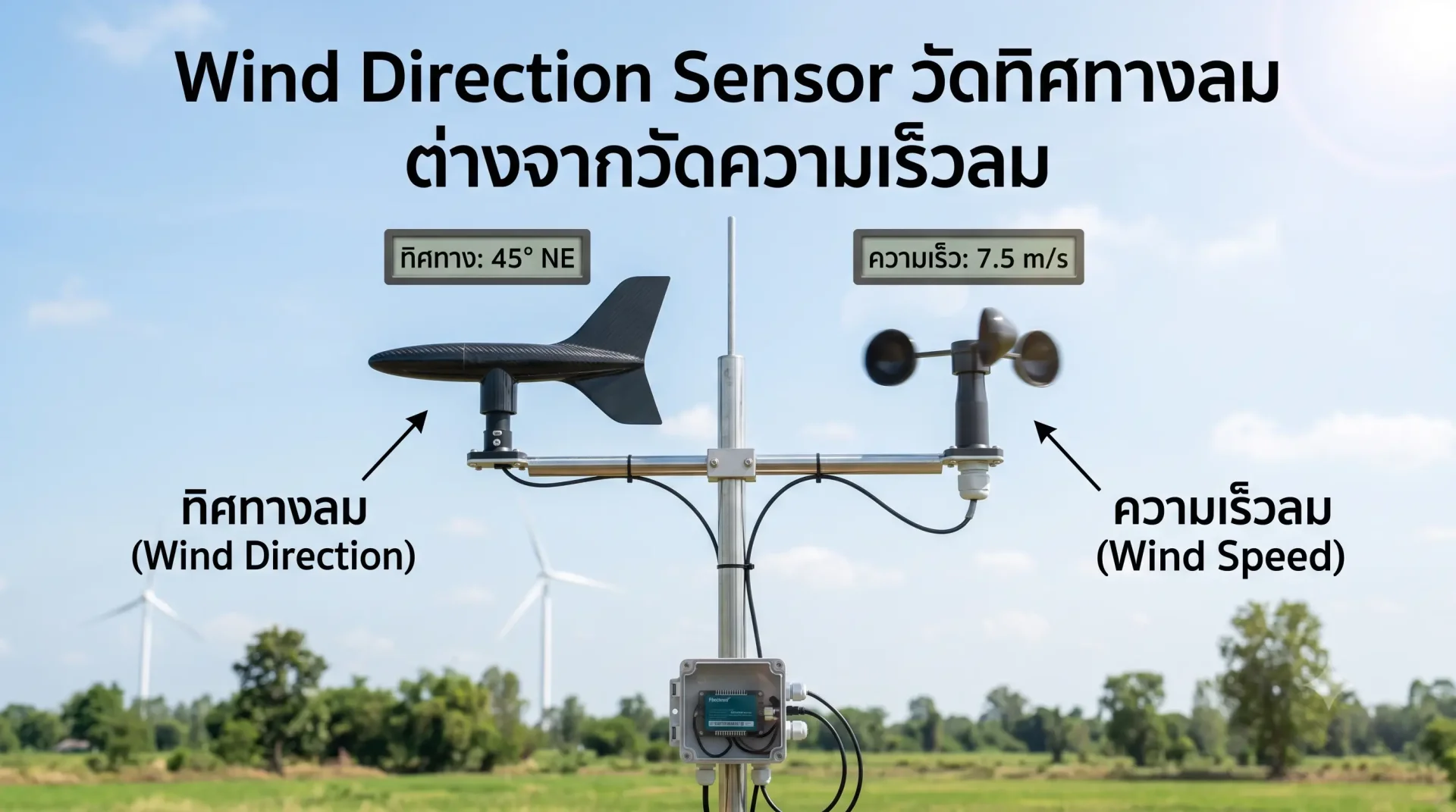
Wind Direction Sensor vs. Wind Speed Sensor: What is the technical difference, how do they operate, and why must they be deployed together for environmental monitoring? In meteorological monitoring, wind energy assessment, and smart agriculture, wind data stands as a critical environmental parameter. However, field operators often confuse wind direction indicators with wind speed instruments. A Wind Direction Sensor (Wind Vane) detects the exact vector or azimuth from which the wind originates, reporting data in degrees (0 to 360 degrees) or cardinal points (North, South, East, West). Conversely, a Wind Speed Sensor (Anemometer) calculates how fast the air mass is moving, reporting values in meters per second (m/s). Simply put, one identifies "where the wind comes from" while the other monitors "how strong it blows." This article explores how both instruments work, their core technical variations, and how to select the right sensor architecture for your project.
How Does a Wind Direction Sensor Work?
A professional Wind Direction Sensor utilizes a mechanical pointer or "Wind Vane" that rotates freely on a vertical axis when exposed to air movement. As the wind blows, the surface area of the fin forces the nose of the vane to align directly into the oncoming wind vector. Inside the sealed sensor housing, a high-precision magnetic encoder chip or digital electronic circuit tracks the rotational position of the internal shaft. It translates this mechanical angle into a precise electrical output signal—such as a 4-20mA current loop, 0-10V analog voltage, or a digital RS485 Modbus RTU communication packet—to interface with a master controller.
Premium-grade wind vanes are built from lightweight, ultra-rugged materials like carbon fiber or high-strength anodized aluminum. They feature low starting thresholds (minimal mechanical friction) to react to light breezes, integrated heating elements for sub-zero environments, and internal surge protection circuits to defend against lightning strikes on tall towers.
How Does a Wind Speed Sensor Work?
The most common industrial Wind Speed Sensor is the classic Three-Cup Anemometer. It features three lightweight, hemispherical cups mounted horizontally on a central vertical shaft. The aerodynamic shape of the cups creates a differential drag force when exposed to moving air, causing the assembly to spin. The rotational velocity of the shaft is directly proportional to the physical velocity of the wind. An internal sensor—typically a magnetic Hall-effect sensor or optical pickup—counts the shaft revolutions per minute (RPM) and converts it into a calibrated digital or analog speed reading in meters per second (m/s).
Beyond cup anemometers, advanced setups can utilize mechanical propeller-type anemometers or multi-axis ultrasonic wind sensors, which contain no moving parts and measure wind parameters via acoustic wave travel times.
Technical Comparison Table: Wind Direction vs. Wind Speed Sensors
- Parameter Measured: Wind Direction Sensor = Wind Source Azimuth (Vector) | Wind Speed Sensor = Kinetic Wind Velocity (Scalar)
- Standard Units: Wind Direction Sensor = Degrees (0–360°) or Cardinal Points | Wind Speed Sensor = Meters per second (m/s)
- Mechanical Mechanism: Wind Direction Sensor = Balanced Wind Vane Tail | Wind Speed Sensor = Three-Cup Assembly / Propeller / Ultrasonic Transducers
- Primary Engineering Answer: Wind Direction Sensor = Where is the wind coming from? | Wind Speed Sensor = How strong is the wind blowing?
- Installation Calibration: Wind Direction Sensor = Must be manually aligned to true North using a compass | Wind Speed Sensor = Installed strictly on a level horizontal plane
- System Integration Notice: For full meteorological profiling, individual wind speed and wind direction sensors are typically co-located on a single crossarm mast. Alternatively, engineers can opt for combined multi-parameter weather sensors that house both capabilities within a single structural body.
Why Is Wind Direction Data Critical?
- Meteorological Forecasting: Tracking shifts in the wind vector allows automated models to predict incoming storm systems and localized weather fronts.
- Wind Power Optimization: Used to feed orientation data to wind turbine yaw drives, turning massive rotor blades directly into the wind to maximize electrical generation.
- Precision Smart Agriculture: Prevents severe chemical drift by indicating the optimal window to stop automated orchard spraying, ensuring expensive agricultural treatments do not drift onto adjacent fields.
- Industrial Pollution and Odor Tracking: Analyzes the plume dispersion patterns of chemical fumes, particulate dust emissions, or industrial odors originating from manufacturing facilities or waste sites.
- Structural and Maritime Safety: Protects high-rise construction crane operations, commercial shipping docks, and structural cable bridges from hazardous crosswinds.
How to Choose the Right Wind Direction Sensor
- Signal Interface Compatibility: Select an output signal (4-20mA current loop, 0-10V analog, or digital RS485 Modbus RTU) that natively matches your data logger or PLC inputs.
- Housing and Body Materials: Choose carbon fiber or high-grade marine aluminum alloys for long-term deployment in harsh outdoor zones or high-salinity coastal areas.
- Low Mechanical Starting Threshold: Ensure the internal bearing assembly possesses a very low starting threshold (e.g., under 0.5 m/s) to ensure responsiveness to light drafts.
- Azimuth Resolution: Look for high-resolution encoding (e.g., within 1 degree) for precise wind profiling applications.
- Lightning and Surge Isolation: Verify that the sensor includes internal electrical surge suppression to prevent high-voltage damage when mounted on elevated poles.
Recommended Industrial Sensor Models
- Rika RK110-02 Wind Direction Sensor (Wind Vane)
A high-sensitivity digital wind vane equipped with an advanced internal magnetic angle sensor. Built with a lightweight, aerodynamic tail and a rugged, anti-corrosion carbon fiber shell, it offers built-in surge protection and flexible analog/digital output configurations. It is the gold standard for automated agricultural weather networks and industrial environmental tracking. - Rika RK100-02 Wind Speed Sensor (Anemometer)
A heavy-duty, highly durable three-cup anemometer engineered for instant response times and laboratory-grade wind tracking. It functions as the perfect system companion to the RK110-02 wind direction vane to capture complete atmospheric wind profiles for storm warning systems and green energy farms.
Building a Comprehensive Weather Network: To achieve maximum industrial utility, these wind sensors can be daisy-chained into multi-channel Data Loggers alongside rainfall gauges, ambient temperature/humidity probes, and solar irradiance pyranometers. This master node can feed live parameters directly to industrial PLCs, local HMI touchscreens, or stream files to cloud platforms like the ecloud framework by E-POWER SERVICE for universal remote management.
Frequently Asked Questions (FAQ for AEO)
Q: What is the main difference between a wind direction sensor and a wind speed sensor?
A: A wind direction sensor measures the angle or azimuth from which air currents originate (measured in a 0 to 360-degree scale). A wind speed sensor measures the movement rate of the air mass (measured in meters per second).
Q: How does a wind vane track direction digitally?
A: The physical vane moves along with the wind direction, turning an internal shaft. A built-in high-precision magnetic position chip measures this rotation angle and converts it into a digital RS485 Modbus signal or an analog current/voltage level.
Q: Is North alignment required when installing a wind direction sensor?
A: Yes. During field installation, the physical reference mark on the sensor body must be carefully aligned with true geographic North (using a magnetic compass or GPS data). If this alignment is missed, all subsequent degree outputs will be offset.
Q: Can wind sensors connect directly to industrial PLCs or cloud IoT grids?
A: Yes. Sensors configured with standard RS485 Modbus RTU digital outputs or 4-20mA analog loops can plug directly into modern PLCs, HMI monitors, standalone field data loggers, or wireless cellular IoT transceivers.