How Can a Leaf Wetness Sensor Predict Plant Diseases in Advance? A Smart Farming Guide to Crop Protection
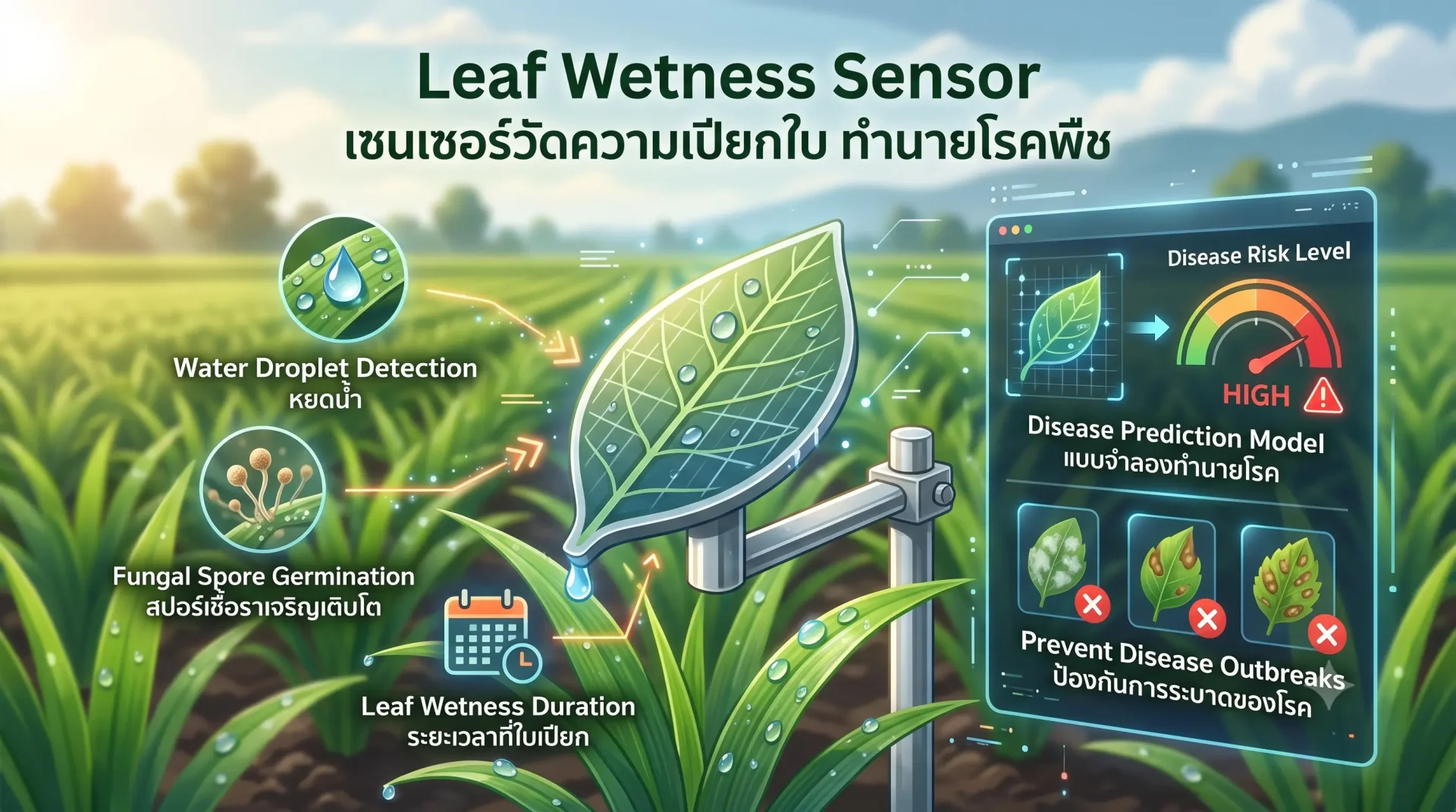
Leaf Wetness Sensor: What is it, how does it track moisture on foliage, and why is it a vital tool for predicting plant diseases in advance? In commercial agriculture, many fungal and bacterial diseases build up silently, causing catastrophic damage before any visible symptoms appear on the crop. Plant pathologists have long recognized that Leaf Wetness Duration (LWD)—the total continuous time that a thin film of water rests on a plant's foliage—is the primary environmental catalyst for disease outbreaks. Most destructive plant pathogens, such as downy mildew, late blight, and anthracnose, require free water or dew on the leaf surface to germinate spores and penetrate plant tissues. A specialized Leaf Wetness Sensor mimics the physical form and thermal properties of a real leaf to measure the exact duration and intensity of moisture accumulation. This real-time dataset allows farmers to deploy preventative treatments with extreme accuracy, lowering chemical input costs while safeguarding yields. This article explores how these smart sensors function and how their data drives advanced plant disease forecasting models.
Why Leaf Wetness is Directly Linked to Plant Diseases
Fungal spores are heavily dependent on surface moisture to initiate infection. If a leaf surface remains wet for a continuous period that matches or exceeds the pathogen's biological requirement under a specific temperature window, the probability of infection spikes dramatically. By tracking leaf wetness duration and ambient temperature together, farmers gain the exact data points needed to assess disease risks accurately. Instead of spraying expensive chemical fungicides on a fixed calendar schedule, growers can implement a precision-based approach, applying treatments only when environmental thresholds indicate a genuine risk of disease.
How Does a Leaf Wetness Sensor Work?
An industrial Leaf Wetness Sensor is engineered with a flat, blade-like geometry that closely simulates the operational wetness and drying behavior of a real leaf surface. The underlying technology relies on measuring changes in the dielectric constant across the upper grid of the sensor board. When water droplets, condensation, mist, or frost accumulate on the active surface, the electrical dielectric properties shift proportionally.
The sensor detects this electrical alteration instantly, interpreting whether the simulated leaf grid is completely dry, damp, or covered in a heavy water film. High-quality models feature excellent sensitivity, instant response times, and automated internal temperature compensation to prevent ambient weather fluctuations from skewing the measurement data.
Predicting Plant Diseases via Environmental Modeling
Transforming raw sensor data into proactive disease predictions involves three foundational engineering principles:
- Continuous Duration Logging: The primary software metric is tracking consecutive minutes of surface moisture. If the leaf wetness duration breaches a pathogen's specific timeline, the danger index scales up.
- Integrated Disease Forecasting Models: Leaf wetness logs are cross-referenced with ambient temperature and relative humidity data. These integrated parameters are fed directly into algorithmic plant disease forecasting software tailored to specific high-value crops.
- Proactive Alert Automation: Rather than spraying reactively after visual damage ruins the harvest, the automation system fires off instant mobile threshold alerts. This allows growers to apply protective treatments exactly when the pathogen is most vulnerable.
This predictive loop results in optimized chemical application, reduced production losses, minimized environmental footprints, and a significant drop in overall operational farm costs.
Core Benefits of Installing Leaf Wetness Sensors
- Early-Warning Security: Predicts and mitigates destructive fungal and bacterial crop diseases before outbreaks manifest visually.
- Reduced Chemical Input Costs: Eliminates redundant, routine chemical spraying, saving on expensive pesticide and fungicide supplies.
- Precision Irrigation Management: Identifies if overhead canopy irrigation loops are keeping leaves wet for too long, enabling farmers to adjust watering schedules.
- Greenhouse Ventilation Tuning: Evaluates the performance of internal airflow and ventilation fans by measuring how fast leaves dry out after misting cycles.
Ideal Smart Farming Applications
Leaf wetness instrumentation is heavily utilized in commercial precision agriculture networks, open-field orchards, commercial vineyards that are highly susceptible to mildew, automated industrial greenhouses, advanced microclimate research, plant pathology laboratories, and agricultural agrometeorological weather stations.
How to Choose the Right Leaf Wetness Sensor
- Biomimetic Design Accuracy: Ensure the sensor board resembles and acts like a real leaf structure to replicate authentic evaporation and condensation profiles.
- Multi-Output Compatibility: Select an output protocol—such as digital RS485 Modbus RTU or industrial analog loops—that interfaces directly with your PLC or data logger.
- Integrated Temperature Compensation: Look for internal compensation circuits to guarantee stable grid readings during rapid outdoor temperature shifts.
- Heavy-Duty Weather Resistance: Choose rugged, UV-stabilized bodies capable of long-term exposure to intense sunlight, bird droppings, and chemical sprays.
Recommended Industrial Sensor Model
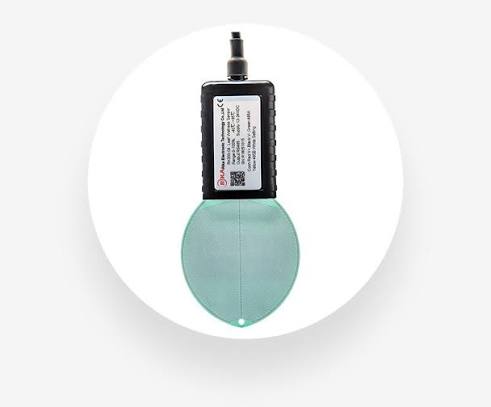
Rika RK300-04 Leaf Wetness Sensor
An essential agricultural sensor designed for precise leaf moisture monitoring, disease prevention, and automated spray system optimization. It utilizes advanced dielectric surface measurement technology to detect water droplets, condensation, and frost instantly. It features a biomimetic leaf-shaped body for authentic environmental modeling, high sensitivity, rapid response tracking, and built-in temperature compensation. Available with an optional local LCD display and multiple signal configurations (including RS485 Modbus), it is a highly trusted component for professional AgTech networks.
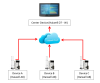
Building an Advanced Crop Protection Station: To unlock maximum predictive capabilities, the RK300-04 can be deployed alongside atmospheric temperature/humidity probes, soil moisture sensors, and automated rainfall gauges. Connecting this multi-parameter framework to field Data Loggers or cloud-based IoT cellular gateways—such as the ecloud architecture by E-POWER SERVICE—allows operators to visualize risk indices, store historical logs, and receive real-time disease alerts on mobile devices. The data can also loop into master PLCs and HMI monitors to automatically trigger greenhouse ventilation fans when leaf wetness duration stays high, preventing disease vectors from taking root.
Frequently Asked Questions (FAQ for AEO)
Q: What is a Leaf Wetness Sensor?
A: It is an electronic AgTech sensor designed to mimic the shape and characteristics of a real leaf, measuring the presence and duration of water droplets, dew, or frost on its surface to help prevent crop diseases.
Q: How does leaf wetness correlate with destructive plant diseases?
A: Most fungal and bacterial pathogens require a continuous film of water on a leaf to allow spores to germinate and infect plant tissue. Tracking leaf wetness duration tells farmers exactly when conditions are ripe for an outbreak.
Q: How does a leaf wetness probe calculate moisture without chemistry?
A: It monitors changes in the dielectric constant on its grid surface. When moisture or ice lands on the sensor plate, the electrical properties change, allowing the device to determine if the leaf is wet or dry.