Dissolved CO2 in Water: Why It Matters for High-Density Aquaculture Ponds
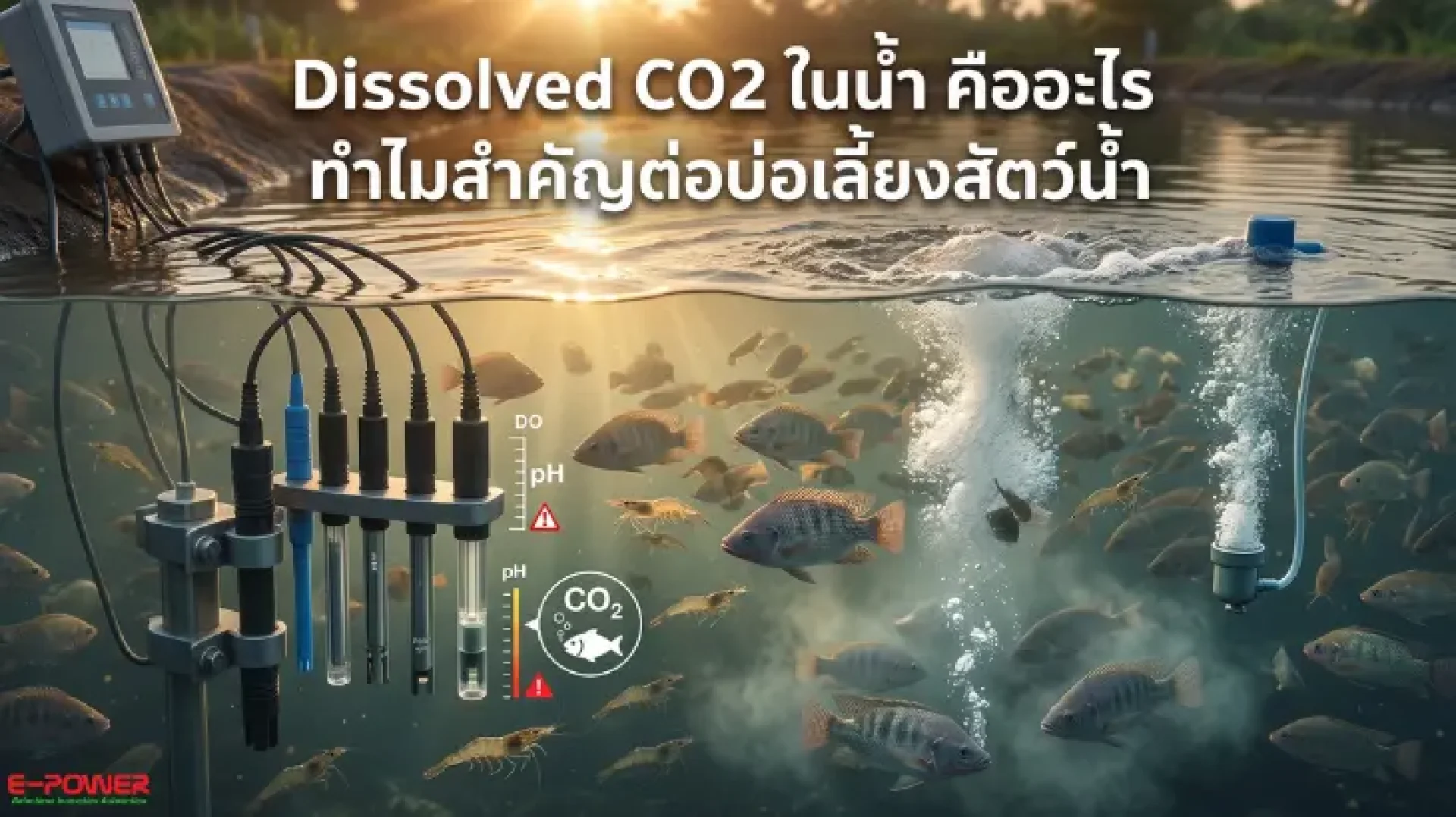
In intensive fish and shrimp farming, most producers focus on dissolved oxygen (DO) and pH. Yet one factor is frequently overlooked: Dissolved CO2 (dissolved carbon dioxide). It is a silent stressor that slows growth, reduces feeding, and increases disease risk in aquatic animals, even when oxygen levels look perfectly fine. This article explains what Dissolved CO2 is, how it affects high-density ponds, safe target levels, and which water quality sensors to use for effective monitoring.
What Is Dissolved CO2 in Water?
Dissolved CO2 is the amount of carbon dioxide gas dissolved in water, measured in milligrams per liter (mg/L). It is produced by the respiration of fish, shrimp, plankton, and bacteria, while algae and phytoplankton consume it during photosynthesis when light is available.
Once dissolved, CO2 reacts to form carbonic acid (H₂CO₃), lowering the water's pH. This is why Dissolved CO2 and pH are directly linked: the more CO2 accumulates, the more acidic the water becomes and the lower the pH drops.
Why Dissolved CO2 Builds Up in High-Density Ponds
Intensive ponds and Recirculating Aquaculture Systems (RAS) hold a high biomass per unit of water, so CO2 accumulates far faster than in traditional systems, mainly because of:
- High respiration rates — a large population releases CO2 continuously, 24 hours a day.
- Heavy feed and waste load — bacteria breaking down waste release additional CO2.
- Night to early morning — with no photosynthesis, algae stop consuming CO2, so CO2 peaks and DO bottoms out together at dawn, the critical window.
- Pure oxygen injection without degassing — in RAS, adding O₂ alone without stripping gas lets CO2 build up even when DO is high.
How High Dissolved CO2 Affects Aquatic Animals
What makes CO2 dangerous is that it harms animals even when oxygen is adequate. High CO2 in the water prevents the animal's blood from releasing CO2 and taking up oxygen efficiently, a condition called hypercapnia. Effects include:
- Breathing difficulty despite normal DO — the blood carries less oxygen, so animals behave as if oxygen-starved even when water DO is good.
- Stress and weakened immunity — higher susceptibility to infection and disease.
- Reduced feeding, slow growth, worse FCR — a direct hit to cost and yield.
- Unstable, acidic pH — disrupts mineral balance and shrimp molting.
- Nephrocalcinosis — kidney calcium deposits seen in some species under chronic high CO2.
Safe Dissolved CO2 Levels for Aquaculture
General water quality guidance recommends keeping dissolved carbon dioxide within these reference ranges (adjust to your species and system):
- Below 5–6 mg/L — ideal for sensitive animals such as fry, post-larvae, and RAS.
- Up to 10–15 mg/L — acceptable for most grow-out fish.
- Above 20 mg/L — dangerous; increase aeration and degassing immediately.
How to Monitor Dissolved CO2 in Practice
In real operations, farmers rarely rely on direct CO2 measurement alone. A more accurate and cost-effective approach is to monitor pH, temperature, and alkalinity together with dissolved oxygen (DO), because CO2 can be estimated from the relationship between pH, temperature, and alkalinity. A sharp pH drop at dawn alongside falling DO is a strong sign that CO2 is building up.
The key to controlling Dissolved CO2 is therefore a continuous, real-time water quality sensor system that measures DO, pH, and temperature simultaneously to catch warning signs before the animals are affected.
Recommended Water Quality Sensors from E-Power Service
E-Power Service is the distributor of Aqualabo water quality sensors, a trusted French technology with over 70 years of expertise and dedicated support for aquaculture. Sensors well suited to Dissolved CO2 management include:
- Dissolved Oxygen (DO) – Aqualabo NEON Oximeter, to monitor oxygen during the dawn window when CO2 spikes → View
- pH & Temperature – Aqualabo Digital Sensor PHEHT, to track CO2 trends through pH changes → View
- Conductivity/Temperature – Aqualabo CTZN / C4E, for salinity and water balance → CTZN | C4E
- Multiparameter logging/display – Aqualabo ODEON & ACTEON 5000, for continuous multi-value monitoring → ODEON | ACTEON 5000
Browse the full water quality range at the Aqualabo product hub or the sensor category.
Add Real-Time Alerts with Ecloud IoT
By connecting sensors to the Ecloud IoT (E-Power IoT Platform), you can push water quality data and automatic alerts via LINE and Telegram and log records to Google Sheets. You will know before CO2 or DO reaches a critical point, reducing losses and letting you switch on paddlewheels or degassing in time.
Frequently Asked Questions (FAQ)
What is Dissolved CO2 in water?
It is the amount of carbon dioxide dissolved in water, measured in mg/L, produced by the respiration of aquatic animals and microbes. High levels make water acidic and impair breathing.
Why does Dissolved CO2 matter in high-density ponds?
Dense ponds generate heavy respiration and waste, so CO2 builds up quickly, especially at dawn, stressing animals and slowing growth even when oxygen is normal.
What CO2 level is dangerous?
Generally keep it below 10–15 mg/L for grow-out fish and below 5–6 mg/L for sensitive species and RAS. Above 20 mg/L is considered dangerous.
Which sensor do I need to measure Dissolved CO2?
In practice, monitor DO, pH, and temperature continuously, for example with Aqualabo sensors from E-Power Service, which help estimate CO2 trends and alert you before critical levels are reached.
Conclusion
Dissolved CO2 is a silent factor with a major impact on yield in high-density and RAS aquaculture. Understanding the link between CO2, pH, and DO, and installing accurate water quality sensors with real-time alerting, is the key to reducing risk and boosting production. Talk to the E-Power Service team to choose the right sensor for your farm: call 081-559-5145 or email info@epower.co.th.