Ammonia Gas in Poultry and Swine Houses: Safe ppm Levels, Measurement, and Automatic Fan Control
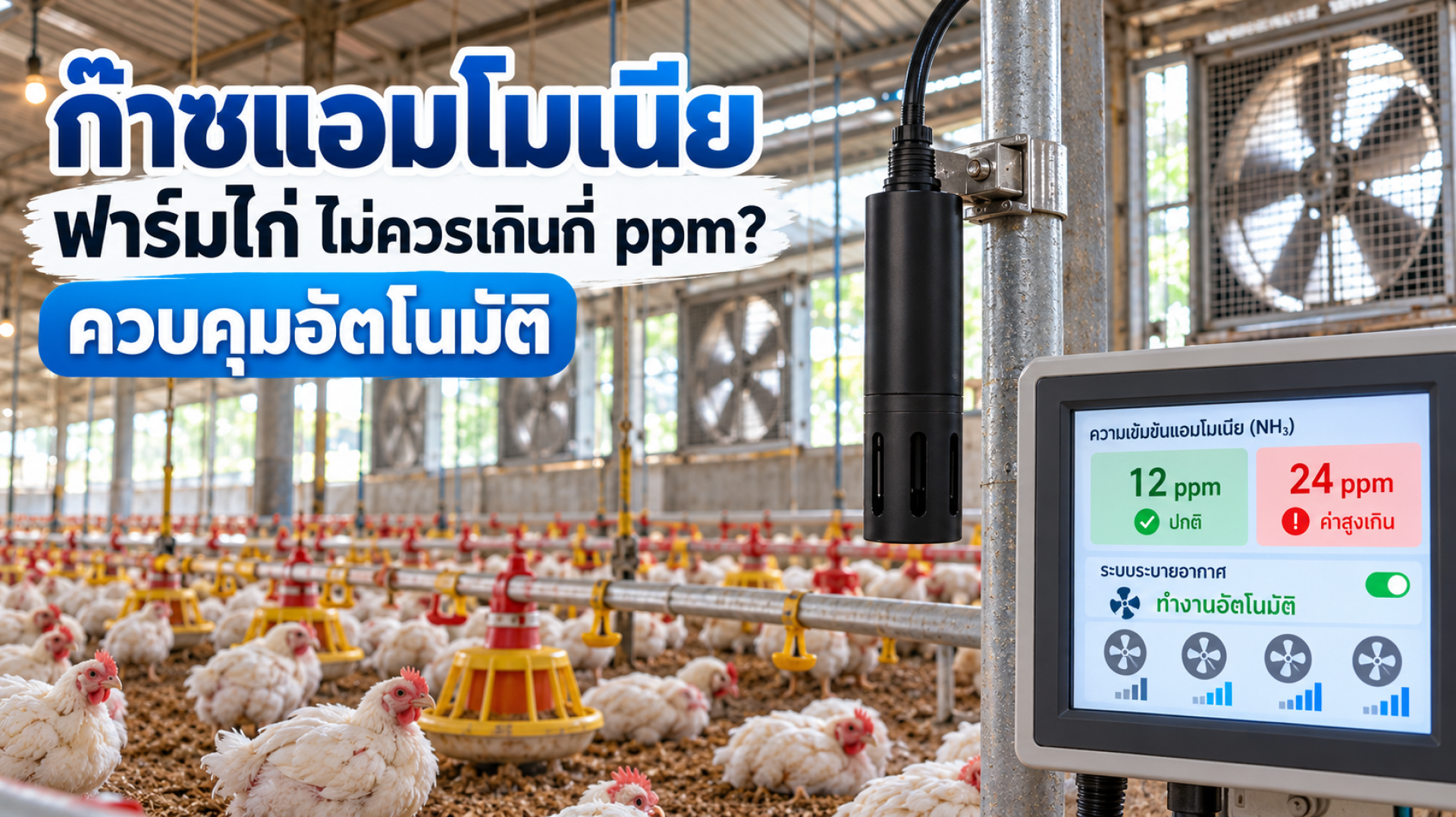
Ammonia gas sensor in poultry and swine houses with automatic ventilation fan control
That sharp, eye-stinging smell inside a chicken house or pig barn is more than an odor problem. It is ammonia gas (NH), and it damages animals' respiratory systems, slows growth, cuts feed intake, raises disease risk, and affects the health of farm workers too. The catch is that once people get used to the smell, ammonia may already be well above safe levels. This article explains how many ppm of ammonia in poultry and swine houses is too much, how to measure it accurately, and how to control it cost-effectively with automatic fans.
What is the maximum ammonia level in a livestock house?
Widely used guidelines recommend keeping ammonia in poultry and pig houses below 2025 ppm, with under 10 ppm as the ideal. Above 25 ppm, animals begin to grow more slowly and fall ill more easily; above 50 ppm, serious eye and respiratory damage can occur. The most effective approach is to install an ammonia gas sensor at animal breathing height and link it to the fan control system so ventilation increases automatically as levels rise.
Where does ammonia in livestock houses come from?
Ammonia forms when microbes break down animal waste. In poultry houses it comes from uric acid in droppings that build up in the litter; in pig barns it comes from urea in urine mixing with manure. Several factors make ammonia climb quickly:
Rice husk or wood shavings soaked by spilled water or loose droppings speed up decomposition and ammonia release
Hot tropical weather boosts microbial activity, so more gas is released
Especially at night or in cool weather, when fans are turned down to keep young birds warm
More animals and longer grow-out mean more waste, so ammonia peaks late in each flock or batch
What happens at different ammonia levels?
The values below are general reference guidelines for farm management. Use them together with advice from your veterinarian and the farm standards you must meet.
| NH level | Effect on animals | Status |
|---|---|---|
| Below 10 ppm | Good air quality, no noticeable effect | Excellent |
| 1020 ppm | Acceptable, but ventilation should be increased | Watch |
| 2025 ppm | Upper limit in most guidelines; feed intake starts to drop | Caution |
| 2550 ppm | Slower weight gain, poorer feed conversion, weaker respiratory defenses, more infections | Harmful |
| Above 50 ppm | Eye inflammation, severe respiratory damage, higher mortality | Critical |
How dangerous is ammonia for farm workers?
Most people start to smell ammonia at around 5 ppm, but after spending time in the house, the nose adapts and the smell seems weaker, so people underestimate the real level. For occupational exposure, international bodies such as the US NIOSH recommend no more than 25 ppm averaged over a workday and no more than 35 ppm for a 15-minute short-term exposure. That is why your nose should never be your measuring instrument; use a sensor that gives real numbers.
How do you measure ammonia in a livestock house?
There are several ways to measure ammonia on a farm, each suited to a different purpose.
| Method | Advantages | Limitations | Best for |
|---|---|---|---|
| Gas detector tubes | Low cost, simple | Single reading, disposable | Occasional spot checks |
| Portable meter | Multiple points, instant readings | No visibility at night | Daily walk-through checks |
| Fixed electrochemical sensor | 24/7 measurement, good accuracy, connects to controllers | Sensing element has a limited life, needs calibration | Automatic fan control |
For automation, electrochemical ammonia sensors with RS485 Modbus-RTU or 420mA output are the most popular choice, as they feed directly into a PLC or IoT gateway.
What to look for in a farm ammonia sensor
- Measuring range: 050 or 0100 ppm is common for livestock houses and gives good resolution where it matters
- Resistance to humidity and dust: livestock houses are humid and full of feed dust and feathers, so choose a model with a filter and suitable protection rating
- Sensing element life: electrochemical cells wear out, so ask about replacement intervals and costs up front
- Cross-sensitivity: some other gases can skew readings; check the manufacturer's cross-sensitivity data
- Output signal: match your existing controller, such as RS485 or 420mA
Where should ammonia sensors be installed?
Placement matters a great deal, because ammonia concentration near the floor differs from that near the roof, and animals breathe close to the floor.
| 1 | Mount at animal breathing height: about 3050 cm above the floor for chickens and around snout height for pigs, secured out of reach of pecking or biting |
| 2 | Keep away from fans and air inlets: fresh incoming air makes readings lower than reality |
| 3 | Use several points in long houses: in evaporative-cooled tunnel houses, air moves from the cooling pads toward the exhaust fans, so ammonia is usually higher at the fan end |
| 4 | Protect from water and dust: avoid mounting under drinker lines or foggers, and keep the sensor easy to reach for filter cleaning |
How do you control fans automatically with ammonia readings?
Most house controllers switch fans on temperature alone. That works well on hot days, but at night, during brooding, or in cool seasons, fans are reduced to keep animals warm, and ammonia quietly builds up. Adding ammonia as a control input solves this. Here is an example of staged fan logic:
| NH reading | System action |
|---|---|
| Below 10 ppm | Normal temperature control with minimum ventilation |
| 1015 ppm | Add one fan stage or extend the on-time in the timer cycle |
| 1520 ppm | Add another stage and notify staff to check the litter |
| 2025 ppm | Run fans at full capacity as far as temperature allows; send a LINE alert |
| Above 25 ppm | Immediate critical alarm; staff must inspect the house on site |
These values are examples. Adjust them for the species, age of the flock or herd, and the design of each house.
Tips for stable control logic
- Set hysteresis: for example, step up at 15 ppm but step down only below 12 ppm, so fans don't cycle rapidly
- Use averaged values over several minutes instead of instant readings to filter out brief spikes
- Set priorities so ammonia ventilation never drops temperature below the limit for young birds
- Measure CO, humidity, and temperature too for complete air quality control
Reduce ammonia at the source, not just blow it out
Fans remove ammonia that has already formed, but preventing it in the first place saves a lot on fan electricity.
Replace or turn wet patches and use highly absorbent bedding
Leaking nipples and drinker lines wet the floor and send ammonia soaring
Clean pens and remove manure regularly to limit contact between urine and feces
Work with a nutritionist on protein levels to reduce excess nitrogen in waste
Automatic ammonia control with E-POWER Smart Farm systems
E-POWER designs smart livestock house control systems that bring everything together in one platform.
| 1 | Sensors: ammonia, CO, temperature, and humidity over RS485 Modbus-RTU, installed at several points in the house |
| 2 | FlowPLC / IoT Edge Gateway: runs control logic in Node-RED, stages fans, or varies fan speed through inverters to save energy |
| 3 | HMI screen at the house entrance so staff can view readings and adjust settings easily |
| 4 | Dashboard and alerts: view every house on mobile, log data for each flock or batch, and receive LINE or Telegram alerts when limits are exceeded |
Historical data also helps farm owners see how air quality relates to body weight, feed conversion, and mortality in each flock, so management can be improved exactly where it counts.
Frequently asked questions (FAQ)
What is the maximum ammonia level in a poultry house?
General guidelines recommend no more than 2025 ppm, ideally below 10 ppm, for good bird health and growth.
How does high ammonia affect chickens and pigs?
It reduces feed intake, slows growth, worsens feed conversion, weakens the respiratory system so infections spread more easily, and at high levels can cause eye inflammation and higher mortality.
Why shouldn't smell be used to judge ammonia levels?
After time in the house, the nose adapts and detects less, so people underestimate the actual level. A sensor gives a precise number.
How high should an ammonia sensor be mounted?
At the animals' breathing height, about 3050 cm above the floor for chickens, and away from fans and air inlets.
Can an ammonia sensor connect to an existing house controller?
Yes, if you choose a sensor with 420mA or RS485 Modbus-RTU output matching the existing controller, or use an IoT gateway to read the sensor and control fans separately.
Want automatic ammonia control for your farm?
E-POWER engineers can design an ammonia monitoring and fan control system tailored to your poultry or pig houses, from sensor selection and installation to mobile monitoring and alerts.
LINE: @epower info@epower.co.thTel. +66 81-559-5145 | YouTube: Epower Service | TikTok: epowerservice_
Related articles: Smart Farm vs conventional farming, Complete guide to industrial sensors, Air Quality Sensors, LoRaWAN vs NB-IoT vs 4G for farms, 4-20mA vs 0-10V vs RS485 sensors