Algae Sensors (Chlorophyll / Blue-Green Algae): Early Warning for Algal Blooms in Water Bodies
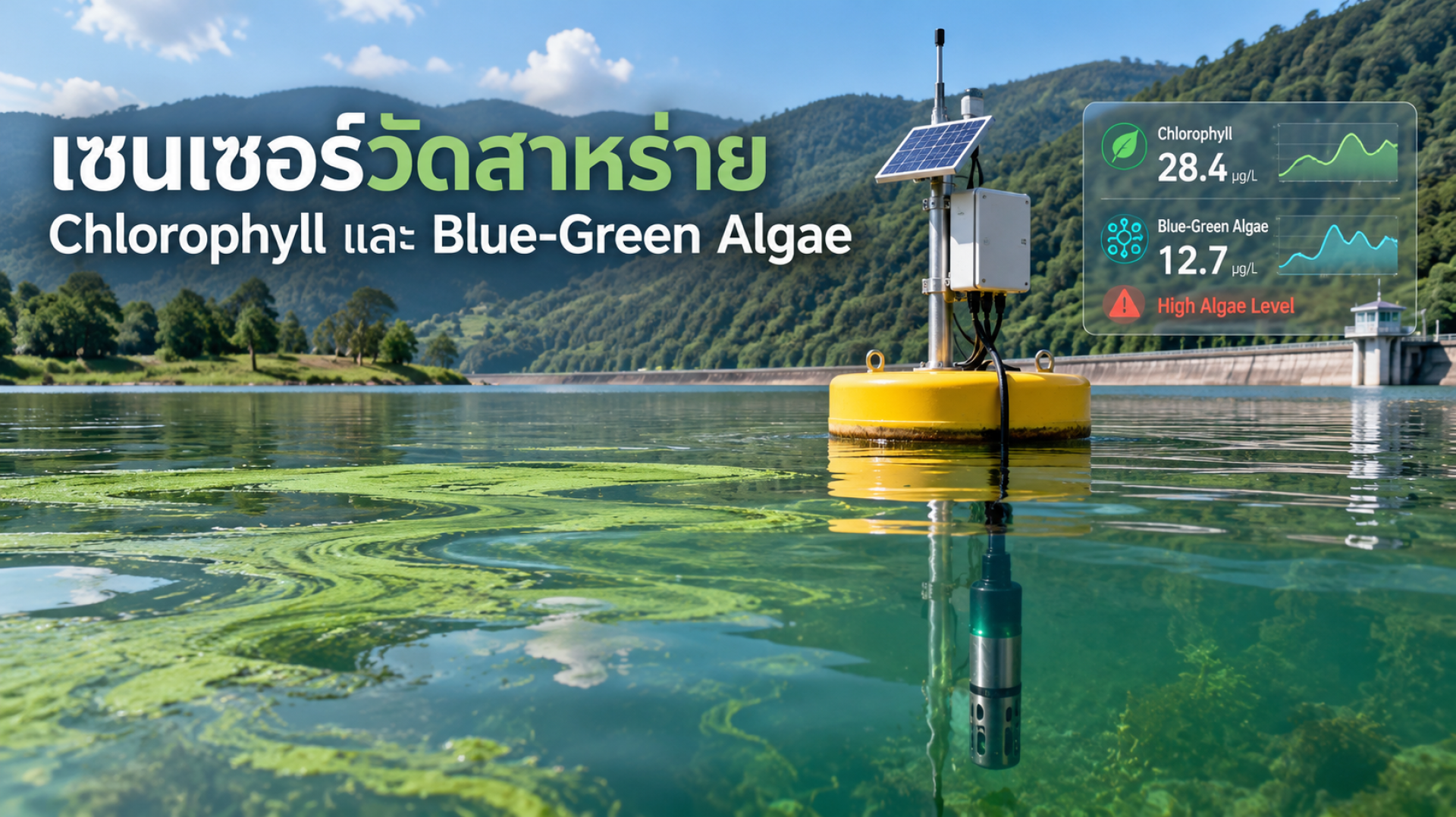
When a reservoir or pond turns thick green like paint, with floating scum and a musty smell, you are looking at an algal bloom. It is not just an eyesore. Blooms can kill entire ponds of fish, push up costs and cause taste-and-odor problems at water treatment plants, and some species produce toxins that are dangerous to people and animals. This article explains what causes algal blooms, how dangerous they are, and how an algae sensor can give early warning.
What causes algal blooms, and are they dangerous? (In short)
Algal blooms happen when water is rich in nutrients, especially nitrogen and phosphorus from domestic wastewater, fertilizer, and livestock farms. Combined with strong sunlight, warm temperatures, and still water, algae multiply rapidly. They are dangerous because they can crash dissolved oxygen and kill fish, and some blue-green algae (cyanobacteria) produce toxins such as microcystin, which damages the liver. Fluorescence-based algae sensors measure chlorophyll and phycocyanin in water continuously, revealing a bloom as it forms, before it is visible to the eye.
What causes algal blooms?
Algae and phytoplankton are a normal part of aquatic ecosystems. When conditions become too favorable, however, their numbers explode into a bloom. Four main factors drive this:
Nitrogen and phosphorus from wastewater, farm fertilizer, and livestock waste are "food" for algae
Algae photosynthesize, so several days of intense sun accelerate growth
Warm water favors algal growth, particularly cyanobacteria, which thrive in heat
Reservoirs, lakes, and ponds with little circulation give algae time to accumulate
With hot weather and strong sunshine for most of the year, water bodies in tropical regions such as Thailand are especially prone to blooms, particularly in the dry season when water levels drop and nutrients become more concentrated.
How dangerous are algal blooms?
| Who is affected | Impact |
|---|---|
| Fish and aquatic life | Algae consume oxygen at night, and when a bloom dies off, decomposition crashes dissolved oxygen, causing fish to gasp at the surface and die in large numbers |
| Water treatment plants | Filters clog faster, chemical use rises, and tap water picks up earthy, musty odors from geosmin and MIB |
| People and pets | Cyanobacterial toxins such as microcystin damage the liver, some affect the nervous system, and skin contact can cause rashes |
| Aquaculture farms | Fish and shrimp develop a muddy off-flavor that lowers market price, and pH and DO swing sharply between day and night |
| Tourism and communities | Thick green, foul-smelling water becomes unusable for recreation and water activities |
How does an algae sensor work?
Most online algae sensors use fluorescence. The sensor shines light of one color into the water; pigments in algal cells absorb it and emit light of another color. The more algae present, the stronger the emitted light, so the sensor can convert that intensity into an algae reading instantly, with no sampling needed.
Chlorophyll-a sensor
Measures chlorophyll-a, found in almost all algae and phytoplankton, as an indicator of total algal biomass in the water.
Excited by blue light around 470 nm, emits red light around 685 nm
Units: µg/L or RFU
Blue-green algae (phycocyanin) sensor
Measures phycocyanin, a pigment specific to freshwater cyanobacteria, to separate potentially toxic algae from algae in general.
Excited by orange light around 590610 nm, emits around 650 nm
Units: cells/mL, µg/L or RFU
For seawater or brackish water, phycoerythrin sensors target the pigment of marine cyanobacteria. Measuring chlorophyll together with phycocyanin shows both total algae and the share made up by higher-risk species.
How accurate are fluorescence readings?
Fluorescence sensors are best for tracking trends and early warning rather than providing legally binding analytical values, because pigment content per cell varies with species and light conditions. Readings should be calibrated against lab results for each water body from time to time, and the sensor does not measure toxins directly. When phycocyanin rises, send samples to a lab for toxin confirmation.
Where are algae sensors used?
Prompt changes to chemical dosing, intake depth, or activated carbon before odors enter the system
Long-term water quality tracking and bloom warnings for communities
Keep water color and plankton at the right level, preventing plankton crashes and off-flavor
Issue warnings before opening water activities
Track algae that affect pH and effluent quality
Monitor discoloration events with sensors rated for saltwater
Measuring algae alone isn't enough: what else to monitor
A bloom changes several water quality values at once. Monitoring multiple parameters together makes warnings faster and more reliable.
| Parameter | Sign that a bloom is developing |
|---|---|
| Dissolved oxygen (DO) | Very high in the afternoon but very low before dawn, with the swing widening each day |
| pH | Rises during the day from photosynthesis, potentially reaching 910 |
| Water temperature | Several consecutive warm days raise bloom risk |
| Turbidity | Increases along with algal cell counts |
| Nutrients (nitrate / phosphate) | High values are the "fuel" that signals risk in advance |
How to install an algae sensor for reliable readings
| 1 | Choose the right depth: typically 0.51 m below the surface, since cyanobacteria tend to float in the upper layer, or at the same level as the raw water intake |
| 2 | Pick a model with an automatic wiper: biofouling on the optical window distorts readings very quickly, especially in algae-rich water |
| 3 | Reduce sunlight and bubble effects: point the sensor face downward or use a protective tube, and keep it away from aerators producing bubbles nearby |
| 4 | Build a baseline and calibrate against the lab: record normal values for the water body and compare with lab results periodically to set alert thresholds that suit that site |
Build a real-time algal bloom warning system with E-POWER
Most reservoirs and natural water bodies are far from power and internet, so E-POWER designs self-sufficient water quality monitoring stations.
| 1 | Sensor set: chlorophyll, phycocyanin, DO, pH, temperature, and turbidity over RS485 Modbus-RTU, mounted on a buoy or bank-side frame |
| 2 | IoT Edge Gateway / FlowPLC: reads values and analyzes trends on site, powered by solar panels and batteries |
| 3 | Remote data transfer over 4G or LoRaWAN to the cloud via MQTT |
| 4 | Dashboard and alerts: view data on mobile and receive LINE or Telegram alerts when algae readings rise abnormally or DO and pH swing sharply |
Good alerts look beyond fixed thresholds to the rate of increase. For example, phycocyanin doubling within 23 days alongside steadily rising afternoon pH is a signal to prepare before the bloom peaks.
Frequently asked questions (FAQ)
What causes algal blooms?
Water rich in nutrients, especially nitrogen and phosphorus, combined with strong sunlight, warm water, and still conditions, lets algae multiply rapidly.
Are algal blooms dangerous to people?
They can be, if they involve cyanobacteria that produce toxins such as liver-damaging microcystin. Don't drink or touch bloom-affected water, and remember that boiling does not destroy these toxins.
What is the difference between chlorophyll and blue-green algae sensors?
A chlorophyll sensor measures all algae combined, while a blue-green algae sensor measures phycocyanin, a pigment specific to cyanobacteria, to track potentially toxic species.
Can an algae sensor measure toxins?
No. It measures algal pigments, not toxins. When readings rise, send water samples to a lab for toxin testing.
Can an algae monitoring station work without grid power?
Yes. Solar panels and batteries can power the sensors and IoT gateway, with data sent over 4G or LoRaWAN.
Need an algal bloom warning system for your water source?
E-POWER engineers can design a complete water quality monitoring station, from sensor selection, solar power, and 4G/LoRaWAN communication to dashboards and mobile alerts.
LINE: @epower info@epower.co.thTel. +66 81-559-5145 | YouTube: Epower Service | TikTok: epowerservice_
Related articles: What is dissolved CO2 in water, Water pH sensor guide, What is ORP? ORP vs pH, Water sensors for industrial use, LoRaWAN vs NB-IoT vs 4G