UV Index Sensor: What It’s Used for in Environmental Monitoring and Which UV Level Harms Skin
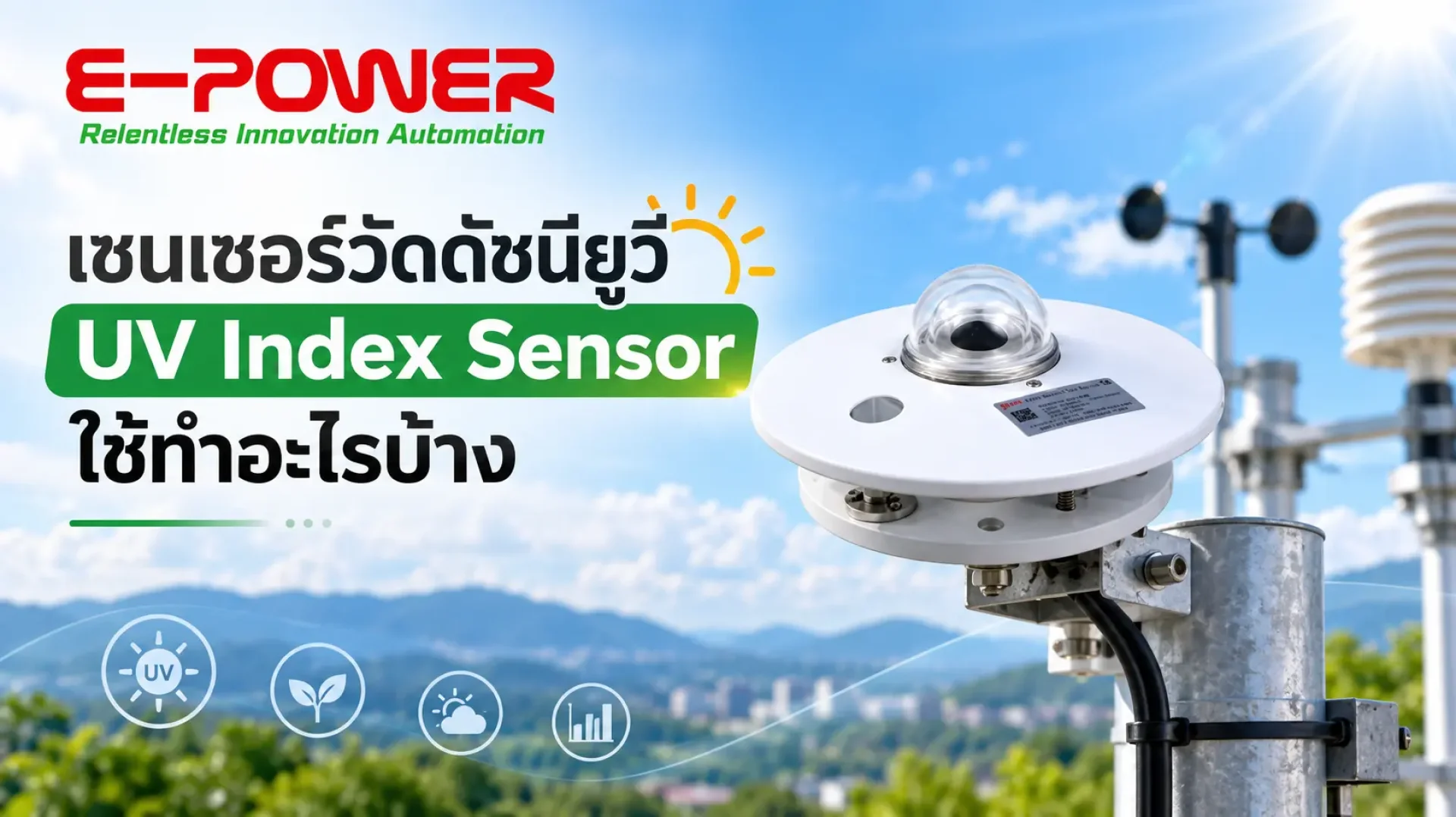
UV index sensor installed on a weather station for environmental monitoring
Tropical countries like Thailand get strong sunshine almost all year, yet what harms skin and eyes most is not the heat we feel. It is ultraviolet (UV) radiation, which is invisible and carries no warmth. Even on overcast or pleasantly cool days, UV can reach harmful levels. The tool that reveals the real risk is a UV index sensor. This article explains what UV index level is dangerous, how the sensor works, and how it is used in environmental monitoring.
What UV index level is harmful to skin? (In short)
Under World Health Organization (WHO) guidance, a UV index of 3 or higher calls for sun protection such as sunscreen, a hat, and sunglasses. Levels of 810 are very high, and skin can burn in a short time. 11 and above is extreme, and midday sun should be avoided. A UV index sensor measures this value in real time, so it can be used to warn the public and outdoor workers and to build long-term environmental records.
What is the UV index?
The UV index is an international standard number describing the strength of the sun's UV radiation in terms of its sunburning effect. It is calculated from UV irradiance weighted by human skin sensitivity, with one UV index unit equal to 25 milliwatts per square meter of weighted radiation. The higher the number, the faster skin burns. Its advantage is that anyone can understand it without knowing the physics behind it.
UV index categories according to WHO
In tropical countries such as Thailand, the sun stands almost directly overhead for much of the year, so the midday UV index often reaches very high or extreme levels, especially in the hot season and at high altitudes, on beaches, or near reflective surfaces.
What types of UV radiation are there?
| Type | Wavelength | Effect |
|---|---|---|
| UVA | 315400 nm | Passes through the atmosphere most easily and penetrates deep into the skin, causing premature aging and pigmentation |
| UVB | 280315 nm | The main cause of sunburn and a key skin cancer risk; contributes most to the UV index |
| UVC | 100280 nm | Almost entirely absorbed by the ozone layer and does not reach the ground |
How does a UV index sensor work?
Most environmental UV sensors use a special photodiode sensitive only to UV wavelengths, combined with filters that block visible and infrared light. The UV intensity is converted into an electrical signal and then calculated as a UV index or as irradiance in W/m². The top of the sensor usually has a diffuser that corrects the response according to the cosine law, so radiation from all angles is measured correctly. This matters because part of the UV reaching the ground is scattered from the sky rather than coming directly from the sun.
How is a UV sensor different from a pyranometer?
UV index sensor
Measures only the UV band, focusing on effects on skin health and materials. Used for health warnings and environmental research.
Pyranometer
Measures total solar radiation across all wavelengths from UV to infrared. Used to assess solar energy for PV systems and meteorology.
Many weather stations install both side by side to capture solar energy data and health-related data at a single site. Learn more about pyranometers in our RIKA RK200-03 Pyranometer article.
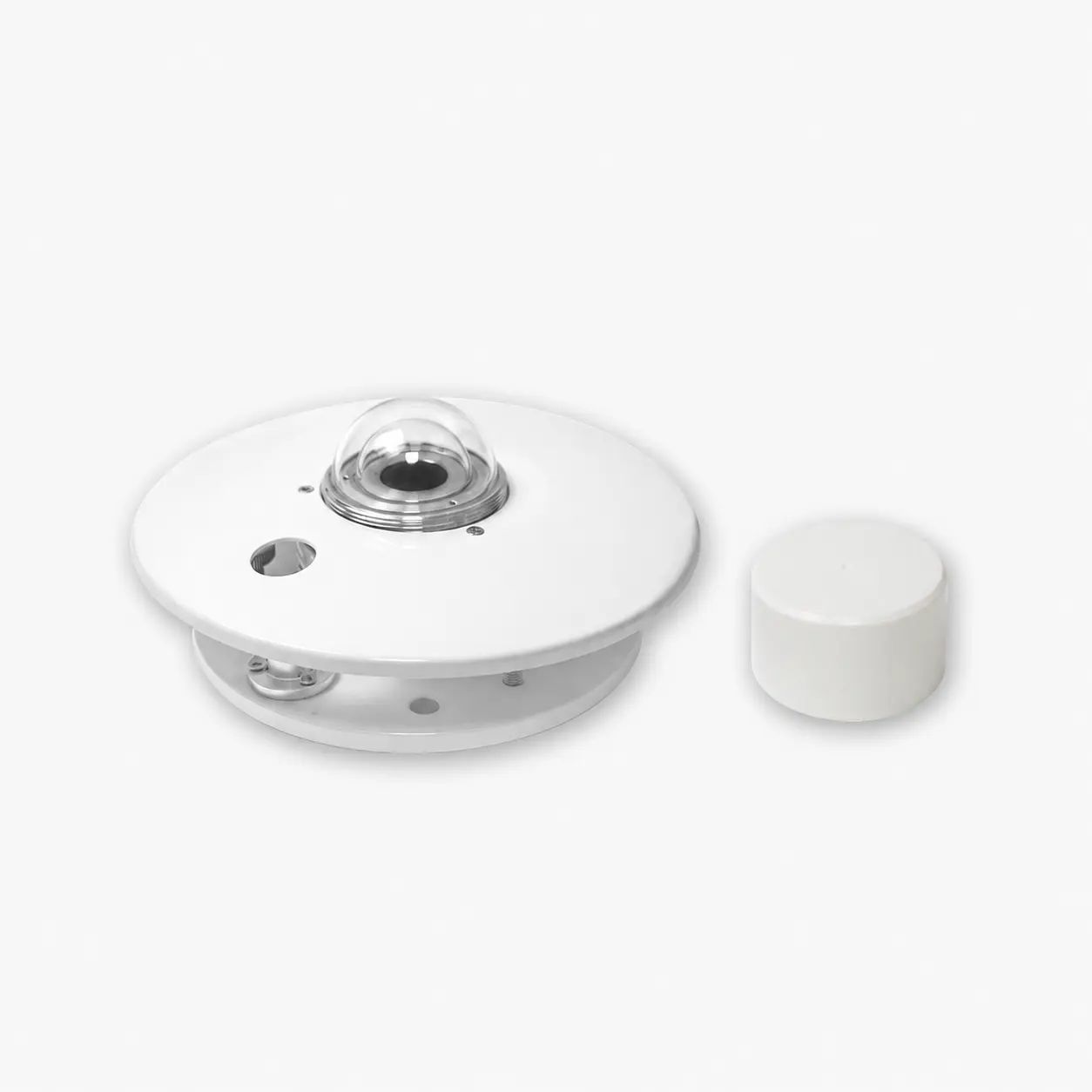
What are UV index sensors used for in environmental monitoring?
Record UV alongside temperature, humidity, wind, rain, and solar radiation for meteorology and climate research
Show UV levels on digital signs in parks, beaches, sports fields, and schools so people can protect themselves immediately
Construction sites, ports, and farms use UV readings to plan work hours and issue protective equipment
Track UV that affects plant growth and assess degradation of greenhouse plastic films
Log cumulative UV exposure to study the lifespan of paints, plastics, solar panels, and outdoor building materials
Combine UV with air quality on smart city dashboards and inform visitors at outdoor attractions
How to choose a UV index sensor
| Factor | What to consider |
|---|---|
| Measured value | Do you need the UV index directly, irradiance in W/m², or separate UVA and UVB readings? |
| Measuring range | In tropical regions, choose a sensor that covers a UV index of 15 or more |
| Angular response | A cosine-corrected diffuser ensures sky radiation is measured accurately |
| Durability | IP65 or higher, built to withstand sun, rain, and outdoor heat |
| Output signal | RS485 Modbus-RTU, 420mA, or 05V to match your data logger or IoT gateway |
How to install a UV sensor for accurate readings
| 1 | Mount in an open, shade-free spot with no buildings, trees, or poles blocking the sky throughout the day |
| 2 | Keep it level with the sensor face pointing straight up, using a spirit level |
| 3 | Avoid reflective surfaces such as white walls or metal roofs nearby, which can inflate readings |
| 4 | Clean the sensor face regularly: dust, water spots, and bird droppings lower readings; recalibrate at the interval the manufacturer recommends |
Real-time UV index alert systems with E-POWER
E-POWER designs environmental monitoring systems that put UV data to work immediately.
| 1 | UV and weather sensors over RS485 Modbus-RTU, mounted on a monitoring station mast |
| 2 | IoT Edge Gateway / FlowPLC reads values, calculates daily averages and peaks, and sends data over 4G or LoRaWAN |
| 3 | On-site display signs show the UV index with WHO color coding for clear public visibility |
| 4 | Dashboard and alerts: view history on mobile and receive LINE or Telegram alerts when the UV index reaches very high levels |
Frequently asked questions (FAQ)
What UV index level is harmful to skin?
Protection should start at 3. Levels of 810 are very high, and 11 or above is extreme; avoid midday sun at those levels.
Should I worry about UV on cloudy days?
Yes. Part of the UV passes through thin clouds, and you cannot feel it as heat. A sensor reading is far more reliable than judging by feel.
What is the difference between a UV index sensor and a pyranometer?
A UV index sensor measures only the UV radiation that affects health, while a pyranometer measures total solar radiation across all wavelengths to assess solar energy.
Where should a UV sensor be installed?
In an open area with no shade, facing straight up and level, and away from walls or roofs that reflect light.
Can a UV sensor be added to an existing weather station?
Yes, if you choose a model whose output matches your existing data logger, such as RS485 Modbus-RTU or 420mA.
Need UV index monitoring or an environmental station?
E-POWER engineers can design weather and environmental monitoring stations, from sensor selection and installation to display signs and mobile alert systems.
LINE: @epower info@epower.co.thTel. +66 81-559-5145 | YouTube: Epower Service | TikTok: epowerservice_