Load Cell: What It Is, Types and How to Choose Capacity
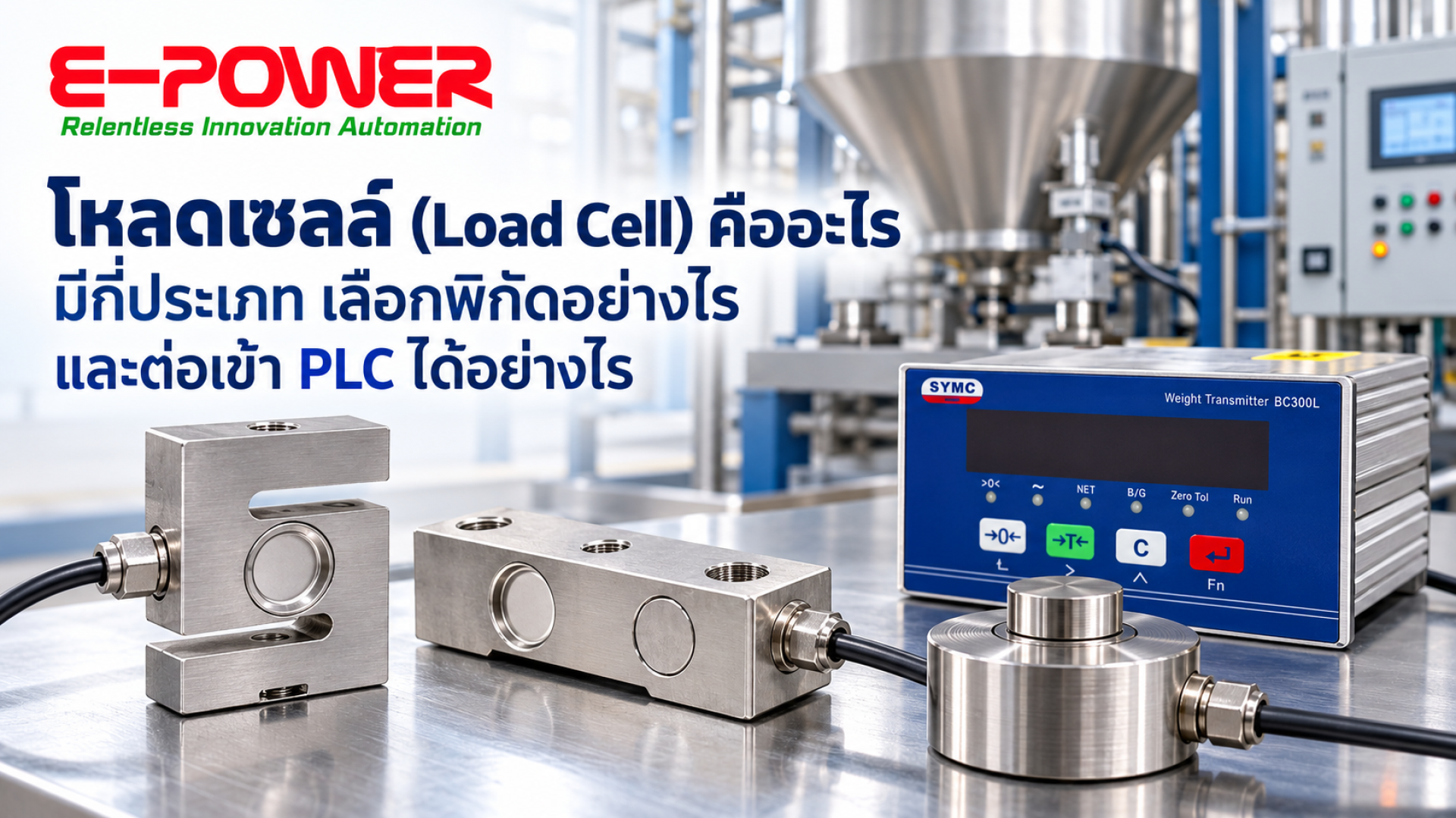
What Is a Load Cell? Types, How to Choose the Capacity, and How to Connect It to a PLC
A load cell is a sensor that converts weight or force into an electrical signal. It is the heart of every weighing system, from shop counter scales to silo weighing in factories. This article explains how a load cell works, the main industrial types, how to choose the right capacity, and how to send weight data to a PLC and IoT system.
Quick answer: what is a load cell?
A load cell is a weight and force sensor. Inside is a metal body fitted with strain gauges. When weight is applied, the metal stretches or compresses very slightly, changing the strain gauges' resistance. A Wheatstone bridge circuit turns this change into a millivolt signal proportional to the applied load.
How does a load cell work?
In a strain gauge sensor, the most common type in industry, a metal element is designed to deform very slightly under force. Four strain gauges bonded to this element form a Wheatstone bridge. When an excitation voltage such as 510 VDC is applied, the sensor outputs a millivolt signal that rises with weight.
Sensitivity is rated in mV/V. For example, 2 mV/V means that with 10 V excitation at full rated capacity, the output is 20 mV. A signal this small must be amplified by a weighing indicator or load cell transmitter before it reaches a control system.
Types of load cell used in industry
Each type is designed for a different force direction and mounting style. Choosing the right type matters as much as choosing the right capacity.
| Type | How it takes load | Typical applications |
|---|---|---|
| Single Point | Supports a single platform; readings stay consistent wherever the item is placed | Digital scales, bench scales, filling machines |
| Shear Beam | Beam fixed at one end, loaded at the other | Floor scales, medium-size tanks |
| S-Type | S-shaped body handling both tension and compression | Hanging scales, suspended hoppers, tensile testing |
| Compression / Canister | Cylindrical body taking very high vertical compression | Truck scales, silos, large tanks |
| Double Ended Shear Beam | Fixed at both ends, loaded in the center, tolerates side forces well | Truck scales, mixing tanks, livestock scales |
How to choose load cell capacity
The most common mistake is the wrong capacity. Too small, and the cell is overloaded and damaged. Too large, and weighing resolution suffers. Use this basic calculation.
Capacity per load cell
Capacity per cell = (empty vessel weight + maximum contents) ÷ number of cells × safety factor
Example: an empty tank weighs 500 kg, holds up to 2,000 kg, and stands on 4 cells. With a 1.5 safety factor: (500 + 2,000) ÷ 4 × 1.5 = 937.5 kg, so choose four 1,000 kg cells. The right safety factor depends on shock, vibration and wind loads on site.
Load cell specifications to check before buying
Accuracy class
A load cell for trade-approved scales usually follows OIML R60, such as Class C3. Process control weighing that is not used for trade can often use a lower accuracy class to reduce cost.
Material and ingress protection
Stainless steel with an IP67 or IP68 rating suits food plants with frequent washdown. Plated alloy steel suits dry indoor applications.
4-wire or 6-wire cable
A 6-wire version adds two sense lines that compensate for voltage drop over long cables, ideal when the cable runs far from the scale to the control panel. A 4-wire version suits short cable runs where very high accuracy is not required.
How to connect a load cell to a PLC and IoT system
A millivolt signal cannot go straight into a standard PLC input. It must be converted first, so an automatic weighing system in a factory is wired in this order.
Mounted under tank legs, under a platform, or suspended from a structure, depending on the type chosen.
Combines the signals from multiple cells into one and allows corner adjustment so every point reads the same.
Amplifies the millivolt signal and converts it to a standard 4-20 mA, 0-10 V or RS485 Modbus RTU output.
Use the weight to control the process, such as closing a valve when an ingredient reaches its recipe weight or stopping a conveyor when a pack reaches target weight.
Send weight data to an online dashboard, check silo inventory from your phone, log history, and get alerts at reorder levels.
Load cell applications in factories and farms
Silo and tank weighing
A A cell under each silo leg measures remaining feed, grain or liquid. It is more accurate than level measurement because it does not depend on how material piles inside.
Recipe batching
The PLC reads the weight and adds each ingredient according to the recipe, one after another, automatically.
Filling and conveyors
Checks product weight during packing and rejects underweight or overweight packs from the line.
Common load cell problems and how to prevent them
Drifting readings or failure to return to zero usually come from moisture entering the cable or the sensor body. Choose a suitable IP rating and avoid cutting or splicing the cable unless necessary.
Errors from side forces occur when pipes or structures attached to the weighed vessel push or pull on it. Use flexible joints on pipes entering and leaving the tank, and use the mounting kit designed for that model.
Damage from shock loading happens when heavy items are dropped onto the scale. Allow enough capacity margin and fit overload stops.
Damage from welding occurs when welding current flows through the sensor and destroys the strain gauges. Never arc weld on a structure with a load cell installed; remove it or bond a ground strap across the mount first.
Calibrating a load cell weighing system
After installation, calibrate the complete weighing system at least at two points: zero with no load, and span with certified test weights of known value. Use test weights as close as possible to the real working load, and recheck on a regular schedule, especially for trade scales that must be verified under weights and measures law.
Load cell FAQ
What does a load cell do?
A load cell converts weight or force into an electrical signal so a scale, PLC or control system can display the value and act on it.
Can a load cell connect directly to a PLC?
Usually not, because the output is in millivolts. It needs a transmitter or weighing indicator that converts it to 4-20 mA or RS485 Modbus, unless the PLC has a dedicated weighing input module.
How many load cells does a tank need?
It depends on the number of legs. Tanks with 3 or 4 legs usually use one cell per leg. A small suspended tank may need just one S-type cell.
How long does a load cell last?
With the right capacity, no overloads, no moisture ingress and no shock, it lasts many years. Premature failure is mostly caused by water ingress, impact and welding near the mount.
Need an automatic load cell weighing system?
E-Power delivers complete systems, from choosing the sensor and transmitter to PLC/HMI control panels and IoT dashboards for real-time silo and tank inventory.
Talk to our engineers on LINE