What Are the Best Sensors for a Smart Greenhouse?
1. Smart Greenhouses: Why Are Sensor Systems Essential?
Modern Greenhouses and High-Value Crop Cultivation
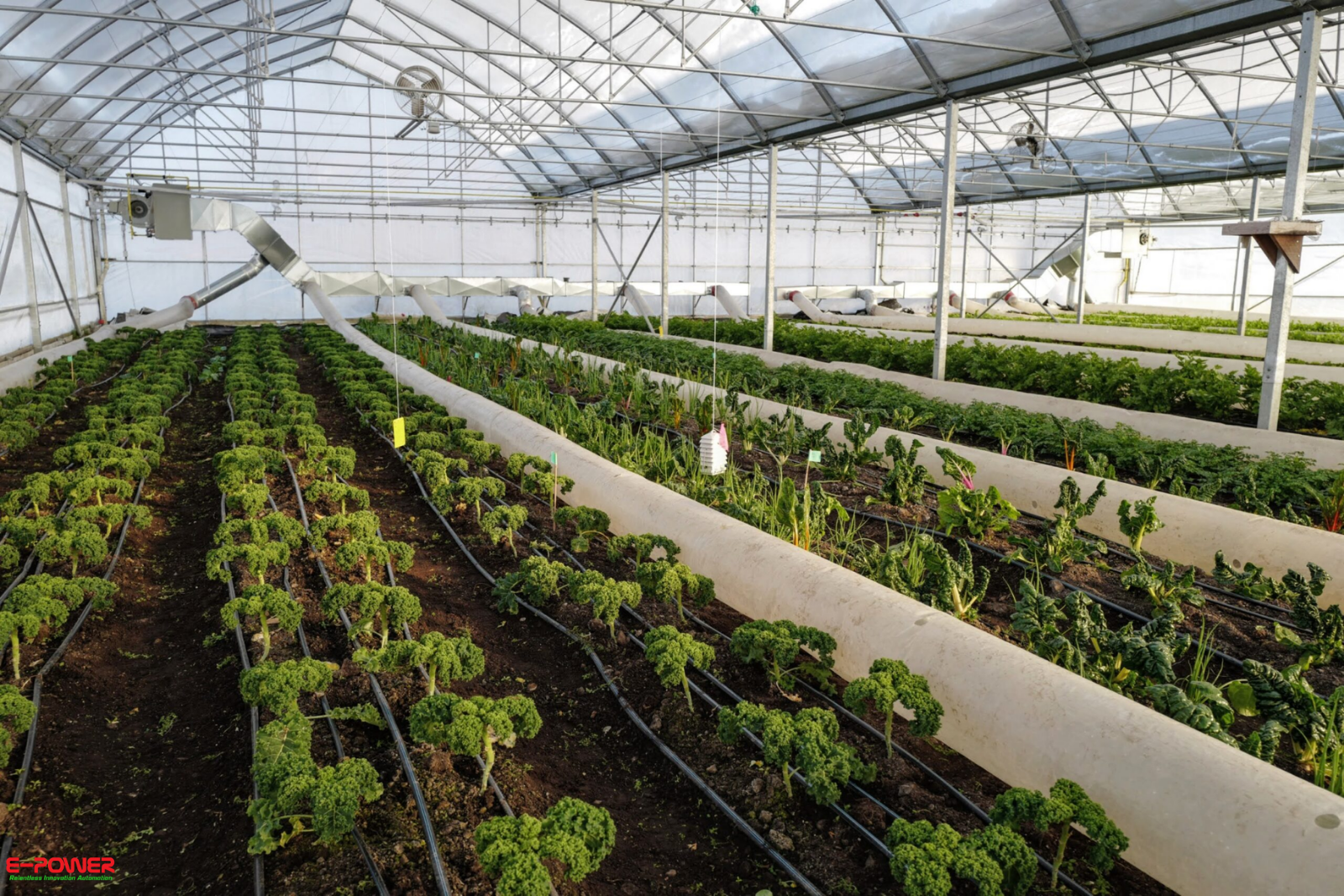
The greenhouse is the ultimate solution for modern agriculture. It is a closed structure made of transparent materials like plastic or glass, designed to trap sunlight and create a controlled environment. Regardless of how harsh external weather conditions may be, an optimal temperature can always be maintained inside.
The Role of IoT Technology and Measuring Instruments
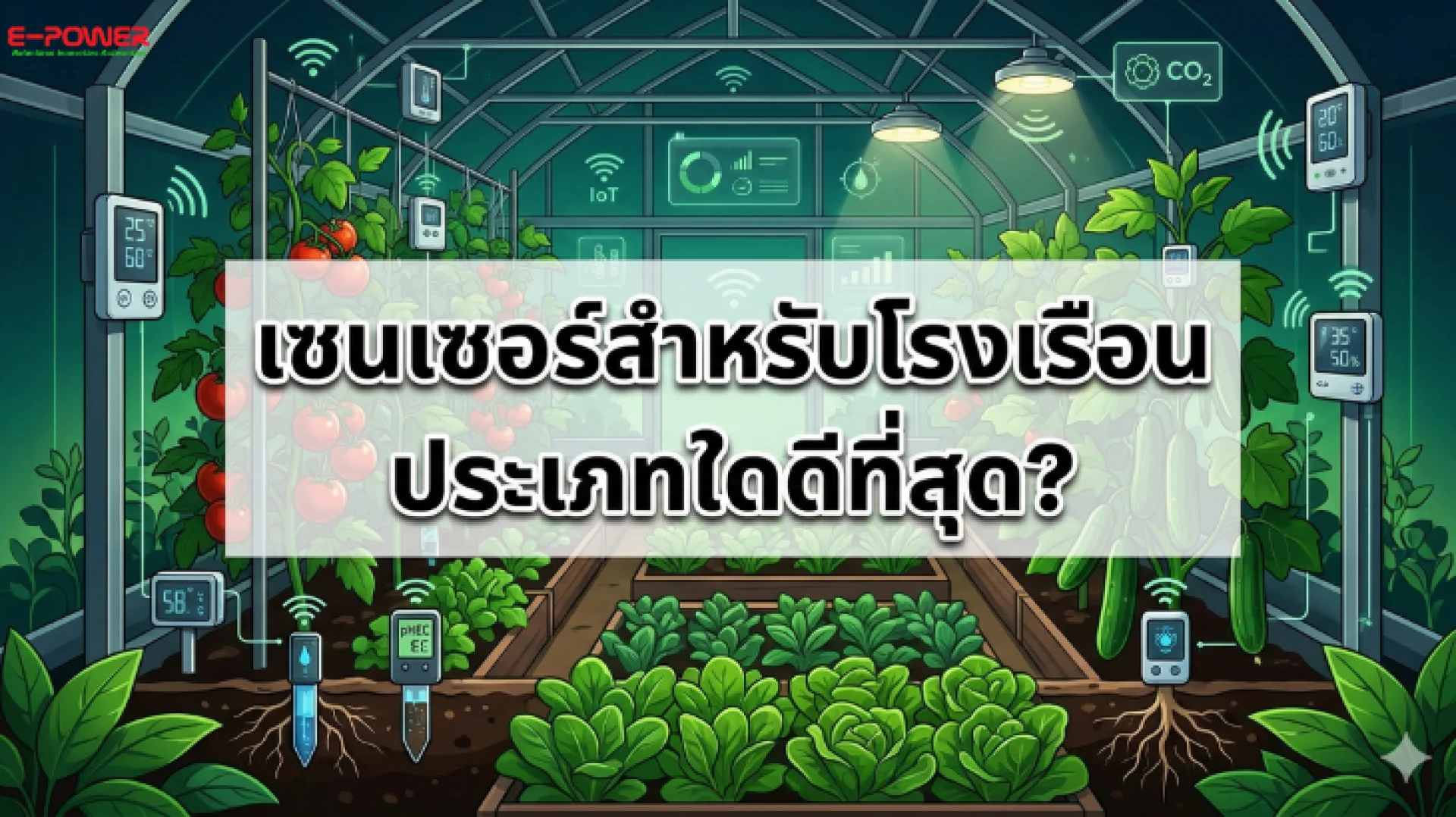
How are these perfect conditions created within a greenhouse? The answer lies in sensor systems and IoT technology. The transition to the modern industrial era allows us to use high-precision measuring instruments to monitor light intensity, carbon dioxide (CO₂) levels, soil moisture, temperature, and relative humidity in real-time.
Unlike traditional farming that relies on manual record-keeping—which is time-consuming and prone to human error—the implementation of IoT technology and data loggers does more than just collect data. It immediately processes the information, creates dashboards, sends alerts, and triggers automated control systems, truly propelling agriculture into the digital age.
2. Key Factors Requiring Sensor Monitoring in Greenhouses
Environmental Factors Affecting Growth
- Temperature: Different crops prefer different temperature ranges. For instance, tomatoes thrive at 18-27°C, while leafy greens like lettuce prefer cooler environments of 15-20°C. Temperature is a crucial variable for photosynthesis, making a highly accurate temperature sensor indispensable.
- Humidity: Relative humidity affects the transpiration rate. If humidity is too low, plant growth stalls; if it is too high, the risk of fungal disease increases. Controlling humidity between 50-70% using humidity sensors is therefore critical.
Soil and Substrate Health
- Soil Moisture: Overly wet soil leads to root rot, while dry soil causes dehydration. Using smart soil moisture sensors helps accurately maintain the water balance.
- pH and EC Levels: The pH level indicates soil acidity/alkalinity, while the EC (Electrical Conductivity) level indicates the amount of nutrients or fertilizers present. High EC means the soil is too salty, causing plant stress, whereas low EC means the plant is deprived of nutrients.
Light and Air Quality
- Light Intensity: Plants require light in the 400-700 nanometer spectrum (PAR) for photosynthesis. Light sensors ensure that plants receive adequate illumination.
- CO₂ Levels: Carbon dioxide is the primary food for photosynthesis. Maintaining consistent CO₂ levels in the greenhouse can exponentially accelerate plant growth.
3. Benefits of Installing Sensor Systems in Greenhouses
- Increased Yield and Quality: Sensor data enables precise condition control, resulting in premium-grade produce with consistent size, color, and taste.
- Resource Optimization (Water, Energy, Nutrients): Say goodbye to guesswork when watering and fertilizing. Sensor systems allow for targeted application exactly when and where needed, minimizing waste and saving on energy costs.
- Early Detection of Plant Stress and Disease: Detecting abnormal environmental data early helps prevent disease outbreaks in the greenhouse, saving significant potential crop losses.
4. Types of Greenhouse Sensors
Temperature Sensors
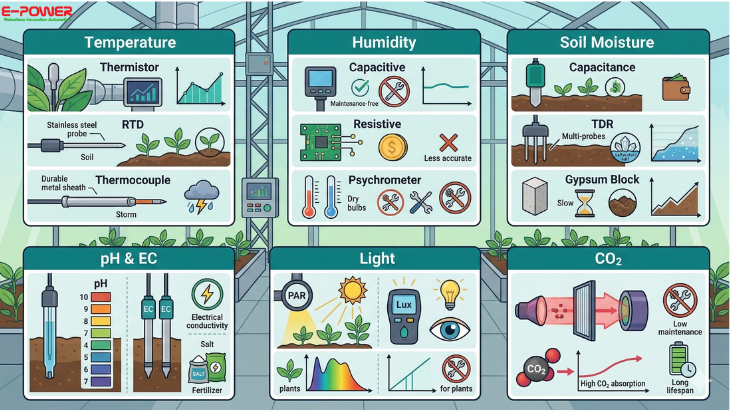
- Thermistor: Used for highly precise measurements (±0.1 to 0.5°C) with fast response times. Often used in HVAC systems or installed near plant canopies.
- RTD (Resistance Temperature Detector): More expensive due to its extreme accuracy and stability. Ideal for monitoring soil temperature or highly temperature-sensitive crops.
- Thermocouple: Highly durable, making it suitable for harsh environments or conditions with severe temperature fluctuations.
Humidity Sensors
- Capacitive: The most widely used due to its quick response, low maintenance, and long-term stability.
- Resistive: Easy to manufacture and cost-effective, but generally less accurate than other types.
- Psychrometer: Uses two thermometers (wet-bulb and dry-bulb). Commonly used for calibration or in research greenhouses; highly accurate but requires intensive maintenance.
Soil Moisture Sensors
- Capacitance: Cost-effective and compact, working well in most soil types.
- TDR (Time Domain Reflectometry): Highly effective in variable salinity conditions and ideal for applications requiring supreme precision.
- Gypsum Block: Slow response but reliable in highly saline or coarse soils, utilizing electrical resistance to measure soil water tension.
pH and EC Sensors
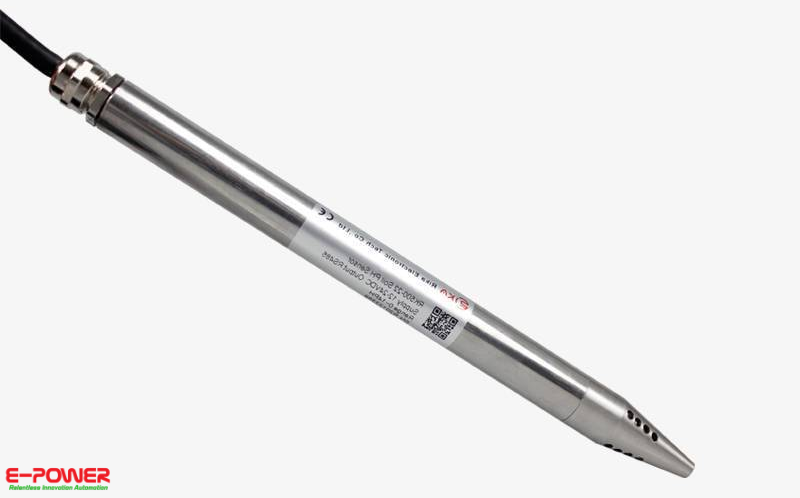
- pH Sensor: Uses a glass electrode to measure hydrogen ion movement, converting it into the soil's acidity or alkalinity value.
- EC Sensor: Emits a mild electrical current to measure the soil's conductivity, which reflects the concentration of dissolved salts and fertilizers.
Light Sensors
In a greenhouse, it is highly recommended to use PAR sensors, as they measure the exact light spectrum plants use for photosynthesis. In contrast, Lux sensors measure brightness as perceived by the human eye, which may not always align with what the plant needs.
CO₂ Sensors
These utilize Non-dispersive Infrared (NDIR) technology to measure infrared light absorption in the presence of CO₂. They offer a long lifespan, require low maintenance, and have minimal drift over time.
5. How to Choose the Right Sensor System for a Smart Farm?
- Choose Based on Crop and Greenhouse Type: Closed hydroponic systems strictly require pH and EC sensors, whereas an orchid greenhouse might prioritize humidity and CO₂ sensors. Select equipment that aligns with your specific crop's behavior for maximum value.
- Accuracy and Durability: Do not choose based solely on a cheap price tag. Investing in reliable, industrial-grade instruments that can withstand chemicals, dust, and moisture will prevent system malfunctions that could otherwise ruin an entire harvest.
- System Integration & Data Loggers: Good sensors must communicate seamlessly with other systems. Opt for sensors that can transmit signals to data loggers and automated controllers, enabling 100% automated activation of fans, irrigation, or fertilizer dispensers.
6. Conclusion
Sensors are the "nervous system" of a modern greenhouse, empowering owners to make precise decisions. Investing in an integrated sensor system provides a competitive edge, enhances yield quality, reduces waste, and allows for rapid adaptation to changing environments. The future of agriculture lies in precision and automation.
Frequently Asked Questions (FAQ)
What is the role of CO₂ sensors in a greenhouse?
Answer: They are used to monitor CO₂ concentrations, a crucial component for photosynthesis. Maintaining an optimal level is essential for efficient and productive plant growth.
How often should greenhouse sensors be calibrated?
Answer: It depends on the specific model and operating conditions. Generally, calibration is recommended every 3 to 6 months, or strictly according to the manufacturer's guidelines.
Are wireless sensors better than wired sensors?
Answer: Wireless sensors are easy to install and highly flexible for large greenhouses, but they require regular battery replacements. Wired sensors, while harder to install, transmit data stably without frequent maintenance or battery concerns. The right choice depends on your budget and the scale of your operation.