How do weather stations help prevent wildfires?
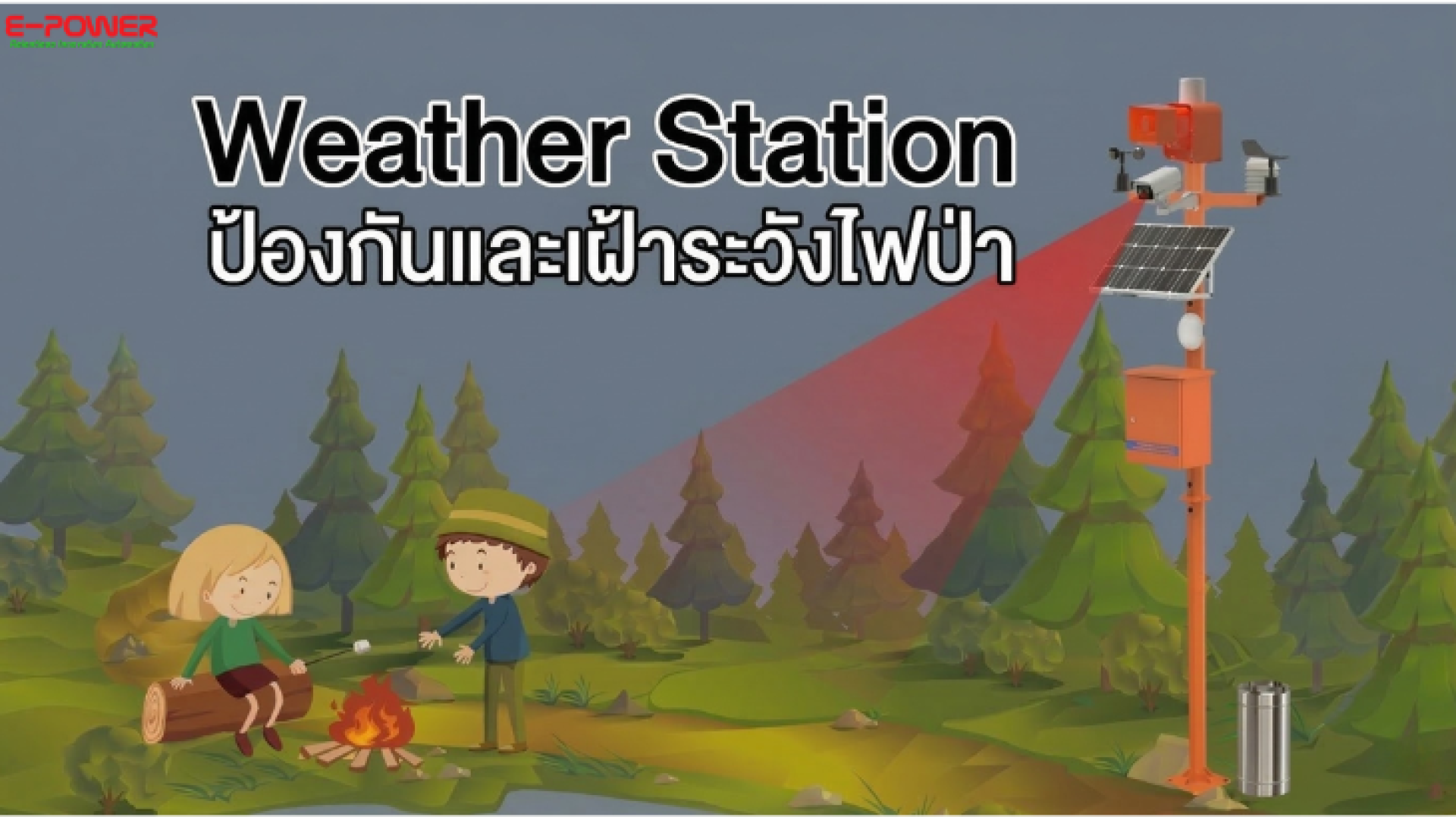
A Weather Station serves as a proactive measure for effective forest fire monitoring and prevention, particularly in Thailand, which faces severe forest fire issues annually during the dry season and recurring droughts. Accumulations of deadwood and fallen leaves in the forest act as potent fuel, ready to ignite instantly with a small spark from lightning or human activity. Forest fires not only destroy valuable woodlands and endanger wildlife but also severely impact the ecosystem by causing soil degradation, destroying water sources, and affecting air quality (PM2.5 pollution). Therefore, installing a Weather Station in high-risk areas is crucial for managing this disaster in its early stages.
Main Causes of Forest Fires in Thailand
Statistics show that the majority of forest fires in Thailand are caused by human activities. These include burning forests for foraging, agricultural waste burning, discarded cigarette butts, or carelessness during tourist activities. Arson is another significant cause of widespread damage.
Furthermore, natural factors like lightning strikes during summer storms can also ignite forest fires. Strong winds during periods of hot, dry weather are critical factors that cause fires to spread rapidly and become difficult to control.
Forest Fire Prevention Strategies: From Education to Technology Implementation
- Campaigns and Education: Build public awareness regarding the dangers of forest fires and prevention methods, especially during high-risk seasons.
- Monitoring and Early Warning Systems: Timely detection of forest fires is key to suppressing damage. Implementing Weather Station technology allows officials to monitor weather conditions and assess risks in real-time.

Components of a Weather Station for Forest Fire Monitoring
A complete Weather Station consists of the following main components:
- Meteorological Sensors
- Data Logger
- Power Supply System and Solar Radiation Shield
- Field Protection Box and a sturdy Stand/Tripod
Key Features of Our Weather Station Solution
- Wind Speed and Direction Sensors: Provide accurate data regarding wind intensity and direction, which are the primary factors in fire spread.
- Smart Connectivity: All sensor data can be connected to the Haiwell HMI screen for real-time display of weather information and immediate control of various systems.
- Ecloud IoT Cloud System: Uploads weather data to the Ecloud IoT cloud, allowing officials to monitor forest status, view historical statistics, and receive abnormality alerts anytime, anywhere.
Key Monitoring Parameters of the Weather Station
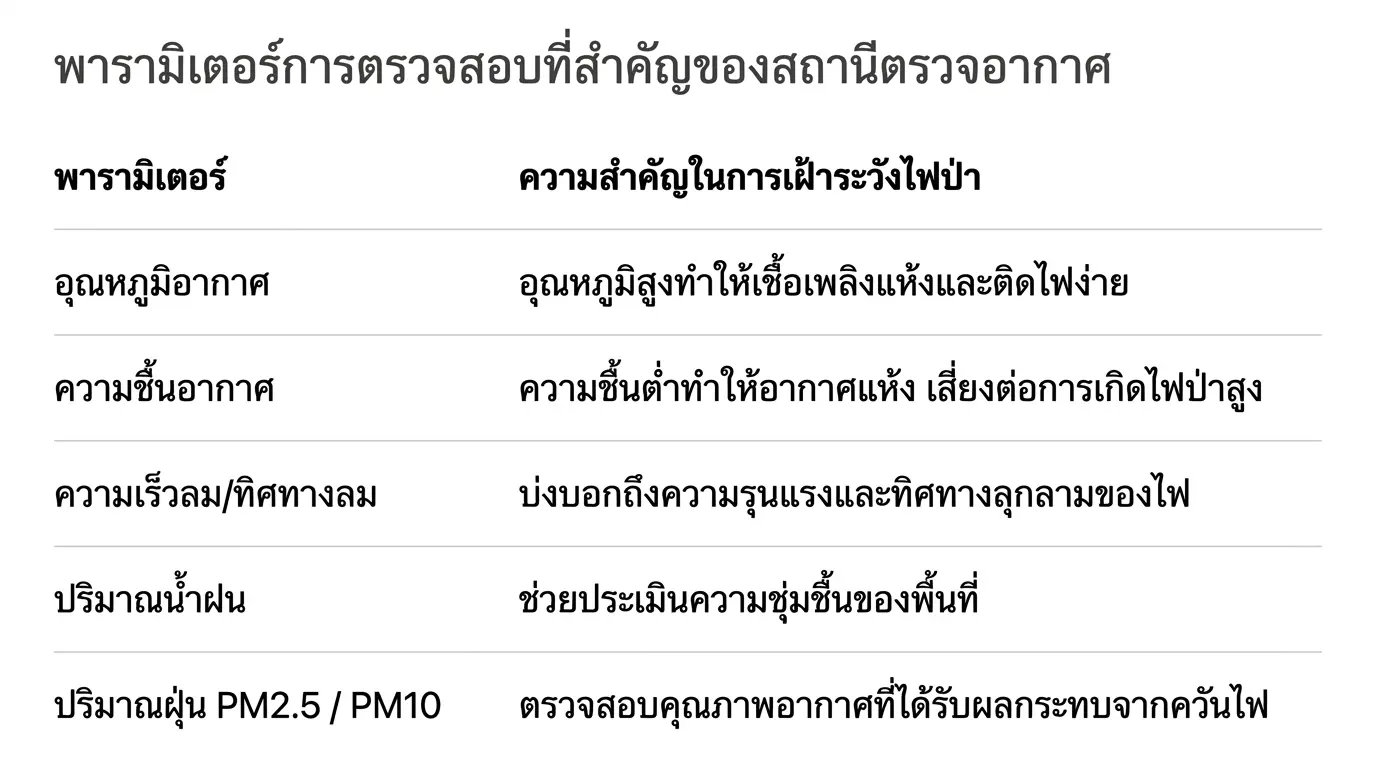
Additionally, optional sensors can be installed to enhance detection efficiency:
- Smoke Sensor: Detects high smoke concentrations in the early stages of combustion.
- Temperature Sensor: Measures surrounding temperature to identify abnormally high heat points.
- Gas Sensor: Monitors gases produced by combustion, such as CO2, CO, CH4, and H2.
Installing CCTV alongside the Weather Station enables 360-degree remote monitoring and immediate detection of fire starting points. Administrators can use the synced weather data on the monitoring screen to facilitate rapid decision-making in fire control.
Weather Factors Affecting Forest Fire Ignition and Spread
- Rainfall: Directly affects fuel moisture. Areas with abundant rainfall have lower risks.
- Temperature: Higher temperatures make fuel dry and easy to ignite, especially during hot days.
- Wind: The primary agent in spreading fire. Strong winds not only add oxygen to the fire but also cause it to spread rapidly and become difficult to control.
Conclusion
Installing a modern, comprehensive Weather Station is a worthwhile investment for effective forest fire prevention and management. Combining accurate meteorological sensors, user-friendly Haiwell HMI screens, and the Ecloud IoT cloud platform helps Thailand handle forest fire issues promptly, reduce damage to natural resources and the environment, and elevate disaster management to a sustainable digital era.