How Do Temperature and Humidity Sensors Work?
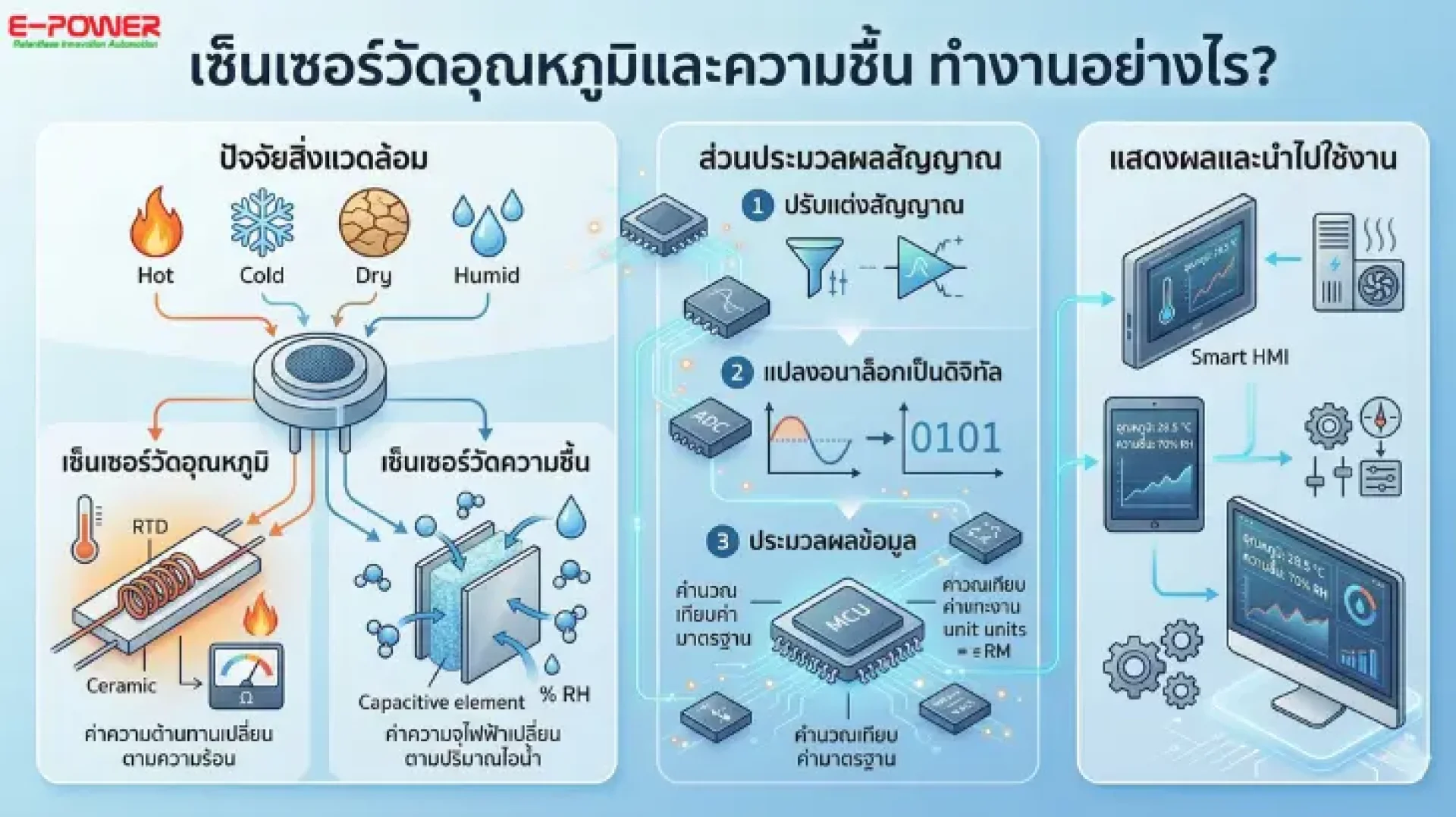
A Temperature and Humidity Sensor is a fundamental device of critical importance in controlling and maintaining optimal environmental conditions. Because temperature and humidity factors directly affect the cooling mechanisms of living organisms, plant growth, and product storage processes. In the era of the Industrial IoT, these sensors are no longer limited to just monitoring the weather. They serve as the core driving force behind Automation systems in industrial factories, HVAC systems, and Smart Farm agriculture to precisely monitor moisture and prevent plant diseases. This article by E-Power Service will take you deep into their working mechanisms, classifications, and application guidelines to fully elevate your business capabilities.
The Relationship Between Temperature and Humidity
Temperature and humidity directly affect living organisms and are crucial variables in controlling factory production processes. Understanding the science behind these two elements is the foundation that will help you correctly choose the right Instrument Sensor:
1. Temperature : This is the quantitative measurement of hotness and coldness (the kinetic energy level of atoms). We use temperature sensors in every part of our lives, from refrigerators and air conditioners to heat control systems in factory machinery.
2. Heat Transfer : Heat always transfers from a hotter object to a colder one. Therefore, temperature is a vital variable in Cooling Systems and ventilation.
3. Standard Temperature Units : The three main units commonly used are Celsius (°C), Fahrenheit (°F), and Kelvin (K).
4. Humidity (Water in the Air) : Have you ever walked through thick fog and felt sticky? That is a condition where the air humidity spikes to 95-100%. Humidity is the amount of water vapor mixed in the air, which often results from sudden temperature changes.
5. Types of Humidity Measurement :
- Absolute Humidity: The actual mass of water in a given volume of air (g/m³).
- Relative Humidity (RH%): The maximum amount of water vapor the air can hold at a specific temperature. This is the standard value used on most IoT Platforms.
6. Humidity Index and Its Importance in HVAC Systems : If air humidity reaches 100%, the cooling processes of humans, animals, and plants stop, causing Heat Stress. This is why large-scale HVAC systems must always install Temperature and Humidity Sensors together to maintain balance and issue commands via Automation systems.
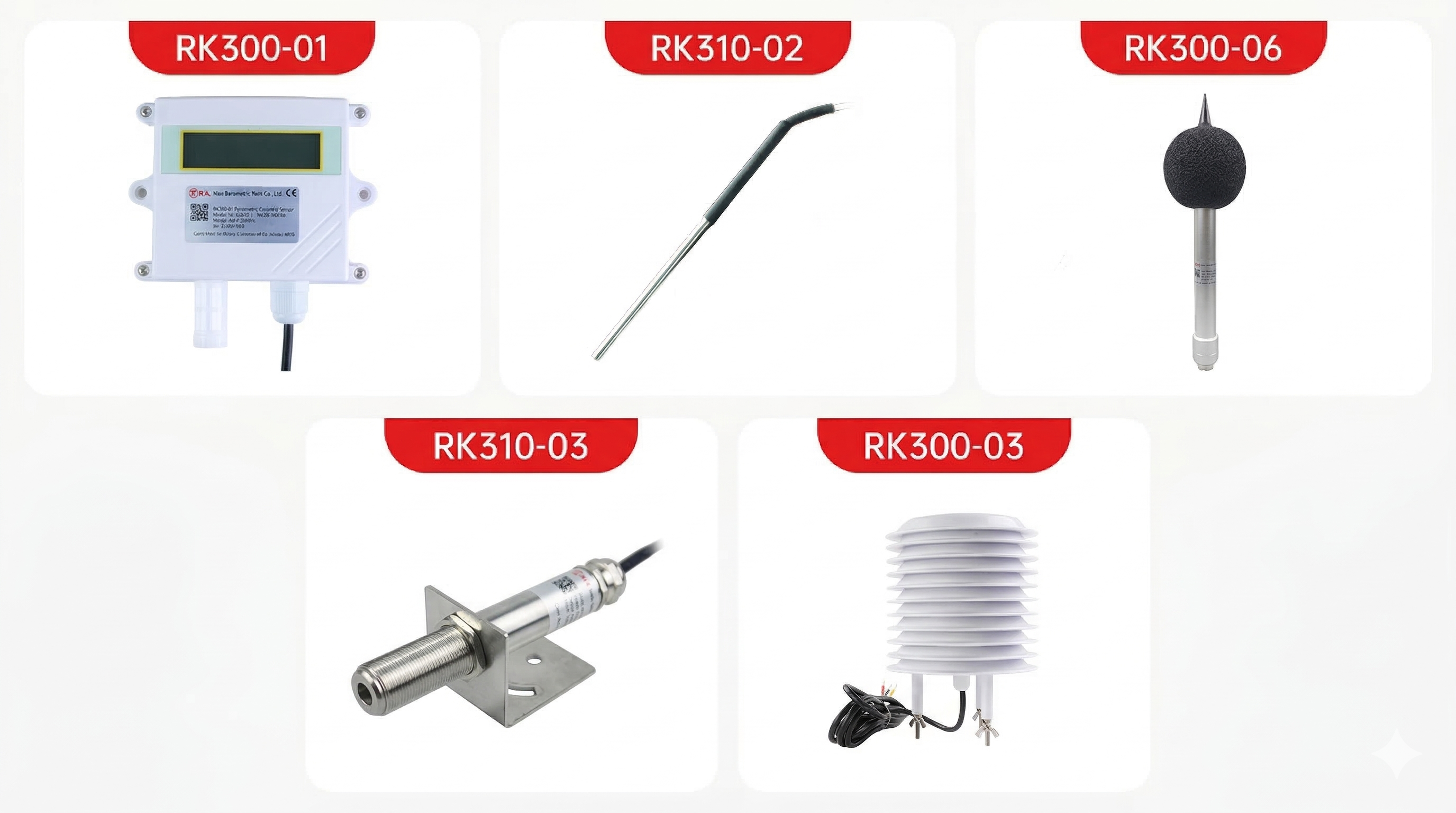
Popular Types of Sensors Used in Industry
To ensure the most accurate data transmission to a PLC or SCADA system, choosing the right type of sensor for the job is crucial.
Temperature Sensors:
- NTC Thermistors: Sensors where electrical resistance is inversely proportional to temperature. Modern versions are developed with digital circuits to be highly sensitive to changes (up to 10 times more sensitive than RTDs). They can withstand temperatures from -55 to +200°C.
- RTDs (Resistance Temperature Detectors): Highly popular in industrial factories due to their high stability and accuracy. They respond quickly in 0.5 - 5 seconds and can measure from -200 to +600°C.
- Thermocouples: A hit sensor for applications requiring extremely high heat resistance. They rely on the potential difference between two types of metals. Some models can measure up to 1600°C.
- Semiconductor Sensors: Rely on P-N junctions, suitable for small electronics. They measure temperatures from -55°C to +150°C.
Humidity Sensors:
- Capacitive Humidity Sensors: Measure changes in capacitance when the dielectric plate absorbs moisture, providing an accurate %RH value.
- Resistive Humidity Sensors: Rely on moisture-absorbing materials like salt. As moisture increases, the electrical resistance changes.
- Thermal Humidity Sensors: Use two temperature sensors (one exposed to moisture, one kept dry) to compare thermal conductivity and determine absolute humidity.
How Do These Sensors Process Data?
The electrical values obtained from the sensors (Voltage, Current, Capacitance) go through a 5-step process before being sent to an HMI screen or IoT Platform:
- Calibration: Verifying and comparing values with international standard instruments for maximum accuracy.
- Signal Conditioning: Filtering and amplifying the signal for stability, preventing electrical interference in the factory.
Analog to Digital Conversion (ADC): Using an ADC to convert electrical signals into digital data (e.g., converting to RS485 / Modbus RTU signals). - Data Processing: A microprocessor calculates the engineering values.
- Unit Conversion: Displaying the output as °C, °F, or %RH so operators can read the values instantly.
Sensor Applications in Various Solutions
Choosing a good Instrument Sensor can be extended to many industries:
- Leaf Wetness Sensor: The heart of a Smart Farm system, using a leaf-shaped capacitive sensor. When water droplets form, the data is sent to the system to manage automatic watering and prevent fungal diseases in plants.
- Atmospheric Sensor: For meteorological tasks or outdoor installations. These sensors usually have a high Ingress Protection (IP Rating) and can measure temperature, humidity, and atmospheric pressure altogether.
- HVAC Sensor: Used to control indoor comfort and save energy by maintaining the temperature at 22-27°C and relative humidity at 40-60% according to standards.
Conclusion
The advent of processing chips and Industrial IoT systems has made modern Temperature and Humidity Sensors smarter, more accurate, and easier to integrate with Automation systems than ever before. Whether you are in agriculture, healthcare, or industrial manufacturing, having real-time environmental data is the key to quality control and cost reduction.
Ready to Elevate Your Control Systems?
At E-Power Service, we are System Integrator experts. We provide high-quality sensors from leading brands, along with designing Smart Farm systems and developing the E-power IoT Platform to give you access to your machinery and environmental data from anywhere, at any time.