PLC Automated Wastewater Treatment: Critical Requirements Factories Must Know
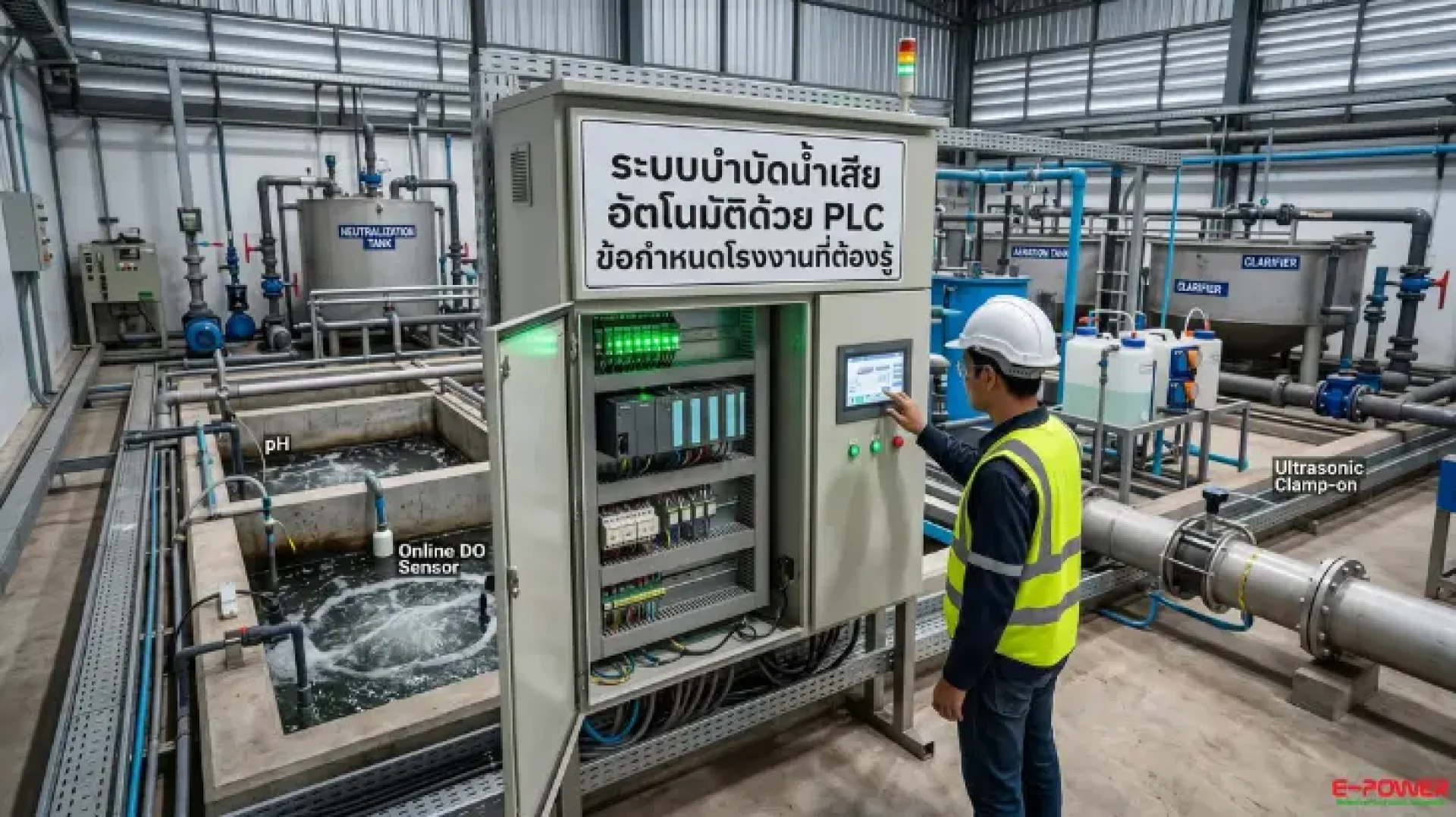
A PLC acts as the centralized brain of the system, receiving inputs from field instruments and instrument sensors. It processes this data using mathematical logic and autonomously transmits commands to control mechanical equipment—such as chemical dosing pumps, agitators, motorized valves, and aerators—24 hours a day. This setup guarantees high-precision wastewater treatment and significantly reduces unnecessary chemical consumption.
4 Critical Requirements for Designing an Automated Wastewater Treatment System
1. Requirements for Online Sensor Integration (Online Monitoring)
A reliable automation loop cannot function without accurate field "eyes." Factories must install online water quality sensors at critical process nodes to feed continuous analog signals (e.g., 4-20mA) or digital data (Modbus RS485) into the PLC. The primary parameters requiring verification include:
- pH Level (Acidity/Alkalinity): Essential for regulating chemical dosing pumps within the neutralization tank. The Supmea SUP-PH5013 sensor is highly recommended due to its exceptional stability in harsh industrial wastewater.
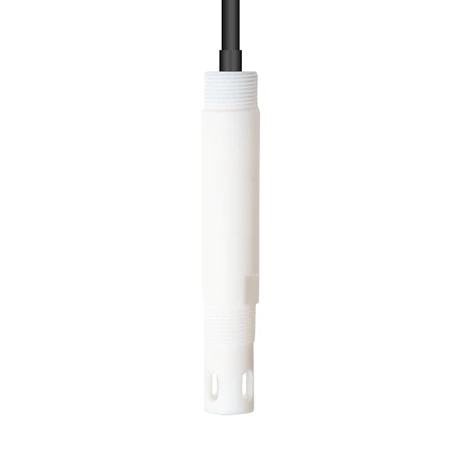
- Dissolved Oxygen (DO): A mission-critical metric for biological treatment loops (Activated Sludge) to optimize the duty cycles of surface aerators. The Supmea SUP-DM2000 optical DO sensor is recommended as it eliminates frequent membrane maintenance.
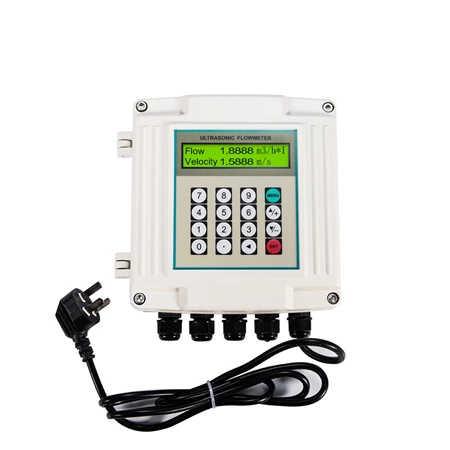
- Flow Rate: Tracks the volumetric influent and effluent wastewater of the facility. The Supmea SUP-1158S Ultrasonic Flow Meter features a clamp-on design that straps onto the exterior of the pipeline, minimizing liquid contact and eliminating sediment blockages.
2. Stability and Flexibility of the Control Platform
The selected PLC hardware and software suite must withstand harsh industrial environments characterized by high humidity and electrical noise.
- Software Selection: Implementing an open, internationally standardized framework like CODESYS is highly recommended. It supports standard IEC 61131-3 programming languages, ensures rapid task execution, handles high-precision PID chemical dosing logic, and allows for seamless future modifications.
- Hardware Selection: Choosing a Haiwell PLC provides integrated Ethernet and Modbus connectivity out of the box, supporting secure cloud network scaling for remote plant monitoring.
3. Safety and Alarm Management (Safety & Alarms)
Industrial estate authorities and factory department regulations mandate robust fail-safe mechanisms within environmental infrastructure. The PLC code logic must be designed with strict safety interlocks, for example:
- If a primary wastewater pump fails or a chemical dosing tank runs dry, the controller must immediately isolate adjacent subsystems and actuate emergency dump valves.
- The control loop must immediately identify out-of-specification water quality trends and broadcast real-time alarms (High/Low Alarms) via physical stack lights, sirens, or online network notifications.
4. Historical Recording Compliance (Data Logging & ESG Report)
To maintain full legal transparency and satisfy corporate sustainability index audits (ESG), water utility data must be logged continuously without any risk of data tampering. Modern PLC frameworks stream fields directly to localized cloud databases or online spreadsheet software (such as Google Sheets) in real time. This logs historical totalized datasets that remain accessible for environmental compliance audits at any moment.
Wastewater Automation Architecture
To visualize the transformation of industrial shop floor analytics into interactive supervisory control data, the complete process layer is mapped as follows:
- Field Layer: Online water quality instruments (pH, DO, Turbidity) and flow sensors monitor real-time wastewater characteristics.
- Control Layer: A Haiwell PLC or an integrated CODESYS controller processes chemical logic and triggers dosing pumps or variable frequency drives (VFDs).
- Supervisory Layer: Real-time metrics display locally on an HMI touchscreen on the panel door, or link globally via Haiwell Cloud SCADA to monitor live dashboards and command remote operations via smart devices.