Negative Oxygen Ion Detector : Professional Guide to Using Air Ion Monitors
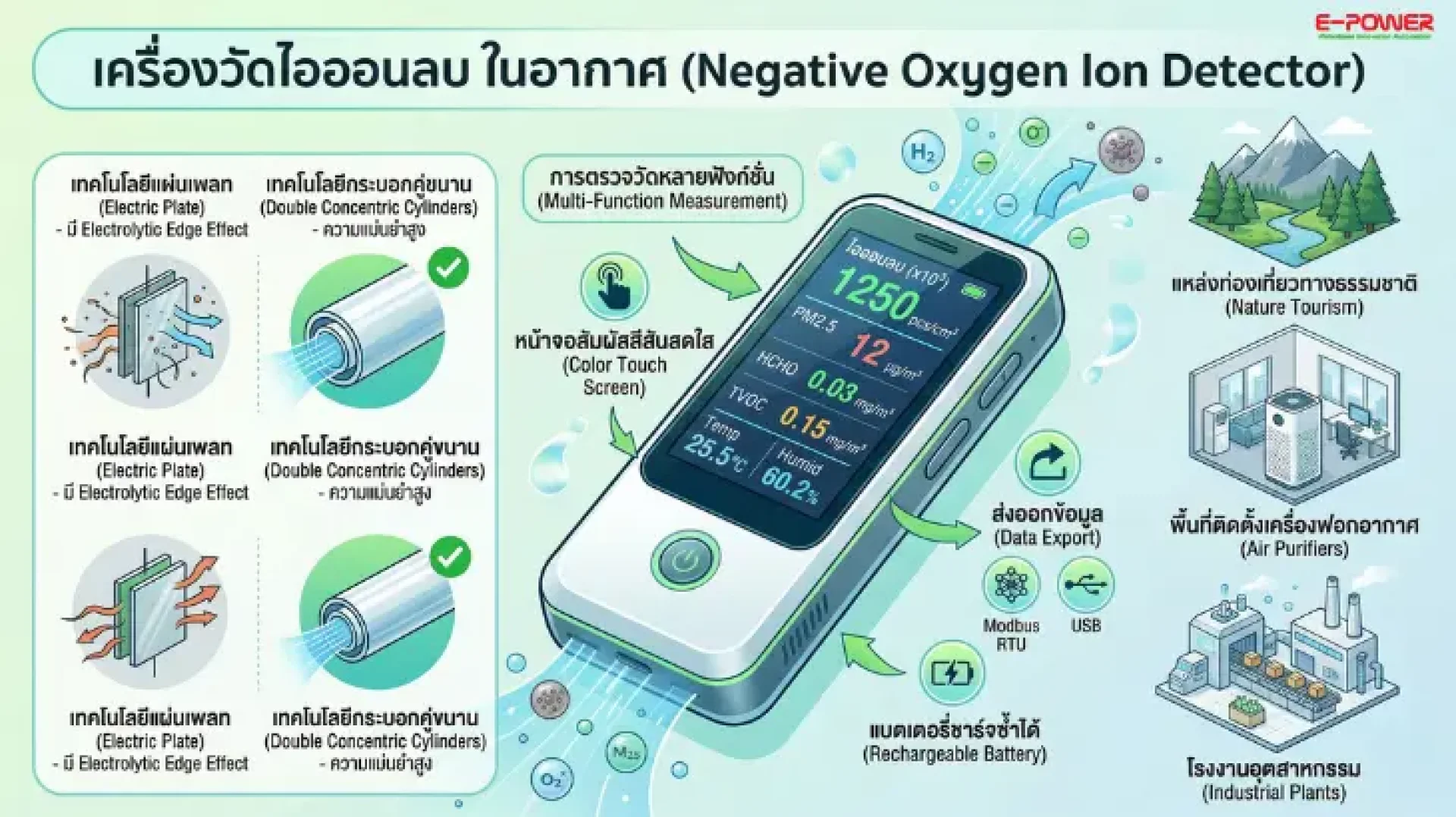
Today, air quality monitoring is no longer limited to PM2.5 levels. Negative Oxygen Ions have become a key indicator of air freshness and cleanliness, especially in natural tourist attractions, areas with air purifiers, or industrial plants requiring environmental control. Integrating these devices with an Air Quality Sensor ensures a more comprehensive management system.
Superior Innovation: Double Concentric Cylinders Technology
Unlike traditional detectors that use electric plates—which often suffer from the "Electrolytic Edge Effect" leading to inaccurate readings—the Renke Negative Ion Detectors (curated for you by ePower) are designed with the Double Concentric Cylinders principle. This dual-cylinder structure maintains stable airflow, significantly improving detection accuracy compared to older methods.
All-in-One Functionality
Equipped with high-precision sensors imported from Switzerland, these units do more than just count ions. They support full Environmental Monitoring Systems by measuring:
- Temperature & Humidity: Can be cross-referenced with Temp & Humid Transmitters in HVAC systems.
- Formaldehyde (HCHO)
- Particulate Matter (PM2.5 & PM10): For large-scale areas, additional Industrial PM2.5 Sensors can be integrated.
- Total Volatile Organic Compounds (TVOC)
Data is displayed via a color touch screen and supports data export via Modbus RTU or USB—standard protocols that connect seamlessly to Data Logger devices or PLC (Programmable Logic Controllers).
How to Use a Portable Negative Ion Monitor
To ensure the most accurate data, follow these simple steps:
1. Power On: Press and hold the "Power" button. Wait approximately 50 seconds for the system to warm up and enter "Detecting" mode.
2. Reading Data: The screen displays real-time values for negative ions, PM2.5, TVOC, and more, color-coded for easy observation.
3. Settings & Export: * Go to "System Settings" > "Data Export" to view history or set storage intervals.
- Use "MODBUS setting" to configure Address and Baud rate for connection to a PLC or HMI Touch Screen.
Why are the readings fluctuating?
Negative ions are highly unstable; they are constantly being generated and neutralized based on airflow, humidity, and environment. Minor fluctuations are a natural characteristic of air ionization.
Best Practices for Accuracy
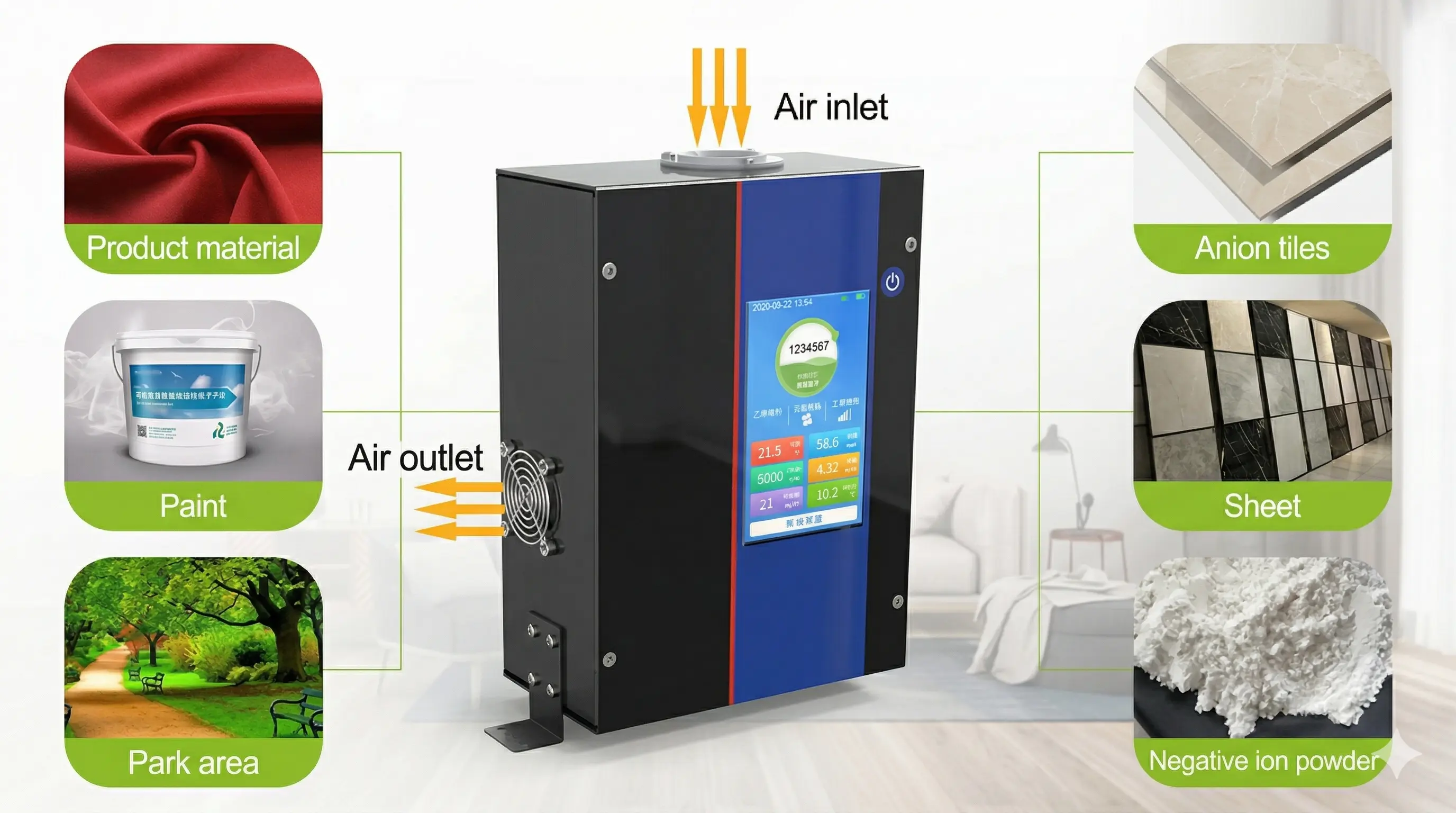
- Placement: Always place the device vertically. Ensure the Air Inlet/Outlet is not blocked.
- Selection: * For homes or offices, a standard measurement range is sufficient.
For forest parks, tourist sites, or ion generator research, choose a Wide Range detector.
Recommended Renke Negative Ion Detectors from ePower
1. Portable Smart Touch Screen: Renke Negative Ion Detector
Perfect for on-site mobility with a built-in rechargeable battery.
- Highlights: Easy-to-use touch screen, adjustable parameters, and multi-factor sensing (Temp/Humid/HCHO/PM2.5/TVOC).
- Range: Options from 0-5 million up to 0-500 million pcs/cm³.
2. Durable Industrial Grade: Renke Industrial Negative Ion Tester
Designed for permanent installation in factories or long-term monitoring stations.
- Highlights: High-strength stainless steel housing, large LCD, 10~30V DC wide voltage support, and high stability (Low drift).
- Range: Supports up to 500 million pcs/cm³ with industrial reliability.
Contact ePower for Smart IoT & Environmental Solutions
If you are looking for a professional Negative Ion Detector or need a consultation for environmental monitoring systems, E-Power Service engineers are ready to assist you.
- Website: www.epower.co.th
- Line Official: @epower
- Tel: 081-559-5145
- Facebook: E-Power Service Co.,Ltd
- YouTube: Epower Service
ePower - Relentless Innovation Automation