What is an Illumination Sensor? Understanding Its Importance in Smart Farming
In the era of Smart Agriculture, controlling the environment to suit living organisms is vital. The Illumination Sensor has become a crucial device, enabling system developers and farmers to manage light with precision. In this article, E-Power Service Co., Ltd. explores the working principles and the significance of illuminance, which directly impacts agricultural yield.
What is Illuminance?
In physics, light intensity or Illuminance is the amount of luminous flux of visible light received per unit area. The standard unit of measurement is Lux (lx). This value indicates how much light is falling onto a specific surface.
The Influence of Light on Plants and Animals
For Agriculture (Plant Growth)
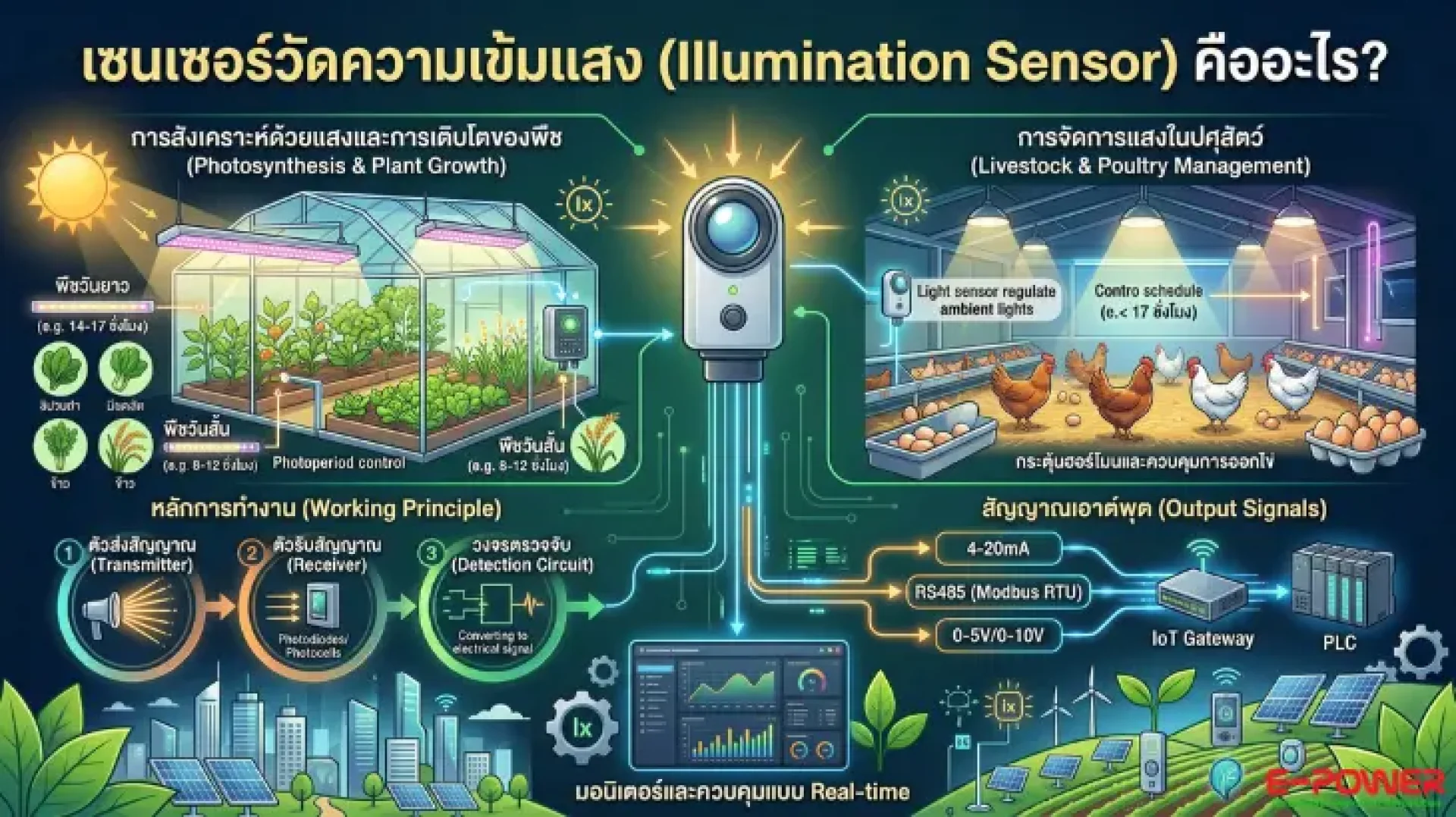
Photosynthesis is the primary process plants use to create food. Light intensity directly affects growth. Different plants have different requirements for their Photoperiod:
Long-day plants
Such as spinach and radishes, require 14-17 hours of light per day to flower.
Short-day plants
Such as rice and soybeans, require only 8-12 hours of light per day. Exposure to light above or below the optimal points (Light Saturation/Compensation Point) can be detrimental to plant health.
For Livestock & Poultry
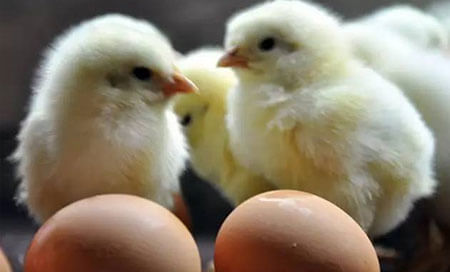
Light affects physiological systems through the animals' vision. Layer hens, for instance, are highly sensitive to light. Light stimulates the pituitary gland to release hormones that control egg production. Poor light management can lead to decreased yield, and providing more than 17 hours of light per day can be counterproductive.
Working Principle of an Illumination Sensor
To achieve maximum production efficiency, an Illumination Sensor (or Light Sensor) is required for real-time monitoring. The device consists of three key components:
- Transmitter: Emits a light beam toward the target.
- Receiver: Contains photosensitive components like Photodiodes or Photocells to receive and filter light signals.
- Detection Circuit: Converts the received light into electrical signals, such as Voltage or Current.
Recommended Illumination Sensor (Model: RS-GZ-N01-2)
E-Power Service selects industry-leading sensors like the RS-GZ-N01-2, which offers features suitable for both industrial and agricultural applications:
- Wide Measurement Range: Covering 0-65,535 Lux up to 200,000 Lux.
- High Precision: High-sensitivity probe ensures stable signals and excellent linearity.
- Rapid Response: Fully electronic circuitry provides instant results without mechanical delay.
- Standard Output Signals: Supports 4-20mA, 0-5V, 0-10V, and RS485 (Modbus RTU) for easy integration with PLC systems or our IoT Gateways.
- Solar Radiation Sensor (Pyranometer) – RK200-03 or equivalent: This device measures solar thermal energy and is widely utilized in Solar Farm systems.
Conclusion: Achieving High Yield with Intelligent Light Control
Applying Illumination Sensors alongside Industrial Automation technology allows us to determine precise light saturation and compensation points. This enables automatic environmental adjustments, enhancing the growth of plants and animals, leading to sustainable and high-quality yields.