Soil Sensor : Elevating Agriculture and Environment with Precise Moisture and Temperature Measurement
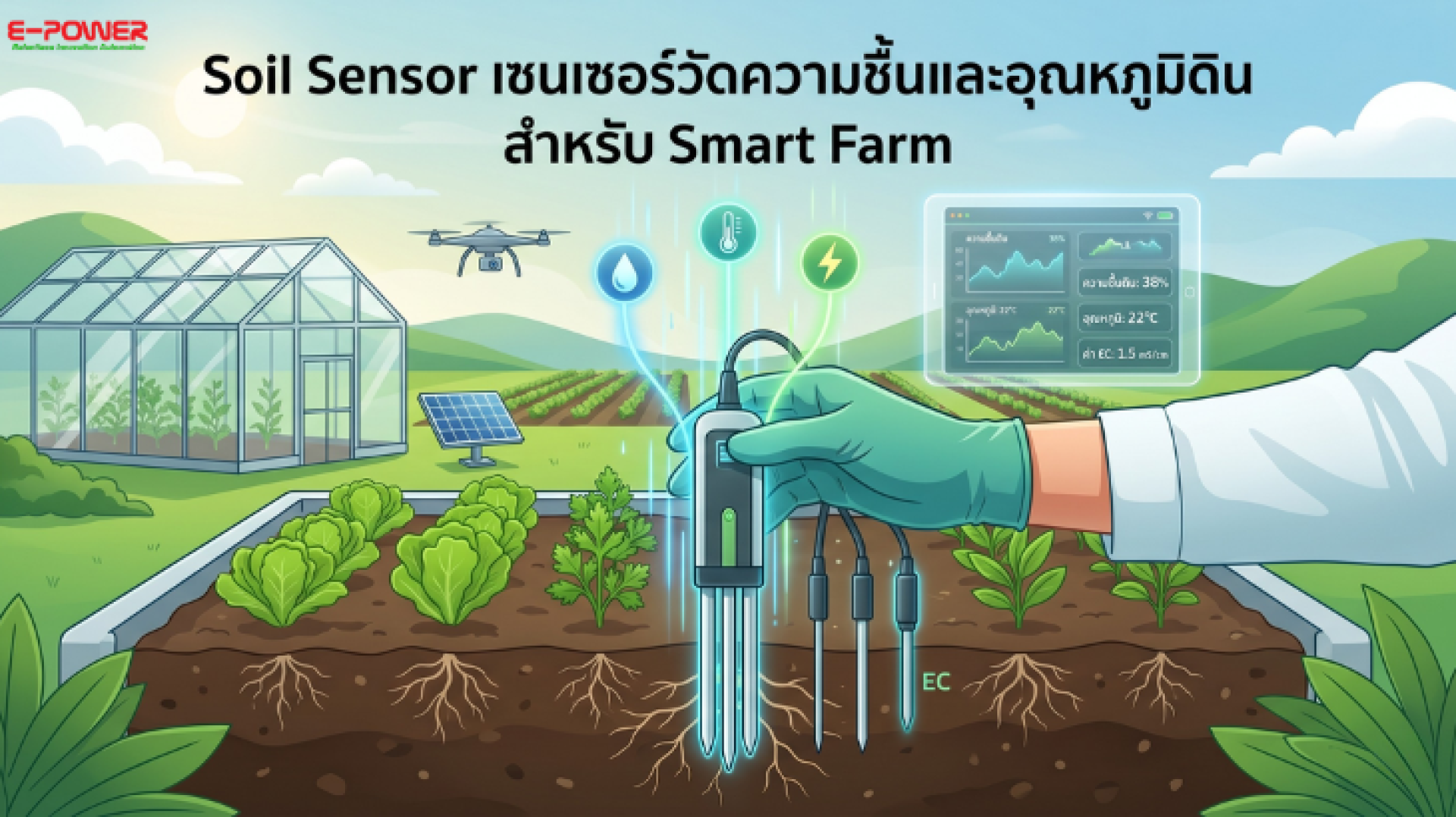
Soil Sensor (Soil Measurement Sensor) for both moisture and temperature plays a vital role in Smart Farming, environmental monitoring, and scientific studies. These devices provide real-time soil status data, which aids in irrigation planning, boosting crop output, forecasting weather patterns, and deeply understanding ecological phenomena. This article explores the fundamentals, types, applications, and advantages of soil moisture and temperature sensors in detail.
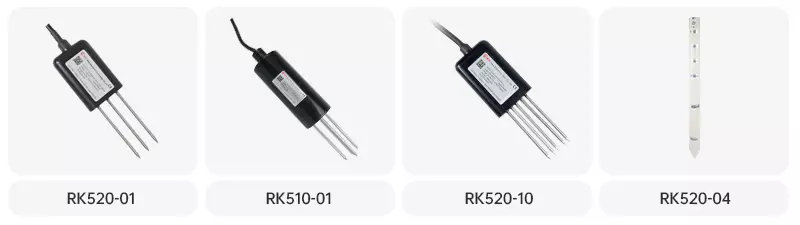
Understanding Soil Moisture Sensors
Soil Moisture Sensors, also known as Volumetric Water Content Sensors, are essential tools for measuring the water content in the soil. They help estimate the water stored within the soil profile, which is key for deciding on the appropriate irrigation method to reach desired moisture levels. These sensors are versatile, supporting both instantaneous spot measurements and continuous long-term monitoring.
Working Principle of Soil Moisture Sensors
These sensors work by detecting shifts in soil characteristics that fluctuate with moisture levels. There are two primary types commonly used:
- Capacitance Sensors: These measure the soil's dielectric constant, which shifts with moisture levels. Since water has a much higher dielectric constant than soil particles and air, capacitance increases with higher soil moisture. They are valued for their simplicity, cost-efficiency, and fast response time.
- Time-Domain Reflectometry (TDR) Sensors: These measure the travel time of an electrical pulse through the soil. The pulse velocity depends on the dielectric constant, which is influenced by moisture content. TDR sensors are highly accurate and provide detailed moisture distribution profiles, though they are often more expensive and complex than capacitance models.
Advanced Sensor Technologies
- Frequency Domain Reflectometry (FDR): Evaluates the frequency response of an electromagnetic signal to measure dielectric properties, offering precision at various depths.
- Neutron Probes: Utilize a radioactive source to measure neutron scattering caused by hydrogen atoms in water. They are highly accurate but require strict safety protocols.
- Tensiometers: Measure soil moisture tension, reflecting the force required by plants to extract water. This helps farmers optimize watering schedules to prevent over- or under-watering.
Applications of Soil Moisture & Temperature Sensors
These innovations offer a wide potential for diverse applications:
- Agriculture: Soil temperature influences crop growth. Farmers use sensors to optimize planting schedules, irrigation, and fertilization to improve yield and quality.
- Environmental Monitoring: Essential for assessing soil quality and predicting climate changes.
- Geological Exploration: Provides data on underground structures and groundwater, including identifying geothermal resources.
- Soil Science & Ecological Research: Studies the relationships between heat, humidity, and microbial activity to maintain soil fertility and ecosystem balance.
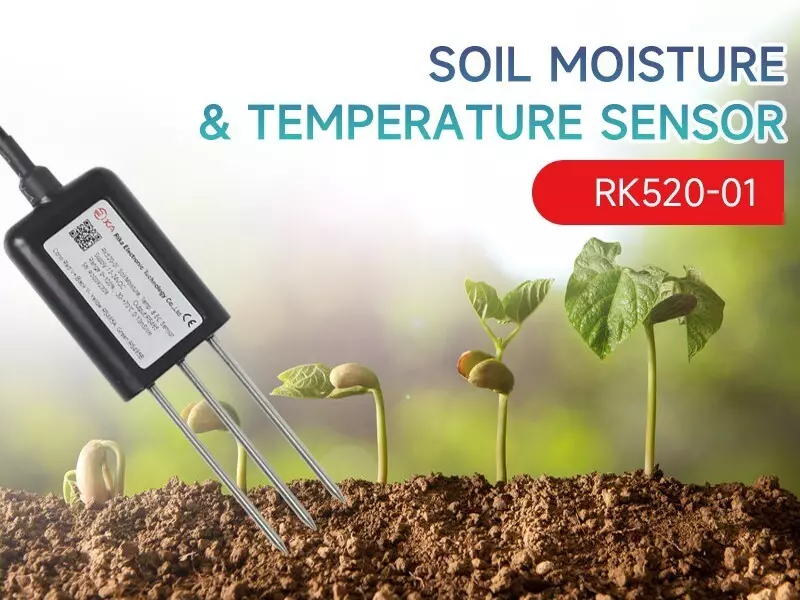
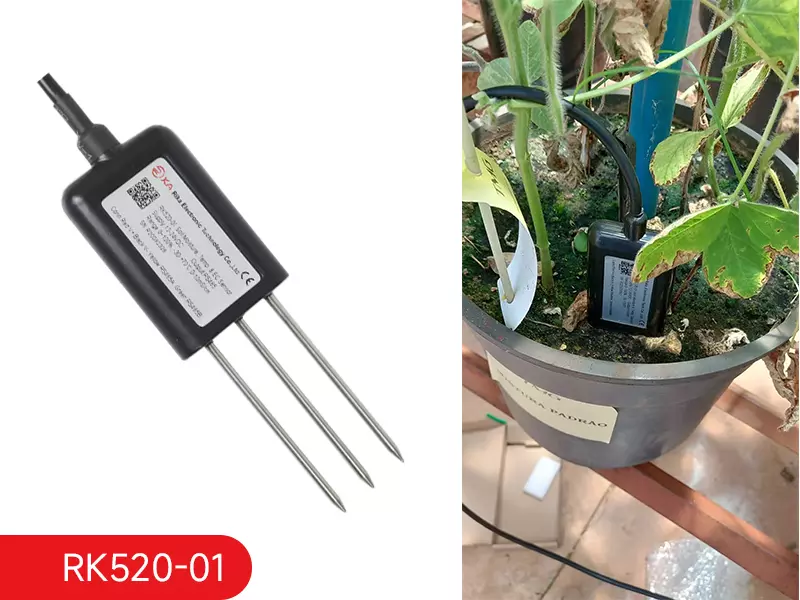
Recommended Product: RK520-01 Soil Moisture, Temperature & EC Sensor
This sensor is specifically engineered for high-precision and stable measurements, making it ideal for smart agriculture research and environmental monitoring.
- Engineering Construction: Critical for planning construction schedules, as temperature affects soil stability and concrete curing times.
Calibration and Maintenance
Proper Calibration is essential for obtaining accurate and reliable data. Regular maintenance, such as cleaning sensors to remove soil buildup and checking connections, is necessary to extend their lifespan and ensure precision, especially in harsh environments.
Trusted Quality with Rika Sensor from E-Power Service
Hunan Rika Electronic Tech Co., Ltd. is an expert with over 10 years of experience in manufacturing environmental monitoring instruments. At E-Power Service, we offer international-standard Soil Sensor solutions from Rika Sensors, exported to over 50 countries, to meet every need for professional agriculture and research.
Summary: Choosing an accurate Soil Sensor is a worthwhile investment for sustainable and highly efficient resource management.