Supmea Electromagnetic Flowmeter LDG-A100-DN100: ±0.5% Accuracy for Water Supply and Wastewater Treatment
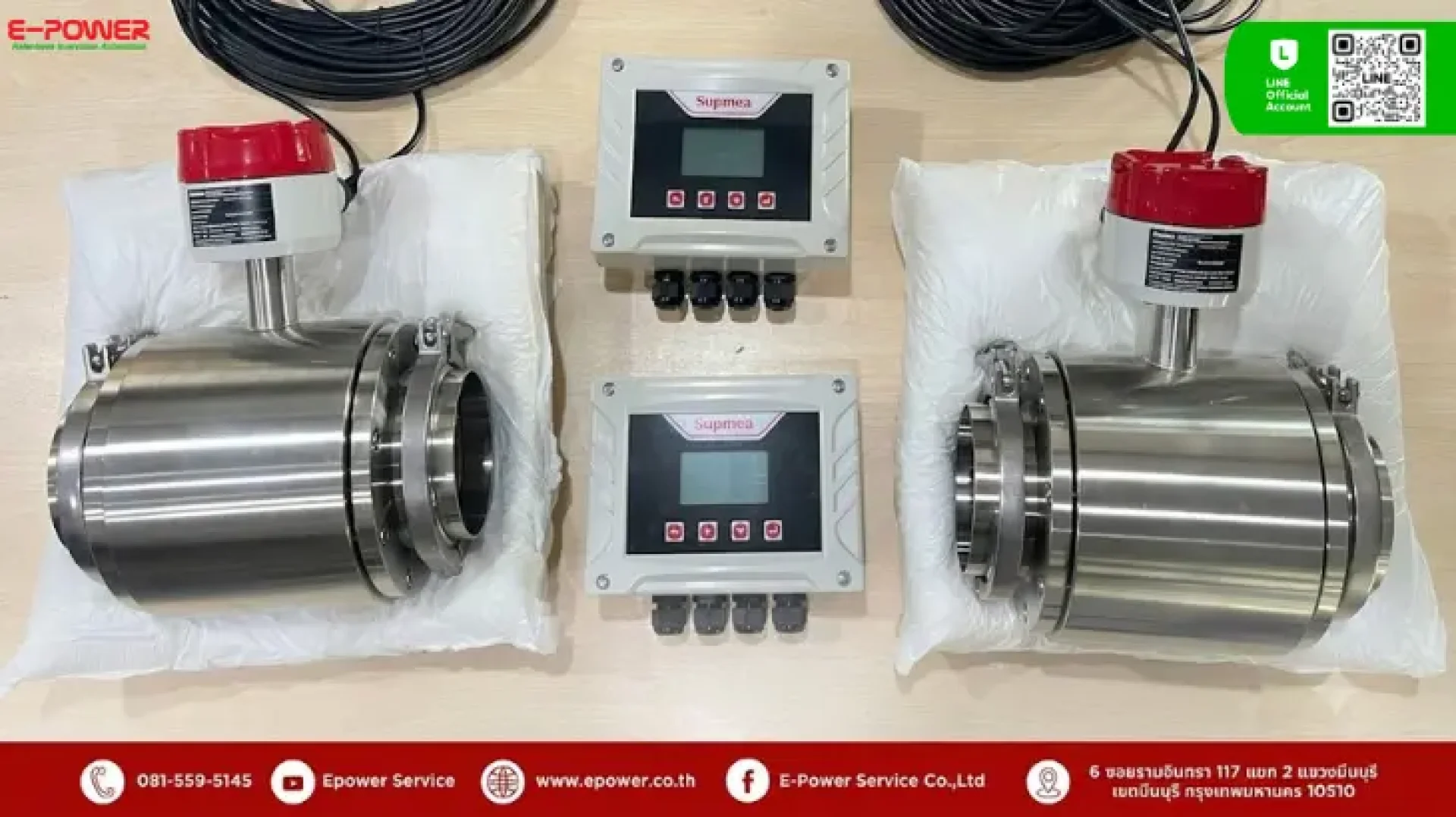
An electromagnetic flowmeter is an instrument that measures the flow rate of conductive liquids using Faraday's law of electromagnetic induction — delivering accurate measurement with no moving parts obstructing the flow. The Supmea LDG-A100-DN100 is a DN100 (4-inch) flowmeter offering ±0.5% accuracy across a 14–140 m³/h flow range, with IP68 ingress protection. It is purpose-built for water supply, wastewater, treatment systems, and general industrial applications.
Why Modern Water Measurement Requires an Electromagnetic Flowmeter
Traditional mechanical or paddle-wheel meters suffer from worn impellers, debris jamming the mechanism, and readings that drift further off with age. In wastewater or liquids carrying suspended solids, clogging becomes so frequent that regular disassembly and cleaning is unavoidable.
An electromagnetic flowmeter eliminates all of these problems. The measuring tube is completely unobstructed — nothing to wear out, nothing to clog, and no pressure drop — so accuracy stays consistent throughout the meter's service life. It also transmits data directly to a central monitoring system, serving both in-plant measurement and regulatory effluent reporting requirements.
Key Specifications of the Supmea LDG-A100-DN100
- DN100 (4-inch) pipe size — covers a 14–140 m³/h flow range, suitable for medium-to-large water supply and treatment systems
- ±0.5% of reading accuracy — dependable enough for commercial billing references and official reporting
- Three output types — 4-20mA, Pulse, and RS485 Modbus for connection to PLCs, data loggers, and SCADA systems
- 316L electrodes + CR lining — corrosion-resistant, suited to wastewater and industrial liquids
IP68 rated — the sensor body is submersible, surviving flooded meter pits without damage - Remote installation with separate display — the sensor stays at the measuring point while the converter/display mounts wherever reading is safe and convenient, with long cable runs supported
How It Works — Explained Simply
As conductive liquid flows through the magnetic field generated by the meter, a small induced voltage is produced in direct proportion to the flow velocity. Electrodes on the tube wall detect this voltage, and the converter processes it into flow rate and totalized volume — shown on the display and transmitted as standard industrial signals.
One important note: electromagnetic flowmeters only work with conductive liquids such as tap water, wastewater, raw water, and water-based chemical solutions. They are not suitable for oil or non-conductive fluids — the E-Power engineering team can assess suitability before you order.
Recommended Applications
- Water supply production and distribution — measure station inflow/outflow and detect network water loss
- Factory wastewater treatment — measure effluent volume for regulatory reporting to the Department of Industrial Works
- Pumping stations and irrigation systems — monitor pumping rates in real time
- Food and beverage plants — meter process water intake to control costs
- Aquaculture farms and modern agriculture — control water fed into ponds and irrigation systems
Scale Up to Remote Monitoring — Read Your Meter from Anywhere
The RS485 Modbus port is this model's gateway to remote monitoring. Real configurations E-Power has deployed for customers include:
- Connecting a BLIIOT S275 4G IoT RTU to push flow rate and totalizer data to the cloud, with mobile alerts when flow becomes abnormal — ideal for remote pumping stations
- Integrating through a BLIIOT M340E Ethernet I/O Module into the plant SCADA system to view multiple measuring points on one screen
- Pairing with the Supmea SUP-TDS210-C EC/TDS controller and water quality sensors to monitor both water quantity and quality in a single system
- Housing the converter in an IP65-rated control cabinet for outdoor sites, complete with backup power
Frequently Asked Questions (FAQ)
Q: How is an electromagnetic flowmeter different from a paddle-wheel water meter?
A: An electromagnetic flowmeter has no moving parts, so nothing wears out or clogs, accuracy stays constant for life, and it outputs signals for monitoring systems. Paddle-wheel meters cost less upfront but need frequent maintenance and drift as they wear.
Q: What pipe size and flow range does the LDG-A100-DN100 suit?
A: It fits DN100 (4-inch) pipes with a 14–140 m³/h flow range. For other pipe sizes, Supmea offers DN10 up to DN1000 — our engineers can calculate the right size for your site.
Q: Can it be installed in a meter pit that floods?
A: Yes. The sensor is IP68 rated and fully submersible, while the separate display unit mounts above ground where it stays dry and easy to read.
Q: Can it measure oil or air?
A: No. The measuring principle requires a conductive liquid. For oil, air, or steam, consult the E-Power engineering team to select a suitable alternative such as a vortex or ultrasonic flowmeter.
Conclusion
The Supmea LDG-A100-DN100 delivers everything a water measurement point needs: ±0.5% accuracy, IP68 durability, and a full set of standard outputs. Install it once and measure reliably for years with virtually no maintenance — the ideal heart of any water supply, wastewater, or treatment monitoring system that depends on trustworthy data every day.
See more Supmea products at https://www.epower.co.th/supmea-product
For more information, contact us at:
- Website : www.epower.co.th
- LINE - https://lin.ee/SXWV7tS or ID @epower
- Youtube : Epower Service
- Tiktok : epowerservice_
- Email : info@epower.co.th
- Tel : 0815595145 (Sales Engineer, E-Power Service Co., Ltd.)
Our engineering team is ready to assist you.