Soil Tensiometer VS Soil Moisture Sensor – Which One Wins for Your Smart Farm System?
In precision agriculture and intelligent automatic irrigation system design, the primary challenge is determining exactly when and how much to water. Two of the most essential instruments used to monitor underground conditions are the Soil Moisture Sensor and the Soil Tensiometer.
While both serve the ultimate purpose of irrigation management, their scientific principles, engineering implementations, and data insights differ entirely. Choosing the appropriate sensor is the key to maximizing crop yield, optimizing resources, and achieving zero-waste water management.
What is a Soil Moisture Sensor?
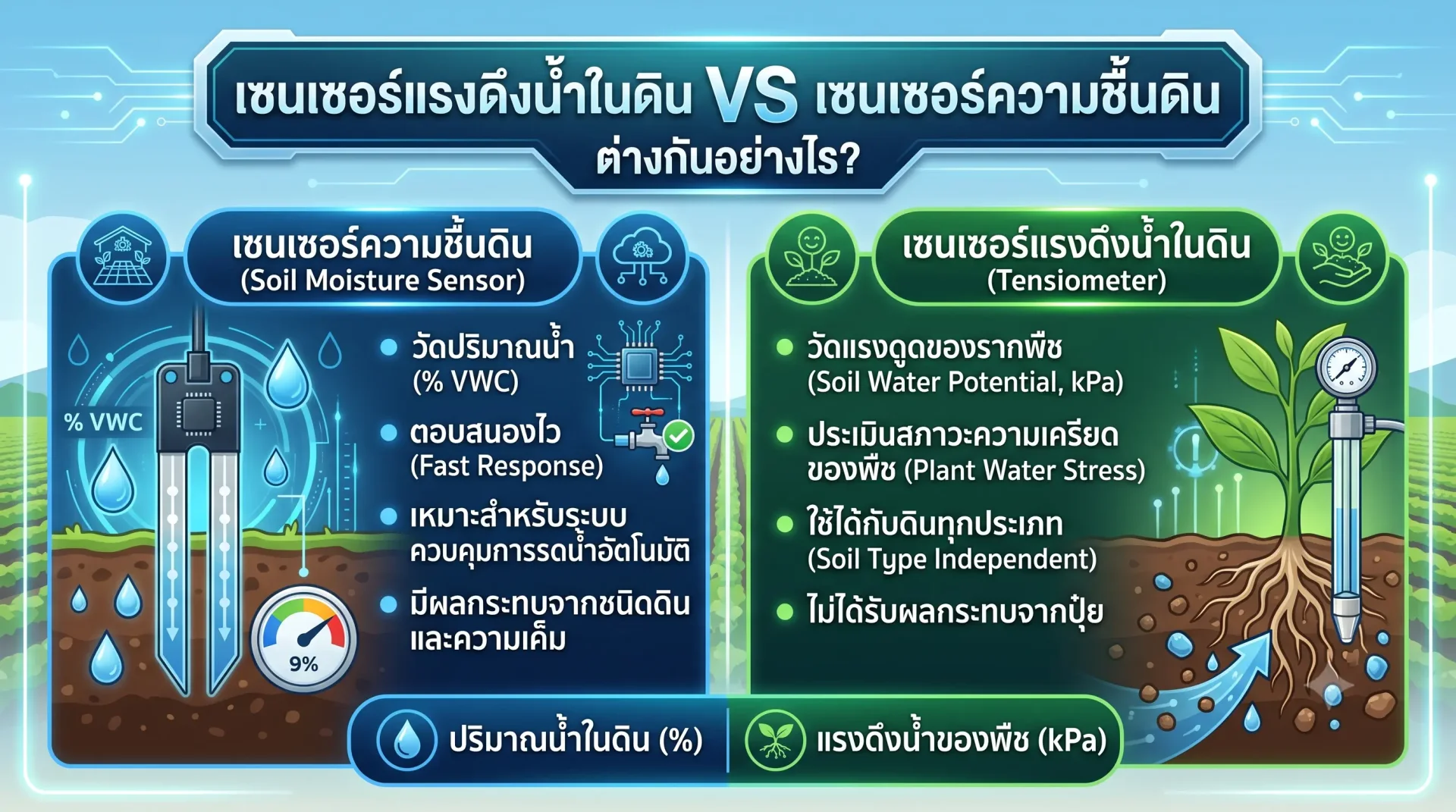
A Soil Moisture Sensor measures the Volumetric Water Content (VWC) of the soil. Utilizing advanced principles like Time Domain Reflectometry (TDR) or Frequency Domain Reflectometry (FDR), it quantifies the soil's dielectric constant and translates it into a straightforward volumetric moisture percentage (%RH).
- What it reveals: The actual volume of water present relative to the total volume of the soil matrix.
- Key Advantages: Ultra-fast response time, real-time data output, and highly durable for permanent burial. Ideal for direct integration with automated irrigation control loops.
What is a Soil Tensiometer?
A Soil Tensiometer measures Soil Moisture Tension or Soil Water Potential (expressed in kPa or Bars). It consists of a water-filled tube with a specialized porous ceramic tip inserted into the root zone. As the soil dries, it draws water out through the ceramic tip, creating a vacuum inside the sealed tube that reflects the precise tension of the soil matrix.
- What it reveals: How hard plant roots must work to extract water from the soil (a direct index of Plant Water Stress).
- Key Advantages: Completely soil-type independent. Its measurements remain unaffected by soil salinity, electrical conductivity (EC), or heavy fertilizer application.
Comparison Matrix: Tensiometer VS Soil Moisture Sensor
| Parameter | Soil Moisture Sensor | Soil Tensiometer |
| Measured Parameter | Volumetric Water Content (VWC) | Soil Moisture Tension / Soil Water Potential |
| Measurement Unit | Percentage (%) or VWC | Kilopascals (kPa) or Bar |
| Response Time | Extremely rapid (seconds) | Moderate (depends on water movement through ceramic) |
| Soil Type Impact | Requires soil-specific calibration | Independent; works accurately across all soil types |
| Salinity / Fertilizer Impact | High salinity can distort readings | Immune to salt ions and EC variations |
| Primary Use Case | Real-time automated irrigation systems (IoT Smart Farm) | Plant physiology research, root rot prevention, sensitive crops |
Recommended Industrial-Grade Sensors by E-Power Service
To upgrade your agricultural automation or environmental monitoring systems, E-Power Service Co., Ltd. recommends the following industry-proven sensors:
- Renke Soil Moisture Sensor: Engineered with a rugged 304 stainless steel probe and TDR technology. Rated IP68 for long-term submersion in agricultural IoT applications.
Product Link: Renke Soil Moisture Sensor - Rika RK510-01 Soil Moisture Sensor: A high-sensitivity instrument based on FDR electromagnetic pulse principles. Perfect for greenhouses and hydrological monitoring.
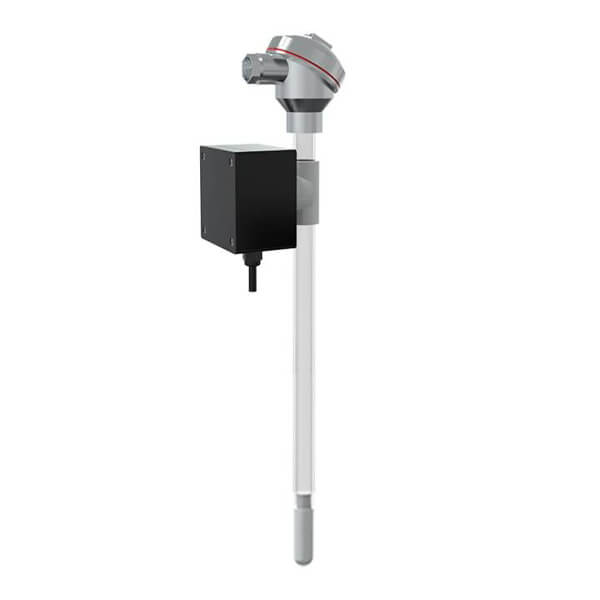
Product Link: Rika RK510-01 Soil Moisture Sensor - Renke Soil Tensiometer (RS-TRZL-1-EX): Featuring a transparent PVC casing for easy water-level tracking and a highly sensitive ceramic head. Supports RS485 Modbus-RTU and 4-20mA analog output for direct connection to industrial PLCs.
Product Link: Renke Soil Tensiometer
Conclusion: Which Sensor Suits Your Application?
Deploy a Soil Moisture Sensor when you need instant, dynamic readings to trigger relays, pumps, and solenoids in an automatic irrigation system. On the other hand, select a Soil Tensiometer if your primary goal is tracking authentic plant water stress without interference from soil composition, salinity, or chemical fertilizers.
For professional smart agricultural design and complete IoT industrial sensor solutions, consult the engineering team at E-Power Service.