Why is an Air Quality Sensor Important, and is It Worth the Investment?
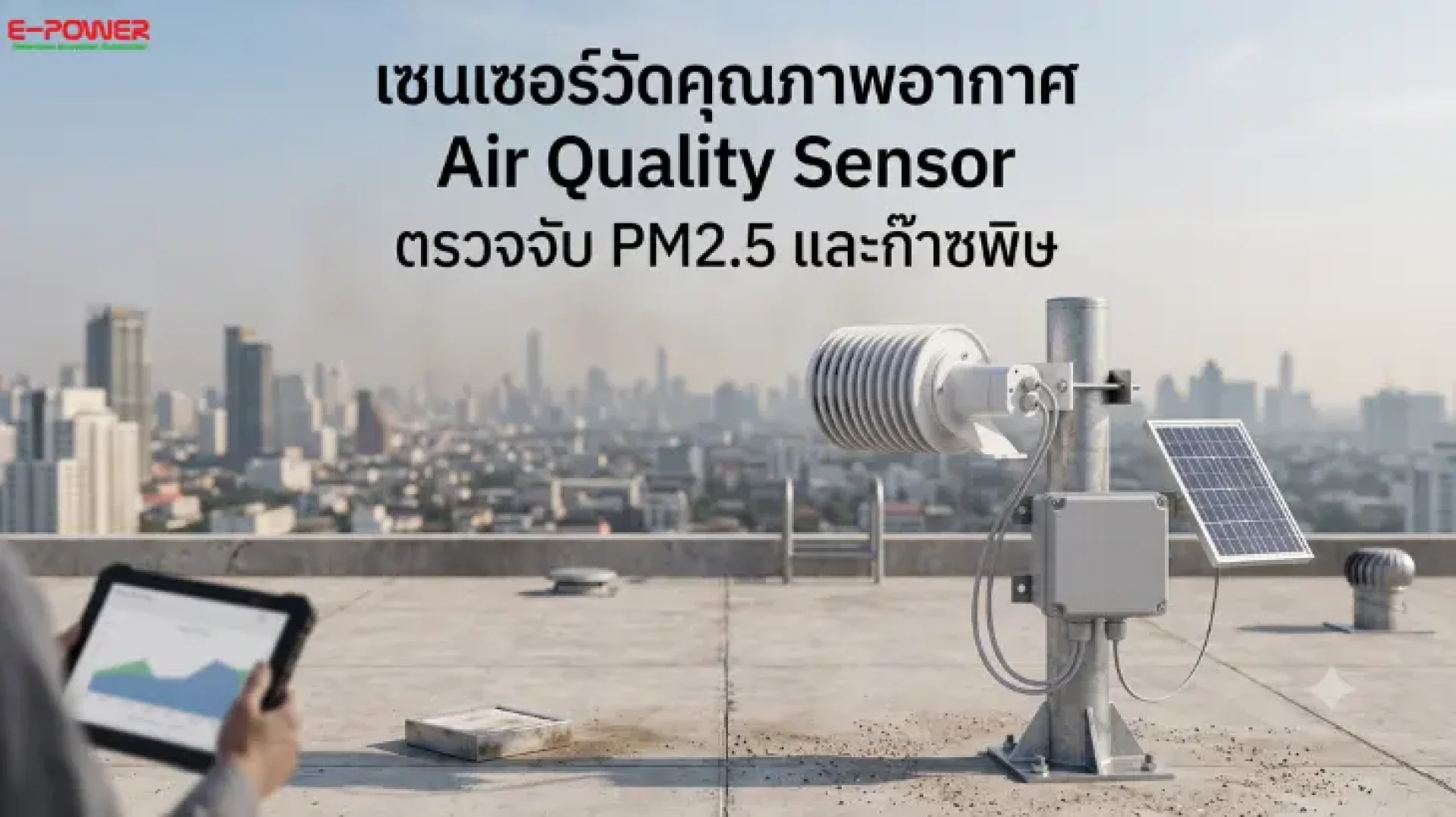
Did you know that the World Health Organization (WHO) estimated air pollution causes over 4 million premature deaths worldwide each year? Clean air is a fundamental necessity for everyone. Whether fine particulate matter (PM) or toxic gases like $CO$, $NO_2$, and $SO_2$, air pollutants can directly enter the human body and damage internal organs.
Accurate and continuous detection is the crucial first step in combating these invisible threats. Air quality sensors have become essential devices—not only for public health alerts, but also for building ventilation systems, industrial plants, and filtration units. Let’s dive into the hazards of air pollution, why monitoring is vital, and why investing in an air quality sensor is truly worth it.
Hazards and Impacts of Air Pollution
Air pollution causes wide-ranging damage, affecting individual health, ecosystems, and national economies alike.
1. Health Impacts
Poisonous particles can be many times smaller than a human hair or a grain of sand—invisible to the naked eye and detectable only via air quality sensors. When inhaled, these fine particles pass through the lung alveoli directly into the bloodstream, reaching vital organs like the heart, brain, and lungs. This leads to strokes, lung cancer, asthma, and chronic respiratory diseases.
2. Environmental and Ecosystem Effects
Pollutants settle on the ground through dry deposition or condense into acid rain, acidifying soil and water sources. This severe environmental shift destroys plant biodiversity and forces animal populations to migrate.
3. Economic Consequences
Escalating pollution imposes a heavy economic burden through rising healthcare costs, reduced workforce productivity, agricultural crop loss, and declining tourism. Installing air quality sensors across industrial zones provides governments and enterprises with an effective tool to monitor and control emissions.
Key Types of Air Pollutants to Monitor
According to WHO guidelines and industrial air monitoring standards, common indoor and outdoor pollutants include:
Primary Pollutants
- Carbon Monoxide ($CO$): Produced by incomplete combustion; reduces blood oxygen levels, causing fatigue, dizziness, and loss of consciousness.
- Nitrogen Oxides ($NO_x$): Damages the respiratory system, triggers acid rain, and reacts to form ground-level ozone.
- Sulfur Dioxide ($SO_2$): Causes severe toxic smog, reduces visibility, and irritates respiratory tracts.
- Ground-Level Ozone ($O_3$): Formed by reactions between $NO_x$ and VOCs; causes chest pain, coughing, and throat irritation.
- Ammonia ($NH_3$): A corrosive gas that severely damages respiratory tracts and eye tissues upon heavy inhalation.
- Hydrogen Sulfide ($H_2S$): Highly toxic gas found in wastewater treatment and chemical facilities; high concentrations can be fatal within minutes.
Particulate Matter (PM)
Generated by industrial combustion, vehicle exhausts, and agricultural burning, particulate matter contains toxic heavy metals and carbons. They are classified by size:
- PM10: Fine particles smaller than 10 microns.
- PM2.5: Fine particles smaller than 2.5 microns that penetrate deep into the lungs.
- PM1.0: Ultrafine particles smaller than 1 micron that can directly enter the bloodstream.
Volatile Organic Compounds (VOCs & TVOC)
Volatile compounds such as Formaldehyde ($CH_2O$) and TVOCs are prevalent in industrial plants, paints, and solvents, posing long-term risks to neurological and respiratory health.
Why Air Quality Monitoring is Essential
- Outdoor Air Quality: Enables facility management and authorities to pinpoint pollution sources, enforce environmental regulations, and issue timely public safety warnings.
- Indoor Air Quality (IAQ) & Industrial Plants: Enclosed areas with central HVAC systems often suffer from poor ventilation. In industrial manufacturing facilities, air quality sensors automatically trigger ventilation fans or signal air filter replacements whenever pollutant thresholds are exceeded.
Working Principle of Air Quality Sensors
Most industrial air quality sensors rely on the Photoelectric Phenomenon:
- Air Sampling: Ambient air is continuously drawn into the sensor chamber.
- Light Emission: An infrared or laser light beam passes through the air stream.
- Light Absorption & Scattering: Particles and gas molecules absorb or scatter the light beam, reducing light intensity at the receiving end.
- Signal Conversion: The photoelectric detector measures the light intensity change and converts it into electrical signals, calculating concentration values in $mu g/m^3$, $ppm$, or $ppb$.
Integrating Air Quality Data with Automation Systems
Modern industrial-grade air quality sensors do more than display readings—they convert raw data into digital control signals:
- Communication Protocols: Supports industrial standards such as Modbus RS485, 4-20mA, or 0-10V analog outputs.
- PLC & SCADA Integration: Sends real-time telemetry to Programmable Logic Controllers (PLCs) or SCADA platforms to automatically trigger exhaust fans, dampers, or purification systems when pollution spikes.
Premium Air Quality Sensor Solutions by E-Power Service
Looking for high-precision, industrial-grade environmental sensors compatible with your plant control architecture? E-Power Service delivers reliable monitoring solutions from leading brands:
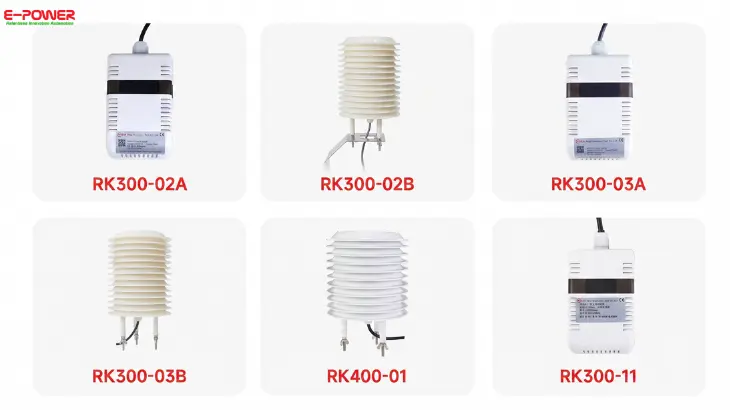
- Environmental & Weather Sensors: Solutions like the Rika RK300-08 Air Quality Sensor offer multi-parameter gas and dust detection equipped with RS485 Modbus RTU outputs.
- Industrial Water Quality Sensors: Products like the Supmea SUP-TDS210-C Conductivity Meter and OPTOD Optical Dissolved Oxygen Sensor ensure accurate liquid analysis for boiler blowdown and wastewater treatment systems.
The engineering team at E-Power Service provides full technical consultation, system design, and PLC automation integration to elevate safety and efficiency across your enterprise.