Industrial Control Panels : Design Principles and Standards to Know Before You Order
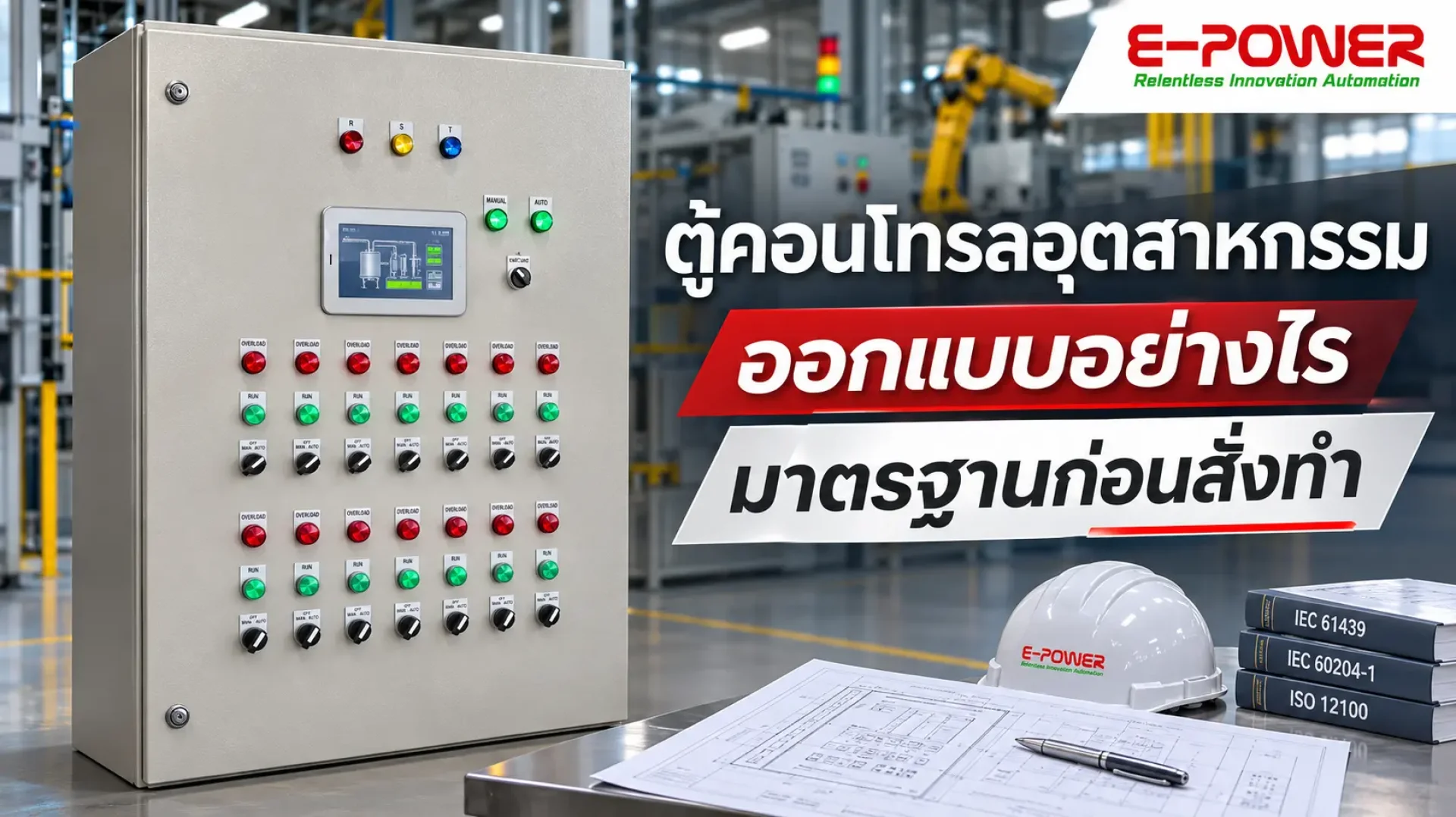
CONTROL PANEL GUIDE
Industrial Control Panels: Design Principles and Standards to Know Before You Order
A well-designed control panel keeps machines running reliably and safely, and stays easy to maintain for years. This guide covers the standards, design principles, and information to prepare before ordering one.
The industrial control panel is the heart of factory automation, housing a machine's power distribution, protection devices, controllers, and signal connections. Poor design leads to overheating that shortens component life, electrical noise, hard-to-trace wiring during repairs, and safety risks. This article explains the standards and design principles to know before ordering an industrial control panel for your plant.
what information do you need to order a control panel?
Before ordering an industrial control panel, prepare six groups of information: the load list (motors, heaters, kW ratings), the power supply (voltage, phases, transformer size), the control scheme (PLC, HMI, I/O count, communications), the installation environment (indoor or outdoor, dust, water, heat), the available space, and the standards to comply with. The more complete the information, the more accurate the quotation and the faster the job, without rework.
01
What's inside an industrial control panel?
| Section | Examples |
| Power distribution and protection | Main breaker, branch breakers, fuses, residual current devices, surge protection |
| Motor power | Contactors, overload relays, inverters (VFDs), soft starters |
| Control | PLC, I/O modules, relays, 24VDC power supply |
| Operator interface | HMI screen, push buttons, pilot lights, emergency stop |
| Communications and metering | IoT gateway, network switch, power meter, CTs, sensor signal terminals |
02
Standards to know before designing a control panel
| Standard | Scope |
| IEC 61439 | Low-voltage switchgear and controlgear assemblies: temperature rise, short-circuit withstand, and internal separation (Forms 1-4) |
| IEC 60204-1 | Electrical equipment of machines, such as emergency stop, wire colors, and shock protection |
| IEC 60529 (IP) | Enclosure protection against dust and water, e.g. IP54 indoors, IP65 for washdown or outdoor areas |
| Thailand EIT standard | Electrical installation standard for Thailand, covering cable sizing, earthing, and wire color codes |
| UL 508A | Required when machines are exported to North America |
Wire color code in Thailand
Three-phase systems use brown, black, and grey for L1, L2, and L3, blue for neutral, and green-yellow for protective earth. Following the color code helps technicians inspect and maintain an industrial control panel safely and quickly.
03
Principles of good industrial control panel design
1. Separate power and signal sections
Place inverters and contactors away from the PLC and signal wiring, and run power cables and 4-20mA or RS485 signal cables in separate ducts to reduce noise that makes sensor readings jump.
2. Calculate heat load and ventilation
Add up the heat from every device, especially inverters and power supplies, then size filtered fans or a panel air conditioner accordingly. Heat buildup is one of the top reasons components fail early.
3. Check short-circuit ratings
Choose breakers rated above the prospective short-circuit current at the panel location, which depends on transformer size and cable length.
4. Leave room for the future
Reserve about 20-30% spare space on the mounting plate and terminals, plus spare PLC I/O, so machines or sensors can be added without building a new panel.
5. Earthing and surge protection
Bond all equipment to a single earth bar, use shielded cable for analog signals, and fit surge protection where sensor cables run in from outside the building.
6. Label everything and document fully
Number every wire to match the drawings, label every device, and hand over as-built drawings, an I/O list, and a bill of materials so plant technicians can maintain the panel themselves.
04
What information do you need to order a control panel?
This checklist speeds up discussions with your industrial control panel builder and gets the panel right the first time.
| Topic | Information to prepare |
| Load list | Number of motors, kW ratings, starting method (DOL, star-delta, inverter), and other loads such as heaters |
| Power supply | Voltage and phases, transformer size, distance from the main switchboard |
| Control | Machine sequence, number of sensors and I/O, preferred PLC and HMI brands |
| Communications | Whether SCADA or IoT connection is needed, using Modbus RTU, Modbus TCP, or MQTT |
| Environment | Indoor or outdoor, dust, humidity, washdown, chemical vapors, maximum temperature |
| Installation space | Available dimensions, floor-standing or wall-mounted, door swing, cable entry |
| Standards and documents | Standards required by the plant or end customer, preferred component brands, and deliverable documents |
05
Testing before handover
- Visual inspection against drawings: wire numbers, labels, and terminal tightness at every point
- Insulation resistance test between power conductors and earth before first energization
- Factory acceptance test (FAT): simulate I/O signals and check PLC logic, HMI screens, and the emergency stop
- Site acceptance test (SAT) after installation, with the actual machines and sensors
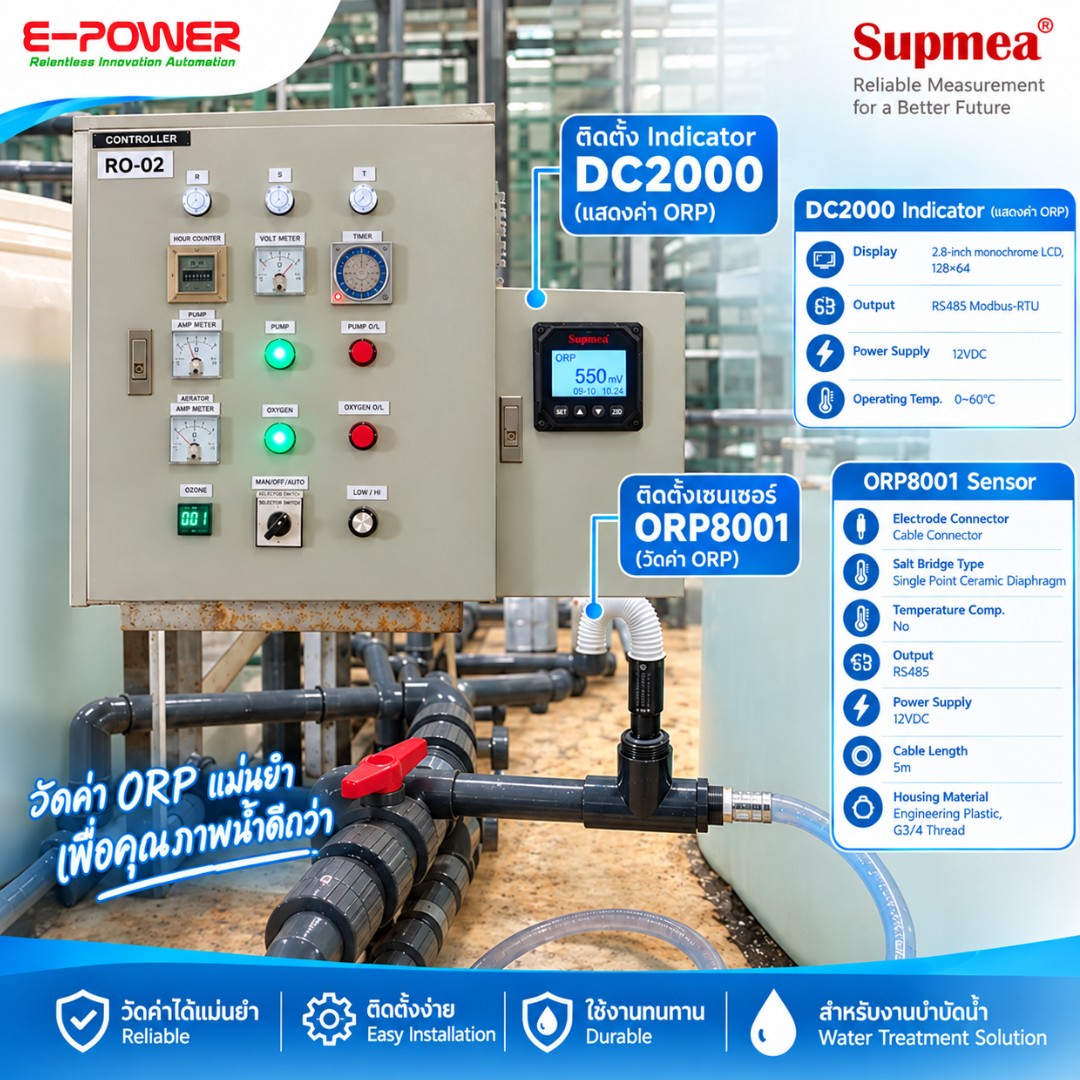
RECOMMENDED PRODUCT
E-POWER equipment for industrial control panels
06
Design and build your industrial control panel with E-POWER
E-POWER is the exclusive Thailand distributor of Haiwell PLCs and HMIs and a CODESYS System Partner. Our engineers design control panels from circuit drawings and component selection to PLC and HMI programming, and connect them to IoT with FlowPLC so you can view machine data on mobile and receive LINE or Telegram alerts instantly.
Frequently asked questions about industrial control panels
What information do you need to order a control panel?
The load list, power supply, control scheme and I/O count, communications, environment, installation space, and required standards.
Which standards apply to industrial control panels?
Mainly IEC 61439 for low-voltage assemblies, IEC 60204-1 for machine electrical equipment, IEC 60529 for IP ratings, and local installation standards such as Thailand's EIT code.
What IP rating should an outdoor control panel have?
Generally IP65 or higher, with a rain and sun canopy and a cooling method that doesn't compromise the IP rating.
Why do panels overheat and damage components?
Usually because heat load, especially from inverters, wasn't calculated, so fans or panel air conditioning are undersized, or air filters are clogged.
How much spare space should a control panel have?
About 20-30% spare mounting space, terminals, and I/O is recommended to allow for future expansion.
Planning to order an industrial control panel?
Send us your load list, control requirements, and site conditions. E-POWER engineers can design, build, and program a standards-compliant, IoT-ready control panel for you.
Talk to us on LINE @epower info@epower.co.thTel. +66 81-559-5145 · YouTube: Epower Service · TikTok: epowerservice_