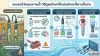
The Relationship Between TDS, Electrical Conductivity (EC), and Salinity
TDS (Total Dissolved Solids), EC (Electrical Conductivity), and Salinity are the most frequently used parameters in water quality monitoring, drinking water safety, and marine research. While all three reflect the concentration of dissolved ions in water, they differ in their specific meanings, calculation methods, and practical applications.
1. What is Salinity?
Salinity refers to the total amount of dissolved salts in water. It is typically expressed in parts per thousand (ppt or ‰) or in a dimensionless unit known as the Practical Salinity Unit (PSU).
- In the past: It was determined based on chlorinity (Cl) using the classic formula:
S (‰) = 1.80655 times Cl (‰)
- Present day: The Practical Salinity Scale (PSS-78) is widely preferred. It defines salinity based on the conductivity ratio of a water sample to a standard KCl solution, providing higher accuracy and global standardization.
2. What is Electrical Conductivity (EC)?
EC is the measure of a solution's ability to conduct an electric current. Common units include µS/cm (microsiemens per centimeter) or mS/cm (millisiemens per centimeter).
- Influencing Factors: Ion concentration, ion type, temperature, and solution viscosity.
- Standardization: To ensure comparability across different conditions, conductivity is usually standardized to a reference temperature of 25°C (referred to as EC25).
3. What is Total Dissolved Solids (TDS)?
TDS represents the total concentration of dissolved inorganic salts and small amounts of organic matter in water (excluding suspended solids and gases). It is measured in mg/L or ppm.
- Primary Components: Calcium (Ca^{2+}$), Magnesium (Mg^{2+}$), Sodium (Na^+), Carbonate (CO_3^{2-}), Sulfate (SO_4^{2-}), etc.
- Measurement: It can be measured directly via the Gravimetric method (evaporating water and weighing the residue) or estimated indirectly from EC values.
The Relationship Between TDS, EC, and Salinity
Relationship between EC and TDS
- In most scenarios, TDS and EC share a linear relationship at 25°C, using the following formula:
TDS (mg/L) = K times EC_{25} (mu S/cm)
- K (Conversion Factor): Generally ranges between 0.5 and 0.9 (the most common range is 0.65 - 0.7).
- NaCl-dominated water: K approx 0.50 - 0.55
- Natural freshwater: K approx 0.65 - 0.75
Relationship between Salinity and EC
This relationship is more complex because different salts contribute differently to conductivity. For global marine monitoring, the PSS-78 polynomial equation is used, which incorporates both temperature and pressure factors.
Relationship between TDS and Salinity
In typical seawater, an approximate correspondence exists:
Example: Seawater with a salinity of 35‰ has a TDS of approximately 35,000 mg/L.
Effect of Temperature on Measurements
- EC increases with Temperature: As temperature rises, water viscosity decreases, allowing ions to move more freely. Generally, EC increases by approximately 2-3% for every 1°C increase.
- Importance of Temperature Compensation: To ensure data reliability, water quality sensors must feature an Automatic Temperature Compensation (ATC) system to reference the value back to the standard 25°C.
Selecting Water Quality Sensors
E-Power Service Co., Ltd. offers Renke water quality sensors designed for high-precision, durable, real-time monitoring:
- EC Sensor: Covers everything from freshwater to high-salinity seawater with an accuracy of ±1% FS.
- Multi-parameter Monitoring: Supports measurement of pH, Dissolved Oxygen (DO), EC, Turbidity, ORP, and Temperature.
- Anti-fouling System: Features self-cleaning mechanisms, such as automatic brushes, which reduce maintenance and extend service life by 2-3 times.
Interested in an Intelligent Water Monitoring System? Contact us:
- Website: www.epower.co.th
- Email: info@epower.co.th
- LINE: @epower