The Importance of Air Quality Sensors
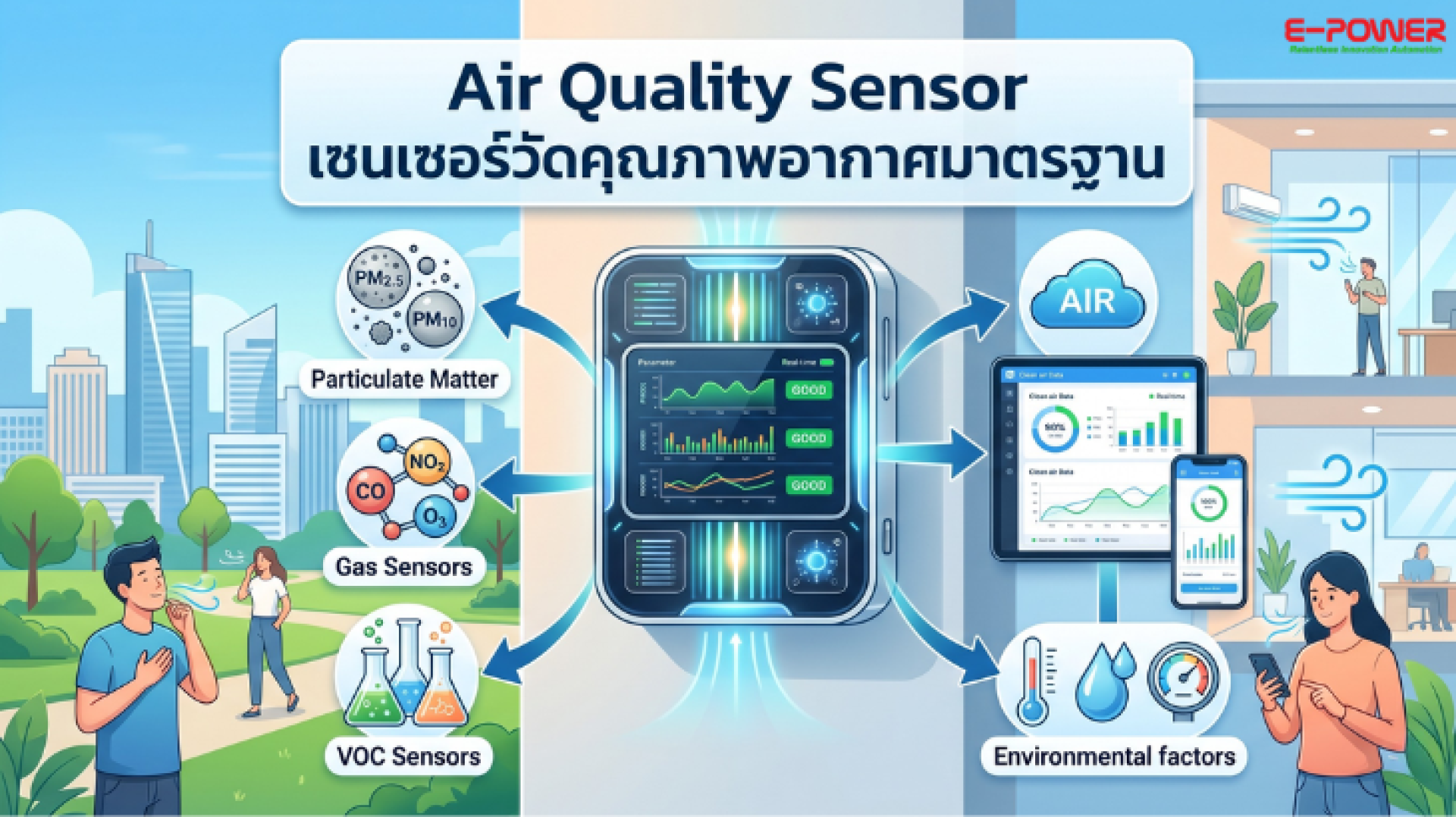
Air Quality Monitoring plays a critical role in safeguarding public health and the environment. Poor air quality directly impacts the respiratory system, heart function, and overall well-being. Monitoring air quality data allows for the precise identification of pollutants and their sources, enabling agencies and individuals to take proactive measures to mitigate health risks in a timely manner.
An Air Quality Sensor is a device designed to measure various pollutants and atmospheric parameters, such as Particulate Matter (PM), toxic gases, Volatile Organic Compounds (VOCs), and environmental factors like temperature and humidity. Utilizing modern technologies—including electrochemical, optical, and spectroscopic methods—current sensors are compact, affordable, and portable, supporting real-time monitoring across diverse locations.
Types and Operation of Air Quality Sensors
Each sensor type is engineered to measure specific values:
- Particulate Matter (PM) Sensors: Measure the concentration of dust and airborne particles.
- Gas Sensors: Detect hazardous gases such as Carbon Monoxide (CO), Nitrogen Dioxide (NO2), and Ozone (O3).
- VOC Sensors: Measure the concentration of Volatile Organic Compounds.
- Environmental Sensors: Track supplementary factors like temperature, humidity, and atmospheric pressure.
Why are Air Pollution Detectors Important?
Pollution detectors monitor hazardous substances like PM2.5 and various toxic gases, providing essential real-time data to raise awareness. This information helps individuals avoid outdoor activities during high-pollution periods and assists the government in developing effective strategies to reduce pollution sources. Furthermore, long-term data helps analyze trends and drives research toward cleaner technologies for a healthier future environment.
The Key: Accuracy and Reliability
Sensor accuracy is vital, as erroneous values can lead to misinterpreted situations. Factors affecting accuracy include degradation over time and environmental interference. Therefore, regular Calibration and maintenance according to manufacturer recommendations are indispensable for obtaining the most accurate and reliable data.
Recommended Products from E-Power Service: CWT-SAQ Series
For comprehensive monitoring, we recommend the high-quality CWT-SAQ Series, an all-in-one solution for building and industrial applications:
- CWT-SAQ-10-CH (10 in 1): Measures up to 10 parameters of pollutants and environmental factors in a single device.
- CWT-SAQ-8-CH (8 in 1): A popular model covering essential basic parameters for monitoring.
- CWT-SAQ Series : The standard model featuring a modern design, easy installation, and high durability.
Benefits and Advantages of Air Quality Sensors
- Real-time Monitoring: Instant knowledge of pollution levels for rapid response.
- Cost-effectiveness: More accessible pricing than traditional monitoring stations, allowing for multi-point installation and broader coverage.
- Data Integration: Sensor data can connect to platforms like the E-power IoT Platform for in-depth analysis and precise decision-making.
At E-Power Service , we are a trusted partner in providing international-standard Air Quality Sensor solutions from Rika Sensor. With over a decade of experience, we are ready to deliver innovations that create a cleaner and safer environment for everyone.