How to Control EC and pH Sensors in a Fertigation System for Optimal Nutrient Uptake
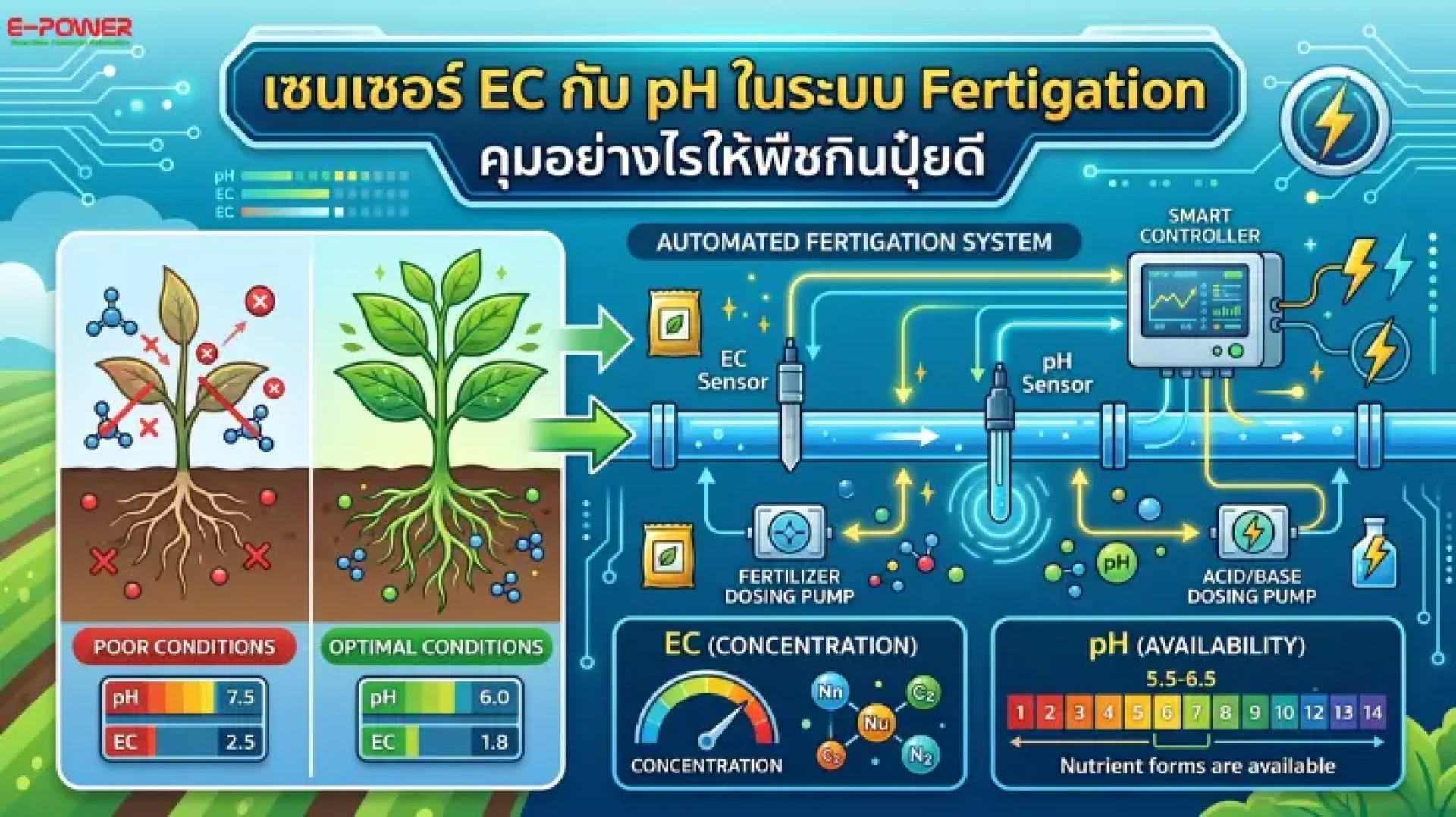
EC and pH sensors in a fertigation system are the heart of determining how well plants can "absorb nutrients." In an irrigation system that delivers fertilizer simultaneously, applying more fertilizer does not always equate to better plant growth. The deciding factors are two metrics that always work in tandem: EC (Electrical Conductivity), which indicates fertilizer concentration in the water, and pH (Potential of Hydrogen), which dictates whether nutrients are in a form that roots can actually absorb. Controlling EC and pH within the optimal range in a fertigation system is therefore crucial to achieving consistent crop quality and maximizing fertilizer efficiency. This article explains the meaning of both values, their relationship affecting nutrient uptake, ideal ranges, and guidelines for measurement and control using real-world system sensors.
What EC Tells Us: Fertilizer Concentration Experienced by Plants
EC or Electrical Conductivity measures the ability of a solution to conduct an electrical current, which varies based on the amount of dissolved minerals and nutrients in the water. Simply put, EC indicates how concentrated the liquid fertilizer is. The more fertilizer added, the higher the EC value. If the EC is too low, plants will suffer from nutrient deficiencies and experience stunted growth. Conversely, if the EC is too high, the osmotic pressure in the solution becomes so elevated that it hinders the roots' ability to absorb water, causing drought-like symptoms despite the abundance of water, and leading to tip burn. Precisely controlling the EC value means effectively regulating the exact "quantity of food" the plants receive.
What pH Tells Us: The Key to Unlocking Root Nutrient Uptake
pH represents the acidity or alkalinity of the nutrient solution. Even if the liquid fertilizer contains a complete profile of essential nutrients, an unsuitable pH level will cause certain elements to chemically transform into forms that roots cannot absorb. This phenomenon is known as Nutrient Lockout. For example, when the pH is too high, iron, manganese, and phosphorus become less soluble and harder to absorb, causing plants to show deficiency symptoms despite full fertilizer application. Therefore, pH acts like a key that unlocks the door for plants to access the food that is already present.
A Relationship That Must Be Monitored Together: Why Measuring EC Alone Is Not Enough
A common misconception is treating EC and pH as separate entities. In reality, both must always be monitored together. EC tells you if there is enough food, while pH tells you if that food is in an edible form. If either value drifts off-target, the plant cannot fully utilize the fertilizer. For instance, a nutrient solution with an optimal EC but a high pH will still leave the plant starved of nutrients. Simultaneous control of EC and pH in a fertigation system is an absolute prerequisite for success.
Optimal Ranges: Reference Figures for Getting Started
In general, the ideal pH of a nutrient solution for most crops ranges between 5.5 and 6.5. This is the sweet spot where primary and secondary nutrients are most bioavailable for root absorption.
As for EC, the value varies depending on the crop type and growth stage. Leafy greens, such as salad vegetables, typically require a lower EC, whereas fruiting crops like tomatoes or chili peppers demand a higher EC during their fruiting stage. Additionally, a lower EC should be maintained during the seedling stage and gradually increased as the plants mature. Note that these are baseline reference values; they should be adjusted based on crop varieties, weather conditions, and specific farm guidelines.
Factors Causing Fluctuations: What to Watch Out For
EC and pH levels in a fertigation system are never static; they fluctuate due to several factors, such as:
- Source Water Quality: Differences in initial hardness or baseline values.
- Differential Uptake: Plants absorb water and nutrients at varying rates, altering stock tank concentrations.
- Temperature Rises: Increased temperatures accelerate evaporation and water uptake.
Salt Accumulation: Fertilizer buildup in the root zone or growing media.
Because of these variables, a single daily manual measurement is insufficient, which is why modern systems have shifted toward continuous monitoring.
From Manual Measurement to Automated Control
In the past, farmers checked EC and pH periodically using handheld meters, risking missing critical windows when values drifted. Modern fertigation systems resolve this by installing continuous EC and pH sensors directly into the nutrient pipeline. When readouts deviate from targets, the control system automatically instructs dosing pumps to inject fertilizer or pH adjusters (acids/bases) to bring the values back into range. This Closed-Loop Control ensures plants receive consistent-quality nutrient solutions throughout the day, minimizing risks and reducing fertilizer waste.
The Role of Sensors and Controllers in Precision Fertigation
High-quality EC and pH sensors should feature Automatic Temperature Compensation (ATC), rapid response times, and digital output signals (such as Modbus RS485) or analog outputs to easily connect with PLCs or HMI touchscreens to drive dosing pumps. Properly positioning sensors where the solution is fully mixed is vital for accuracy. Furthermore, pH probes must be calibrated periodically to ensure reliable readings.
Recommended Models from E-Power
For Electrical Conductivity (EC) Measurement
Supmea SUP-TDS7002 : A 4-electrode conductivity sensor that measures both EC and TDS in a single unit. It features automatic temperature compensation and a durable, IP68 waterproof design, making it perfect for measuring nutrient solutions and source water.
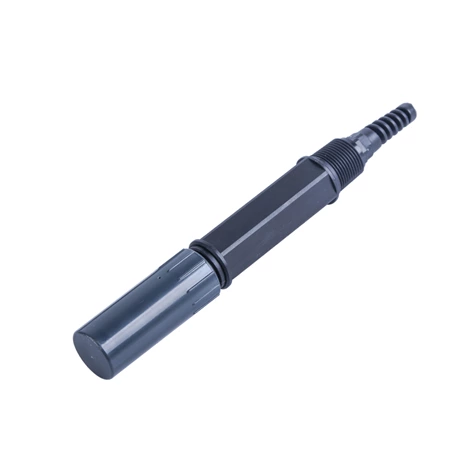
Supmea SUP-TDS8001: A digital conductivity sensor communicating via Modbus RTU (RS485). Designed for aquaculture and water treatment, it is ideal for applications requiring direct digital integration.
For pH Measurement
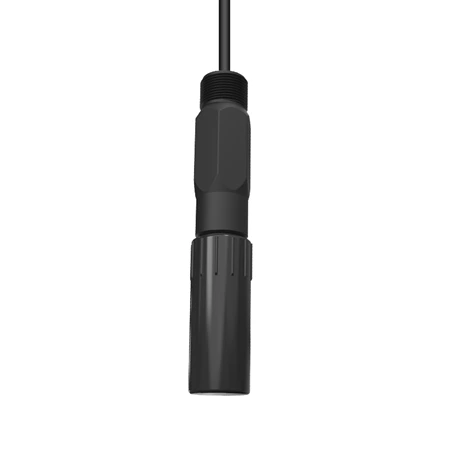
Supmea SUP-pH6001: A durable plastic-body pH probe tailored for general applications. It supports temperature compensation and seamlessly transmits signals to control systems.
For Multi-Parameter Measurement
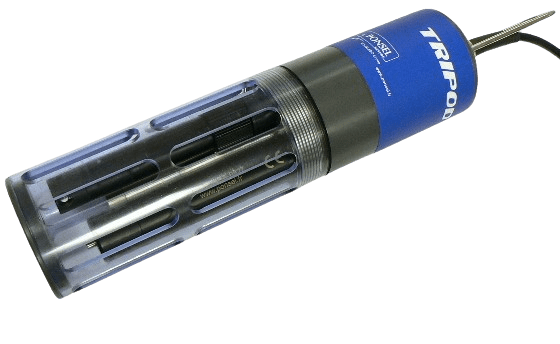
AQUALABO Probe TRIPOD : A multi-parameter probe capable of measuring pH, conductivity, and temperature simultaneously in one unit. It supports RS485/SDI-12 protocols, making it perfect for systems requiring multi-variable surveillance.
Frequently Asked Questions (FAQ)
Q: What should the EC be set to in a fertigation system?
A: It depends on the crop type and growth stage. Leafy greens require lower EC, while fruiting crops need a higher EC during fruit set. Start low during the seedling stage and increase as the plant grows, adjusting for actual environmental conditions.
Q: What is the ideal pH range for nutrient solutions?
A: Generally between 5.5 and 6.5, which is the range where most nutrients are highly soluble and easily absorbed by plant roots.
Q: Why do my plants show nutrient deficiencies even though I apply full fertilizer?
A: This is usually caused by an improper pH level leading to Nutrient Lockout, where nutrients chemically lock up and become unabsorbable. Adjusting the pH back to the ideal range will allow plants to uptake the nutrients.
Q: Why must EC and pH be measured at the same time?
A: Because EC tells you the amount of fertilizer present, while pH determines its availability. If either value is wrong, plants cannot utilize the nutrients efficiently. Both must be managed in tandem.
Q: Can fertilizer dosing be automated based on EC/pH values?
A: Yes. Sensors with RS485 or analog outputs can interface with PLCs and HMIs to control dosing pumps for fertilizer and pH regulators in a closed-loop system, with data uploadable to IoT networks for real-time dashboards and alerts.