Types of Water Sensors: Essential Water Quality and Level Sensors for Industrial Applications
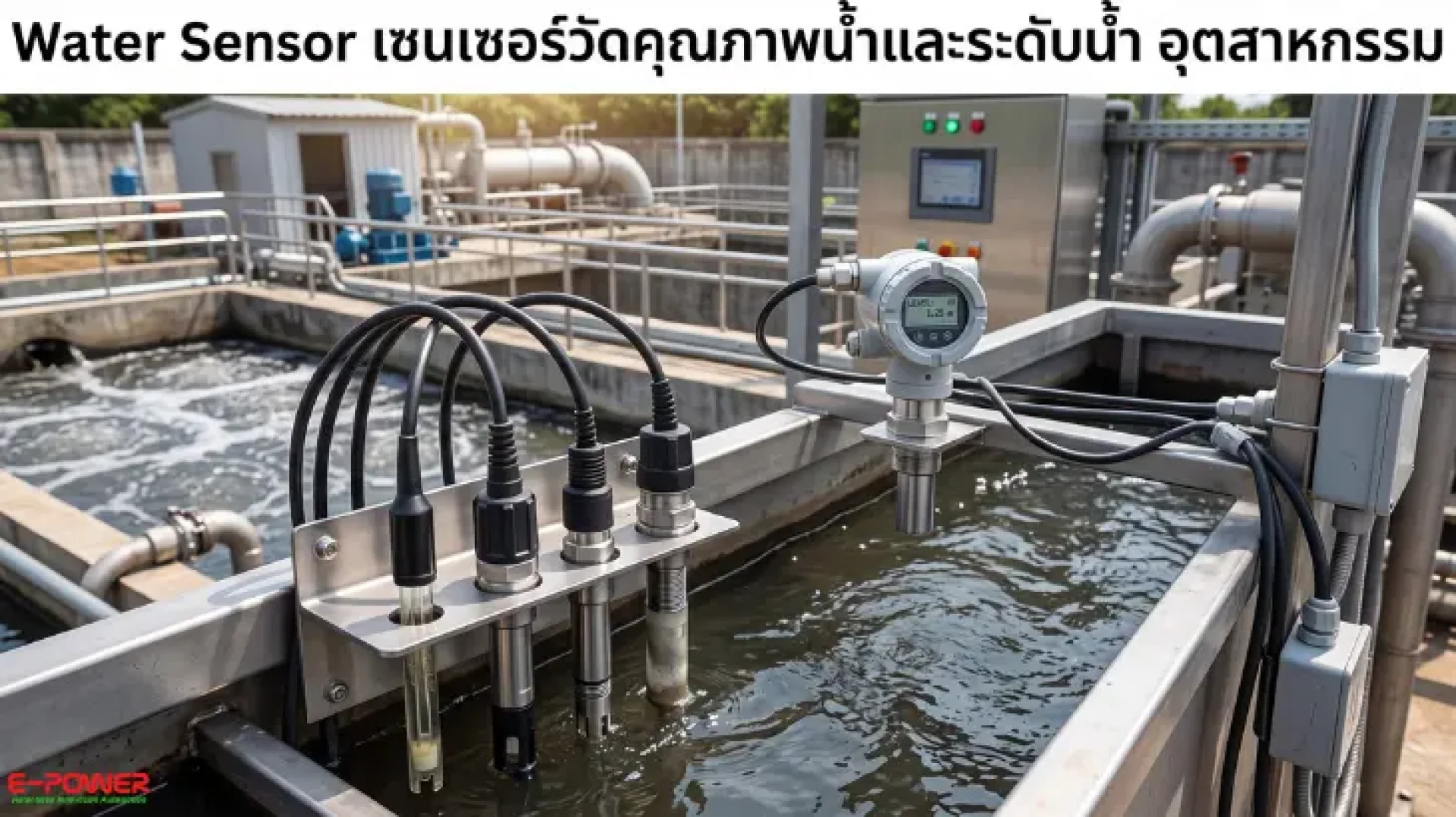
Water Sensors are critical components in industrial processing, environmental monitoring, and wastewater treatment systems. The bottled drinking water consumed every day undergoes rigorous testing through various Water Quality Sensors and Water Level Sensors to eliminate contaminants, maintain mineral balance, and ensure safety.
Water quality and level monitoring in real time provides the essential data required for public health, regulatory compliance, and industrial efficiency. Modern industrial water sensors convert physical and chemical parameters into digital signals, transmitting data directly to PLC Control Systems or SCADA architectures for automated process control.
Importance of Water Sensors in Industrial Systems
Water quality monitoring sensors play a crucial role across multiple operational sectors:
- Public Health Protection: Detects heavy metals, bacteria, and hazardous chemical contaminants across municipal treatment and distribution networks.
- Environmental Conservation: Monitors natural water bodies (rivers, lakes, oceans) to track pollutant levels and safeguard aquatic ecosystems.
- Industrial Process Optimization: Controls feed water quality for boilers, cooling towers, and manufacturing processes to prevent equipment scaling and corrosion.
- Regulatory Compliance: Generates verifiable continuous data needed to comply with strict environmental discharge standards and avoid regulatory penalties.
Water Quality Sensors
Water Quality Sensors measure the chemical, physical, and biological characteristics of water. Key types include:
pH Sensors
pH Sensors measure the acidity or alkalinity of liquid solutions. Maintaining precise pH balance is vital for controlling chemical reactions, preventing pipe corrosion, and managing wastewater treatment.
Dissolved Oxygen (DO) Sensors
DO Sensors measure the concentration of oxygen gas dissolved in water. They are essential for biological wastewater treatment (activated sludge processes) and aquaculture. Devices like the OPTOD Optical Dissolved Oxygen Sensor utilize luminescent optical technology for high precision with minimal maintenance.
Conductivity / EC / Salinity Sensors
Conductivity Sensors (EC Sensors) measure water's capability to conduct an electrical current, which correlates directly to dissolved ionic solids. Products such as the Supmea SUP-TDS210-C Conductivity Meter are widely used for reverse osmosis (RO) monitoring, boiler feed water testing, and precision agriculture.
Turbidity Sensors
Turbidity Sensors evaluate water clarity by measuring light scattering caused by suspended solids. High turbidity levels typically indicate the presence of particulate pollutants, micro-organisms, or silt.
Chemical Oxygen Demand (COD) Sensors
COD Sensors determine the amount of oxygen required to chemically oxidize organic matter in water. They serve as a fundamental indicator for assessing organic pollutant loads in industrial wastewater effluents.
ORP Sensors
ORP Sensors (Oxidation-Reduction Potential) quantify the oxidizing or reducing power of a water solution. They are critical for monitoring disinfection efficiency in chlorination systems, swimming pools, and industrial sanitation.
Ammonium (NH₄⁺) & Nitrate (NO₃⁻) Sensors
Ammonium and Nitrate Sensors utilize ion-selective or optical techniques to detect nutrient run-off from agricultural fertilizers and industrial waste, helping prevent eutrophication in aquatic ecosystems.
Water Level & Flow Sensors
Water Level Sensors determine the liquid height or volume inside tanks, reservoirs, open channels, or natural water bodies:
Radar Liquid Level Transmitters
Radar Level Sensors utilize non-contact microwave radar signals to determine liquid surfaces. They provide exceptional accuracy in challenging environments featuring high pressure, extreme temperatures, or corrosive vapor zones.
Ultrasonic Liquid Level Transmitters
Ultrasonic Level Sensors transmit high-frequency acoustic sound waves to measure distances to liquid surfaces. Non-contact and easy to maintain, they are ideal for atmospheric storage tanks, sumps, and open channels.
Radar Flowmeters & Velocity Sensors
Radar Flowmeters employ Doppler radar technology to measure fluid flow velocity in open channels, rivers, and large discharge pipes—essential for flood forecasting and industrial flow management.
Industrial Applications
- Industrial Wastewater Treatment: Monitors pH, DO, and COD levels while automating chemical dosing pumps.
- Municipal Water Treatment: Continuous tracking of turbidity, residual chlorine, and system pressure.
- Smart Agriculture & Aquaculture: Real-time EC/pH control for hydroponics and continuous DO monitoring in fish farming.
- Smart Water Management: Deployment of Ultrasonic and Radar Level Sensors for flood prevention and reservoir telemetry.
Industrial Automation Integration (Modbus RS485)
Modern industrial water quality sensors do more than display local readings. They feature analog outputs (4–20 mA) and digital communication capabilities via protocols like Modbus RS485 (Modbus RTU). This enables direct integration into PLC Systems, data loggers, and SCADA platforms for fully automated control of pumps, valves, and aeration units.
Industrial Water Sensor Solutions by E-Power Service
If you require reliable water quality sensors or liquid level instrumentation for your facility, E-Power Service delivers comprehensive supply, configuration, and automation integration services:
- Water Quality Instrumentation: Featuring the Supmea SUP-TDS210-C Conductivity Meter and OPTOD Optical Dissolved Oxygen Sensor.
- Environmental & Soil Sensors: Solutions like the Rika RK520-01 Soil Moisture Sensor and Rika RK100-02 Wind Speed Sensor .
Our team of experienced engineers at E-Power Service is ready to assist you in designing and deploying full-scale control systems tailored to your technical requirements.
Frequently Asked Questions (FAQs)
Q1: What is the main purpose of industrial water quality sensors?
A: They continuously monitor physical and chemical parameters in water to ensure safe process usage, protect mechanical assets from scaling/corrosion, and maintain compliance with environmental discharge regulations.
Q2: What is the benefit of Optical DO Sensors over traditional Electrochemical types?
A: Optical DO sensors require no electrolyte replenishment, exhibit minimal calibration drift, provide rapid response times, and offer long-term stability with minimal maintenance.
Q3: Why choose Radar Level Sensors over Ultrasonic Level Sensors in chemical tanks?
A: Radar signals are unaffected by vapor layers, severe temperature fluctuations, foam, or atmospheric pressure variations inside sealed chemical vessels.
Q4: Why is Modbus RS485 preferred for sensor network integration?
A: Modbus RS485 supports long-distance noise-tolerant communication over a simple twisted pair, allowing multiple sensors to connect directly to a PLC or IoT gateway.