Water pH Sensor: How It Works, Where It's Used, and How to Choose the Right One
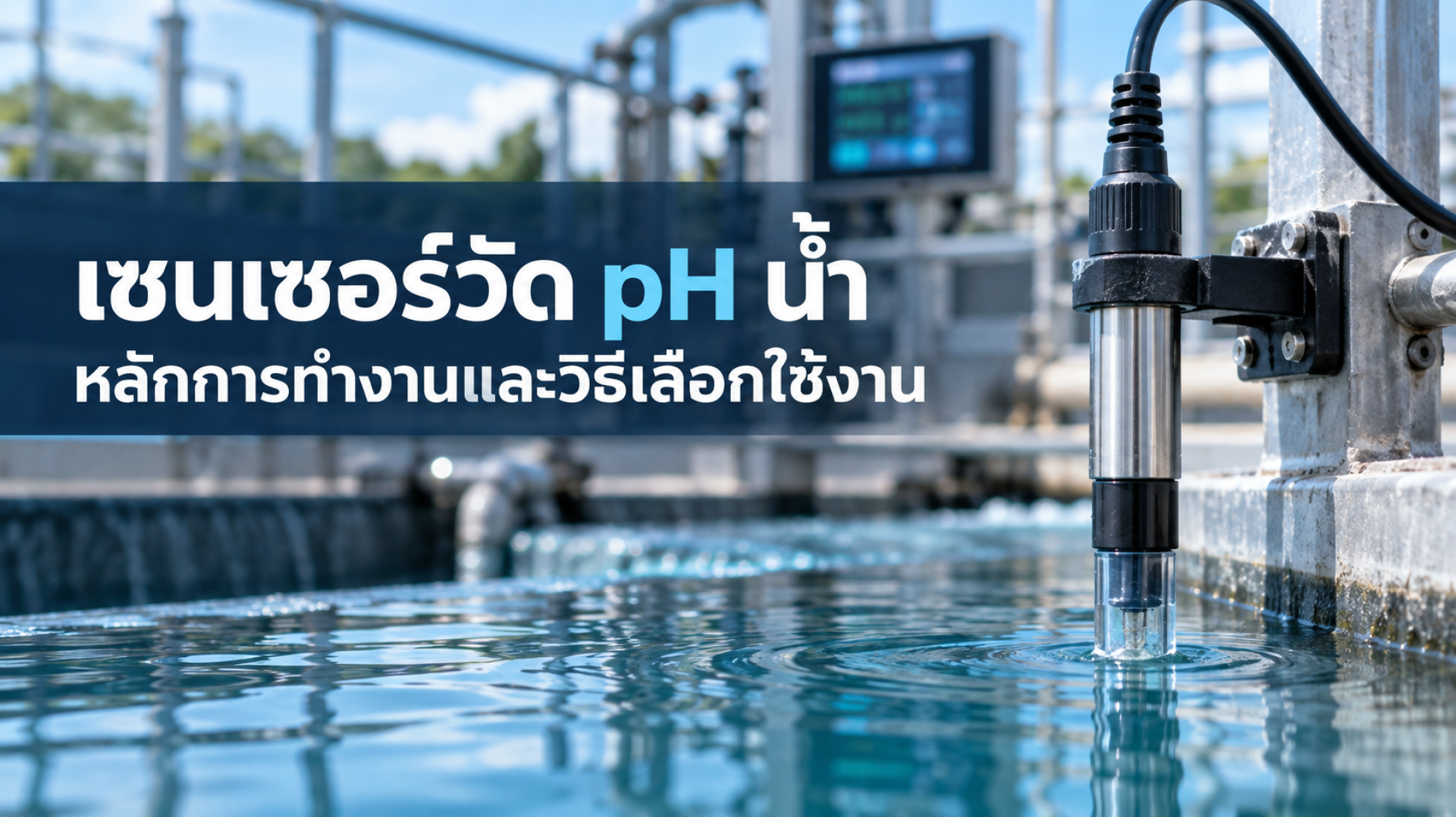
From wastewater plants and shrimp ponds to hydroponic farms and factory process lines, pH is among the most frequently monitored water quality values. Yet a water pH sensor that works well in practice takes more than a 014 pH range on the datasheet. This guide brings together how an online pH sensor works, where it is used, how to select one, and how to install and maintain it for stable readings.
What is a water pH sensor? (In short)
A water pH sensor is a device that tracks how acidic or alkaline water is, around the clock. A glass electrode reacts to hydrogen ions in the water, and the sensor converts that reaction into a pH value that can be sent straight to a PLC, controller, or monitoring platform. Choosing the right one means looking at the water type, temperature, pressure, materials, mounting method, fouling level, and output signal together.
| pH 0 | pH 7 | pH 14 |
| Acidic | Neutral | Alkaline |
What does pH mean?
pH expresses how acidic or alkaline a water-based solution is, on a scale from 0 to 14. Values under 7 are acidic, values over 7 are alkaline, and pure water at 25°C sits close to 7. Because the scale is logarithmic, a one-unit step is a big change: water at pH 5 is roughly ten times more acidic than water at pH 6.
Should every process aim for pH 7?
No. Each process has its own working range, so the useful question is whether the pH suits the job, not simply whether the water is acidic or alkaline. Commonly cited reference ranges include:
| Application | Typical pH range |
|---|---|
| Drinking / tap water | 6.58.5 |
| Industrial effluent (Thailand) | 5.59.0 |
| Shrimp ponds | 7.58.5 |
| Swimming pools | 7.27.8 |
| Hydroponic nutrient solutions | 5.56.5 |
These are general reference values. Always confirm the actual limits required by the relevant standard or process specification.
How does a pH sensor work?
Most industrial pH sensors pair a glass measuring electrode with a reference electrode. The thin glass bulb at the tip reacts to hydrogen ions and generates a small voltage that shifts by about 59 mV for every pH unit at 25°C. The sensor electronics then translate this voltage into a pH reading.
| 1 | The probe meets the water: the glass bulb sits submerged in the sample |
| 2 | The glass reacts to the hydrogen ions present |
| 3 | A voltage forms against the reference electrode, changing with pH |
| 4 | A pH value is output after temperature compensation, over RS485 or 420mA |
Online pH sensor or portable pH meter?
Portable pH meter
Good for occasional checks, field sampling, lab work, or measuring several points with one device. What happens between measurements stays invisible.
Online pH sensor
Permanently mounted in a tank or pipe, reading 24/7 with automatic logging, alarms, PLC connection, and long-term trend data.
Where are water pH sensors used?
pH swings with incoming loads and dosed chemicals, so the probe must cope with fouling
Anything from fairly clean recirculating water to heavily dosed or contaminated streams
Paired with DO, ORP, and temperature to follow day-night changes in the pond
Keeps irrigation water and nutrient solutions where plants absorb nutrients best
Long-term environmental monitoring where waterproofing and service access matter
Needs sensor materials and versions built specifically for saline conditions
How to choose a pH sensor for your application
A 014 pH rating alone does not make a sensor a good fit. Before choosing, work through these six questions:
| Factor | Question to answer |
|---|---|
| 1. Water type | Fresh water, wastewater, seawater, nutrient solution, or process water? |
| 2. pH range | Does the sensor cover the values that actually occur in the process? |
| 3. Temperature | What is the maximum water temperature, and is the chosen version rated for it? |
| 4. Pressure | Is it going into a pressurized pipe, and at what working pressure? |
| 5. Mounting | Immersion, threaded pipe fitting, or flow cell? |
| 6. Output | RS485 Modbus-RTU or 420mA, matching your PLC or monitoring system? |
Meet the RIKA RK500-12 pH sensor
The RK500-12 is an online pH sensor offered in several mounting styles. Depending on the version, it suits general water, wastewater, nutrient solutions, industrial water, river water, and seawater.
| Specification | Value |
|---|---|
| Range | 014 pH |
| Resolution | 0.01 pH |
| Accuracy | 0.01 pH (per manufacturer) |
| Power supply | 730 VDC |
| Output | RS485 and 420mA |
| Protection | IP68 |
| Operating temperature | Up to 100°C (version dependent) |
| Working pressure | Up to 1 MPa (version dependent) |
RK500-12 mounting versions
Compact immersion probe with fixed cable, for tanks and ponds
PG13.5 thread with M8 connector, high-temperature options
NPT3/4 threads top and bottom, fixed cable, for pipes and rivers
NPT3/4 threads top and bottom, waterproof connector for quick swaps
RIKA RK500-12 Water pH Sensor
See the product details, or send us your site information and our engineers will recommend the right version.
View product details Request a quoteWhy temperature compensation matters
A glass electrode's output drifts as temperature changes, so temperature compensation corrects the reading as water warms or cools. Keep in mind that this only corrects the electrode's own behavior. The real pH of some solutions also shifts with temperature, and that is a chemical property of the water rather than a sensor error.
Installing a pH sensor for stable readings
Even the right sensor can give noisy or drifting values if it sits in the wrong spot. The RK500-12 can be mounted on a tank wall, from the top, in a pipe, in a flow channel, or by immersion. Key points to watch:
- Stay clear of sediment: recesses and dead zones collect deposits quickly, and the probe tip should always sit above any settled layer
- Keep insertion depth consistent: changing depth or position can change what the sensor reads
- Ensure steady flow with no trapped air at the probe face, and leave easy access for cleaning
pH sensor maintenance and calibration
Keep the probe wet
When out of service, store it in 3 mol/L or saturated KCl solution. Avoid long-term storage in distilled, DI, or low-ion tap water.
Clean as conditions require
Frequency depends on how dirty the water is, with roughly 3 or 6 months as a starting point. Oily wastewater may need more frequent cleaning.
Calibrate regularly
Electrodes age and pick up contamination, so check them against standard buffers such as pH 4, 7, and 10 at intervals suited to your accuracy needs.
Can one sensor handle both pure water and wastewater?
Not always. Wastewater carries solids, grease, chemicals, and microbes that foul the probe quickly, while high-purity water has so little conductivity that stable pH measurement becomes difficult and may call for a dedicated system. The current RK500-12 specification covers general water, wastewater, nutrient solutions, industrial water, rivers, and seawater, but it does not list semiconductor-grade ultrapure water. Such applications should be assessed separately before selecting a sensor.
Taking pH data further with Smart Water Monitoring
An RS485 Modbus-RTU pH sensor connects directly to E-POWER's IoT Edge Gateway or FlowPLC, and can share the same bus with ORP, DO, and EC sensors. The system logs history, shows live dashboards on mobile, sends LINE or Telegram alerts when pH leaves its set range, and can drive acid or alkali dosing pumps for automatic pH correction. The 420mA version plugs into existing PLCs right away.
Frequently asked questions (FAQ)
What does a pH sensor measure in water?
It measures how acidic or alkaline the water is by responding to the hydrogen ions it contains.
Can a pH sensor monitor water continuously?
Yes. Online pH sensors mounted in tanks, pipes, or flow cells provide readings 24 hours a day.
What is a normal pH for water?
There is no single correct value. It depends on the process and water type, for example around 6.58.5 for drinking water and 7.58.5 for shrimp ponds.
Can I store a pH probe in distilled water?
It is not recommended. For the RK500-12, the manufacturer advises 3 mol/L or saturated KCl solution, since long-term storage in distilled or DI water shortens electrode life.
Can a pH sensor connect to a PLC?
Yes. The RK500-12 offers both RS485 and 420mA outputs, so it connects directly to PLCs, SCADA, HMIs, and IoT gateways.
What is the difference between pH and ORP?
pH describes acidity or alkalinity, while ORP describes disinfecting power and oxygen conditions. The two are related and are often measured together. See our article What is ORP? ORP vs pH for more.
Let our engineers help you pick the right pH sensor
Share your water type, expected pH range, temperature, pressure, mounting method, and required output. E-POWER engineers will recommend a suitable model and can design and install a complete water quality monitoring system.
LINE: @epower info@epower.co.thTel. +66 81-559-5145 | YouTube: Epower Service | TikTok: epowerservice_
Related articles: What is ORP? ORP vs pH, ORP monitoring installation for an RO water system, EC & Salinity water quality sensors, Immersion vs flow cell water sensors, 4-20mA vs 0-10V vs RS485 sensors
Reference: www.rikasensor.com