Level Sensor : A Professional Guide to Selecting Level Measurement Instruments for Industrial Sectors
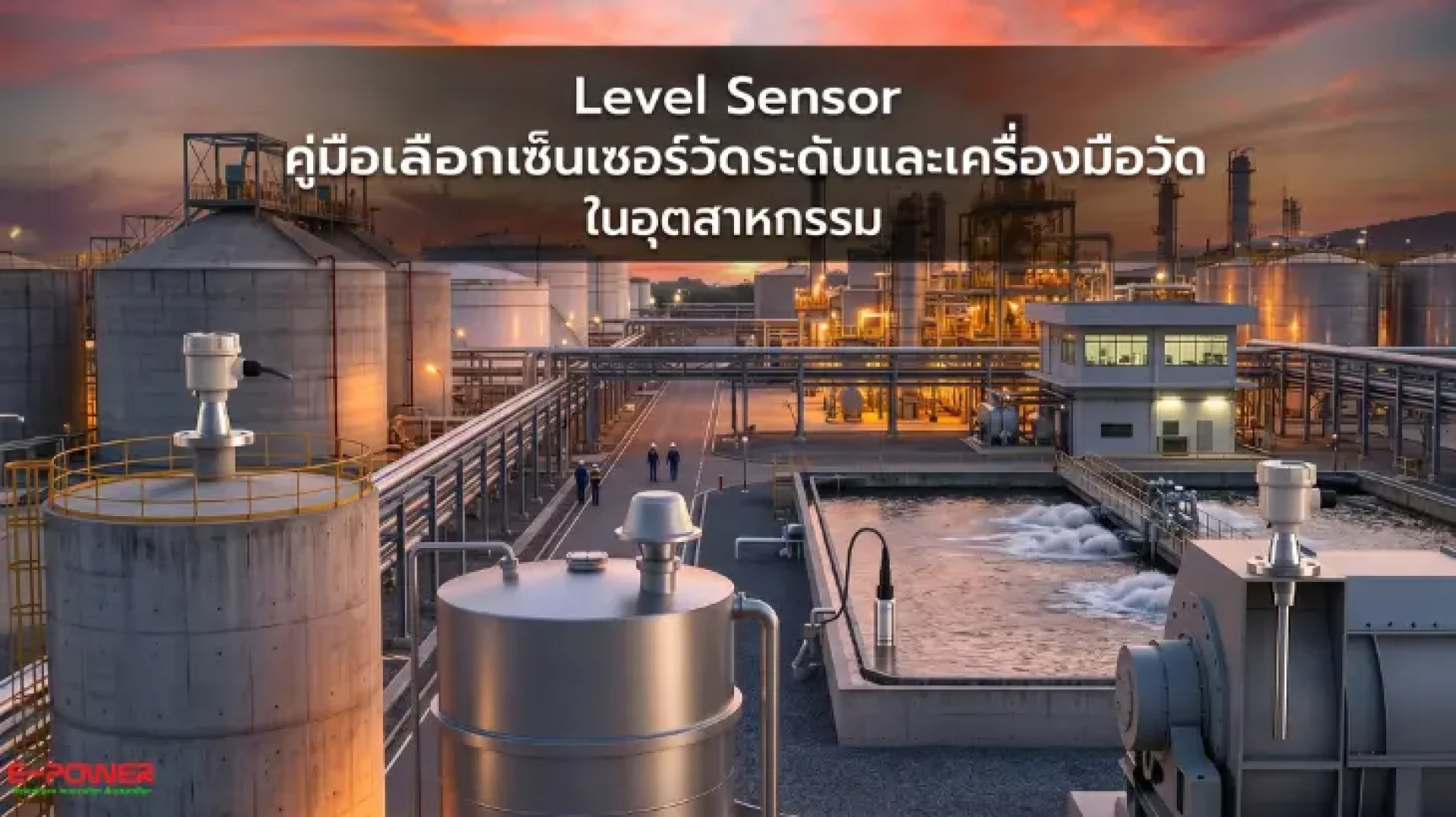
Level Sensor technology serves as a critical measurement and control component within industrial manufacturing and environmental monitoring processes to ensure systems run smoothly, efficiently, and safely. These instruments accurately detect and regulate raw material capacities inside process tanks or natural water resources across manufacturing plants, oil and gas sectors, wastewater treatment systems, and smart farms. Accessing real-time level data prevents hazardous chemical overflows, minimizes severe machinery downtime, and secures long-term environmental safety.
Understanding the Distinctions: Liquid vs. Solid Level Sensors
Matching the selection of your Level Sensor technology to the physical state of your target material is the primary factor engineers must evaluate:
- Liquid Level Sensor: Engineered specifically for substances presenting a uniform, flat surface. This type utilizes non-contact configurations, such as radar or ultrasonic waves, to measure exact distances to the fluid surface. It is highly demanded in chemical storage tanks and wastewater facilities.
- Solid Level Sensor: Structured to conquer the operational challenges of handling aggregates, grains, powders, or bulk materials like corn, flour, or cement inside silos. Because these materials form irregular topographies and generate heavy dust blankets, they require high-frequency radar or specialized sensors that can penetrate dense dust particles.
4 Core Level Sensor Technologies in Modern Industry
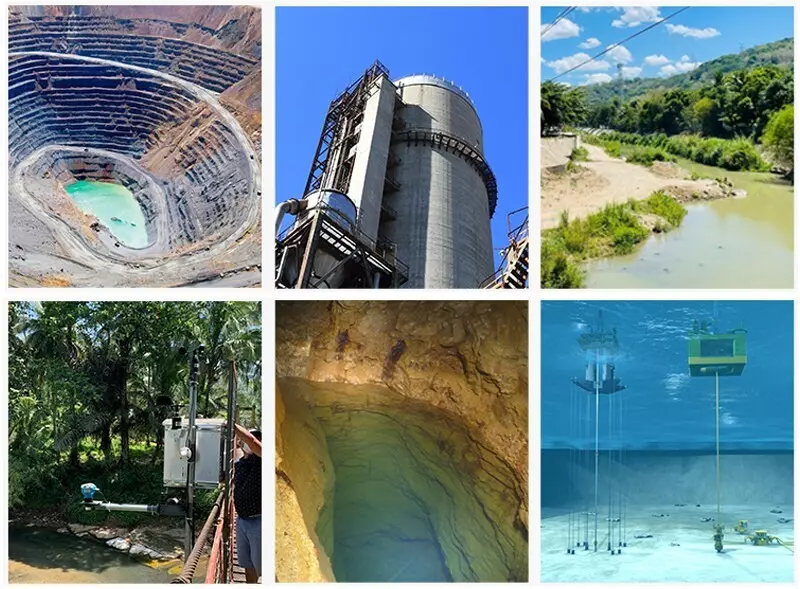
Industrial Level Sensor types encompass diverse engineering principles, each presenting distinct operational strengths for specific field environments:
1. Ultrasonic Level Sensor
Distinguished by its non-contact measurement mastery, this configuration transmits acoustic sound waves to compute distances. It is perfectly suited for harsh applications where direct contact with fluids must be avoided, such as raw water storage or open-channel river level monitoring for early flood warnings.
2. Capacitive Level Sensor
Delivers immense precision by tracking fluctuations in electrical capacitance when process materials approach the probe tip. It excels at measuring viscous fluids, liquids, or fine powders inside mixing vats. This is heavily utilized within food, beverage, and pharmaceutical productions demanding strict sanitary compliance and high sensitivity.
3. Float Level Sensor
Provides unparalleled reliability through a straightforward, mechanical design. The float physical unit rises and falls with the shifting liquid surface to mechanically actuate electrical switches. This highly robust, cost-effective device is widely deployed in industrial sewage systems, water supply infrastructure, and agricultural irrigation networks.
4. Radar Level Transmitter
Represents the pinnacle of level instrumentation, utilizing high-frequency microwave pulses. Advanced systems like the 80GHz radar technology found in the SUPMEA WSR550 run unaffected by ambient temperature swings, heavy vacuums, high pressures, or thick vapors. It stands as the premier choice for extreme fields, including petroleum fuel storage or corrosive chemical reactors.
Key Technical Factors for Engineering Selection
To maximize your return on investment and secure top-tier system efficiency, verify these parameters before finalizing your equipment specification:
- Material Type: Define clearly whether your medium is a clean liquid, solid bulk, fine powder, or corrosive slurry, as sensor elements are specifically calibrated to react to distinct material densities.
- Process Environment: Review the maximum operating temperatures, internal tank pressures, humidity levels, and chemical properties. For outdoor applications, always select instruments built to at least an IP67 protection standard.
- Accuracy Demands: While general storage monitoring might only require standard readings, intricate batching processes or precise inventory evaluations demand high-accuracy sensors delivering a $pm2$ mm precision threshold.
- Control Integration: Ensure the selected device outputs signals that interface smoothly with your current system architecture—whether that requires an analog 4-20mA loop or digital RS485 Modbus RTU communication to feed data directly into PLCs or control screens.
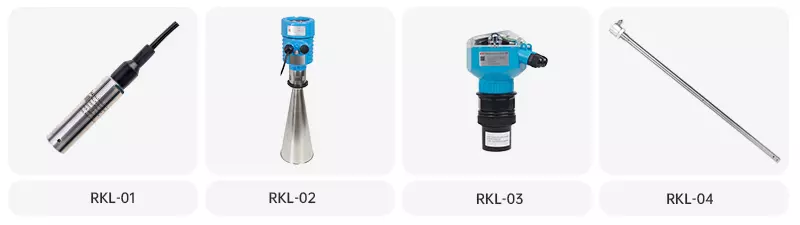
Premium High-Performance RIKA Level Sensors
To meet diverse manufacturing demands, E-Power Service offers an elite lineup of RIKA Level Sensor solutions trusted by automation engineers globally:
1. Rika RKL-01 Submersible Liquid Level Transmitter
The Ultimate Answer for Deep Water and Open Systems: This submersible hydrostatic pressure level probe is constructed from premium anti-corrosive stainless steel. It is ideal for groundwater wells, deep raw-water reservoirs, chemical sumps, and open-river monitoring.
2. Rika RKL-02 Radar Level Transmitter
Peak Precision with Zero Environmental Boundaries: Utilizing a non-contact radar pulse guided by a specialized horn antenna, this device focuses a tight beam that pierces through heavy steam, thick dust layers, and high pressures. It is optimal for massive chemical vats and complex agricultural silos.
3. Rika RKL-03 Ultrasonic Liquid Level Transmitter
Cost-Effective Non-Contact Measurement for General Fluids: A highly compact and rugged non-contact ultrasonic instrument that eliminates component wear and maintenance. It is an excellent match for utility water tanks, mild chemical storages, and open-channel flow tracking.
4. Rika RKL-04 Capacitance Fuel Level Sensor
Specially Calibrated for Exact Petroleum and Oil Tracking: This rod-probe sensor utilizes advanced capacitance tracking inside a protective cylindrical chamber. It delivers ultra-stable measurements for diesel, crude oil, or machinery lubricants, completely canceling out signal noise caused by fuel sloshing.
Elevate Your Factory Tank Level Systems Today
In the era of Industry 4.0, tedious manual dipping is being replaced by intelligent automation. E-Power Service Co., Ltd. is your comprehensive partner for instrumentation and Industrial IoT solutions.
We link your field data directly to centralized networks. Whether you want to view real-time tank capacities on a Haiwell Cloud SCADA V3.50 interface or transmit variables through the E-power IoT Platform straight into Google Sheets with instant LINE Notify alarms, our team has you covered. From designing custom control panels to executing on-site calibration, our expert engineers ensure your plant runs flawlessly.
Ready to upgrade your industrial level monitoring systems?
Contact an E-Power Service engineer for an professional consultation:
- Website: www.epower.co.th
- LINE Official: @epower
- Phone: 081-559-5145
- Email: info@epower.co.th