Industrial Sensors Ultimate Guide: Types, Applications, and Selection Techniques
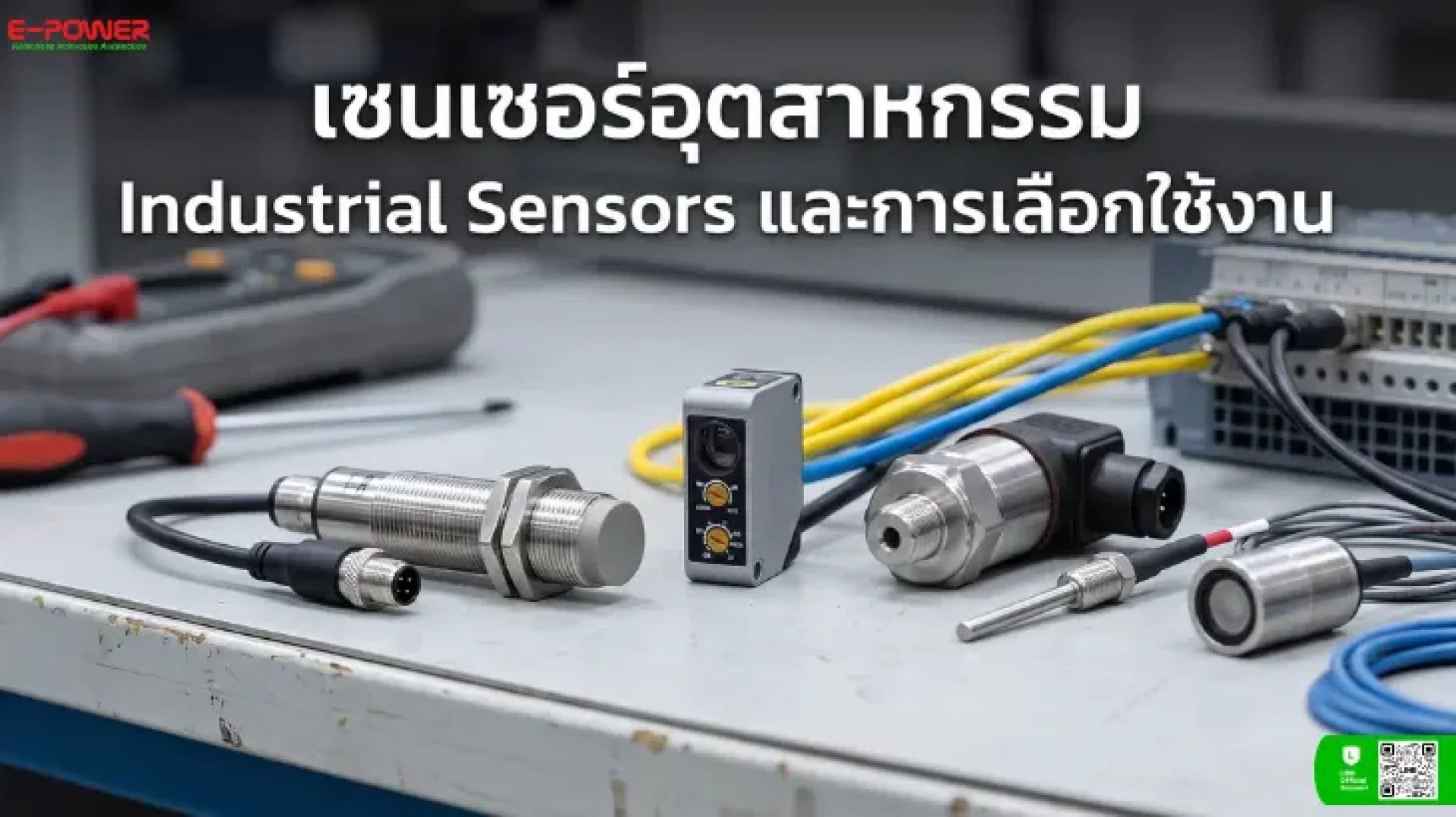
Industrial automation is driving today's manufacturing, logistics, energy, and smart infrastructure. Industrial sensors are at the heart of this transformation, enabling systems to detect, monitor, and respond to changes in production processes in real time.
Adapting to Industry 4.0 and Smart Manufacturing has caused the demand for industrial sensors to grow rapidly. This comprehensive guide will help you understand their types, applications, key differences from standard commercial sensors, and how to select the right sensor to perfectly match your industrial environment.
What is an Industrial Sensor?
An industrial sensor is an electronic device designed to detect physical, chemical, or environmental changes within a factory and convert those changes into electrical signals that machines, controllers, or monitoring systems can read.
Examples of parameters that industrial sensors can measure include:
- Temperature & Humidity
- Pressure
- Proximity
- Level & Flow
- Vibration
- Gas Concentration
- Current & Voltage
These sensors transmit signals to Programmable Logic Controllers (PLCs), DCS, SCADA systems, or cloud platforms for processing. The devices themselves are engineered with exceptional durability to withstand harsh operating conditions, such as heavy dust, moisture, corrosive chemicals, intense vibration, and electromagnetic interference (EMI).
The Importance of Sensors in Industrial Applications
Industrial sensors are crucial for driving automation systems, offering several key benefits:
- Real-time Monitoring: Allows operators to view system statuses instantly.
- Enhanced Production Efficiency & Quality Control: Minimizes defect rates and waste within the production line.
- Predictive Maintenance: Detects machine abnormalities before a breakdown occurs, significantly reducing downtime and maintenance costs.
- Safety & Energy Optimization: Maintains a safe working environment for operators and eliminates excess energy consumption.
Comparison: Industrial vs. Commercial vs. Residential Sensors
| Feature | Industrial Sensors | Commercial Sensors | Residential Sensors |
| Environment | Harsh conditions, chemicals, extreme heat | Office buildings, department stores | Homes and condominiums |
| Durability | Exceptionally high | Moderate | Basic |
| Ingress Protection | Typically IP65 / IP67 / IP68 | Limited to specific models | Low level |
| Operation | Continuous 24/7 duty cycle | Active during business hours | Intermittent based on demand |
| Communication | IO-Link, Modbus RTU/TCP, CANopen | Basic networking protocols | Wi-Fi / Bluetooth |
| Noise Immunity | Extremely high (EMI Shielded) | Moderate | Low |
Popular Types of Industrial Sensors
- Proximity Sensors
Used to detect objects without any physical contact. These include Inductive Proximity Sensors (for metal detection), Capacitive Proximity Sensors (for non-metals/liquids), Photoelectric Sensors, and Ultrasonic Sensors. They are widely used in conveyor systems, packaging lines, and industrial robotics.
2. Temperature Sensors
Responsible for monitoring thermal conditions during manufacturing. Common types include RTDs (Pt100/Pt1000), Thermocouples, and Infrared (IR) temperature sensors. They are ideal for HVAC systems, food processing lines, and industrial ovens.
3. Pressure Sensors
Used to measure gas or liquid pressure inside pipelines and pressure vessels. These are heavily relied upon in hydraulic, pneumatic, and water treatment systems to ensure machinery safety.
4. Level Sensors
Designed to measure liquid levels or dry solids inside tanks, silos, or sumps. Examples include Ultrasonic Level Sensors and Radar Level Sensors, which are commonly found in the chemical, oil & gas, and water supply industries.
5. Flow Sensors
Measure the velocity and volume of liquids or gases moving through a pipe, optimizing chemical dosing systems and quickly detecting leaks.
6. Humidity Sensors
Control moisture levels in the air to maintain product quality. They are essential for warehouses, cleanrooms, pharmaceutical manufacturing, and smart farming greenhouse systems.
7. Gas Sensors
Detect flammable gases, toxic gases, or oxygen levels—such as Carbon Monoxide (CO) and Methane ($CH_4$)—to ensure safety in confined spaces, refineries, or chemical plants.
8. Vibration Sensors
Monitor the vibration profiles of motors, pumps, and rotating machinery to analyze bearing wear before catastrophic equipment failure occurs.
Sensor Applications Across Industries
- Manufacturing: Utilizes Proximity Sensors and Vision Sensors for position tracking and quality inspection on automated assembly lines.
- Water Treatment: Deploys pH Sensors and Conductivity Sensors to automate chemical dosing and monitor effluent water quality.
- Smart Agriculture: Implements weather stations and soil moisture sensors to precisely manage automated irrigation and fertilization.
- Renewable Energy: Uses wind speed sensors, wind direction indicators, and Photosynthetically Active Radiation (PAR Sensors) to optimize solar farms and wind turbines.
Sensor Technology in the Industry 4.0 Era: Smart Sensors & IO-Link
Modern sensors have evolved into Smart Sensors connected directly to the Industrial Internet of Things (IIoT). By adopting the standardized IO-Link communication protocol, these sensors can transmit detailed diagnostics, predict component failures, and support remote configuration. This makes predictive maintenance highly accurate and significantly slashes unplanned downtime.
Sensor Output Comparison: NPN vs. PNP
When wiring digital sensors to a PLC, you must match the output type to your PLC input specifications:
- NPN (Sinking): Outputs a negative signal (0V) when the sensor is triggered. Commonly used in Asian automation control systems.
- PNP (Sourcing): Outputs a positive signal (+24V) when the sensor is triggered. Standard practice in European and North American control systems.
Technical Selection Criteria for Industrial Sensors
- Identify the Target Parameter: Match the sensor to the physical property you need to measure, such as temperature, pressure, flow rate, or distance.
- Evaluate Environmental Conditions: Assess presence of dust, water, chemical exposure, or extreme temperatures to choose the right Ingress Protection (IP Rating).
- Determine Accuracy Requirements: Critical analysis or control applications demand high-stability sensors with minimal tolerances.
- Verify Output Compatibility: Confirm how the sensor connects to your PLC—whether via analog signals (4-20mA / 0-10V), digital outputs, or communication protocols like Modbus RS485 or IO-Link.
Premium Industrial Sensor Solutions by Rika Sensor
If you are looking for highly durable, accurate, and cost-effective industrial-grade sensors, E-Power Service—your automation expert—proudly recommends our Rika Sensor product line, tailored for diverse industrial applications:
- Environmental & Weather Sensors: Products like the Rika RK100-02 Wind Speed Sensor and the Rika RK520-01 Soil Moisture & Temperature Sensor are ideal for smart farming setups and professional weather stations.
- Industrial Water Quality Sensors: Solutions like the OPTOD Optical Dissolved Oxygen Sensor for DO tracking, and the Supmea SUP-TDS210-C Conductivity Meter system which supports RS485 Modbus RTU integration, allow seamless water quality monitoring in boiler blowdown and wastewater treatment setups.
The engineering team at E-Power Service is ready to consult, design, and source the perfect industrial sensors to fit your facility's exact needs, helping you transition smoothly into next-generation industrial automation.
Reference : rikasensor.com