Wind Measurement Devices on Anemometer Towers: Industrial-Grade Wind Speed and Direction Sensors
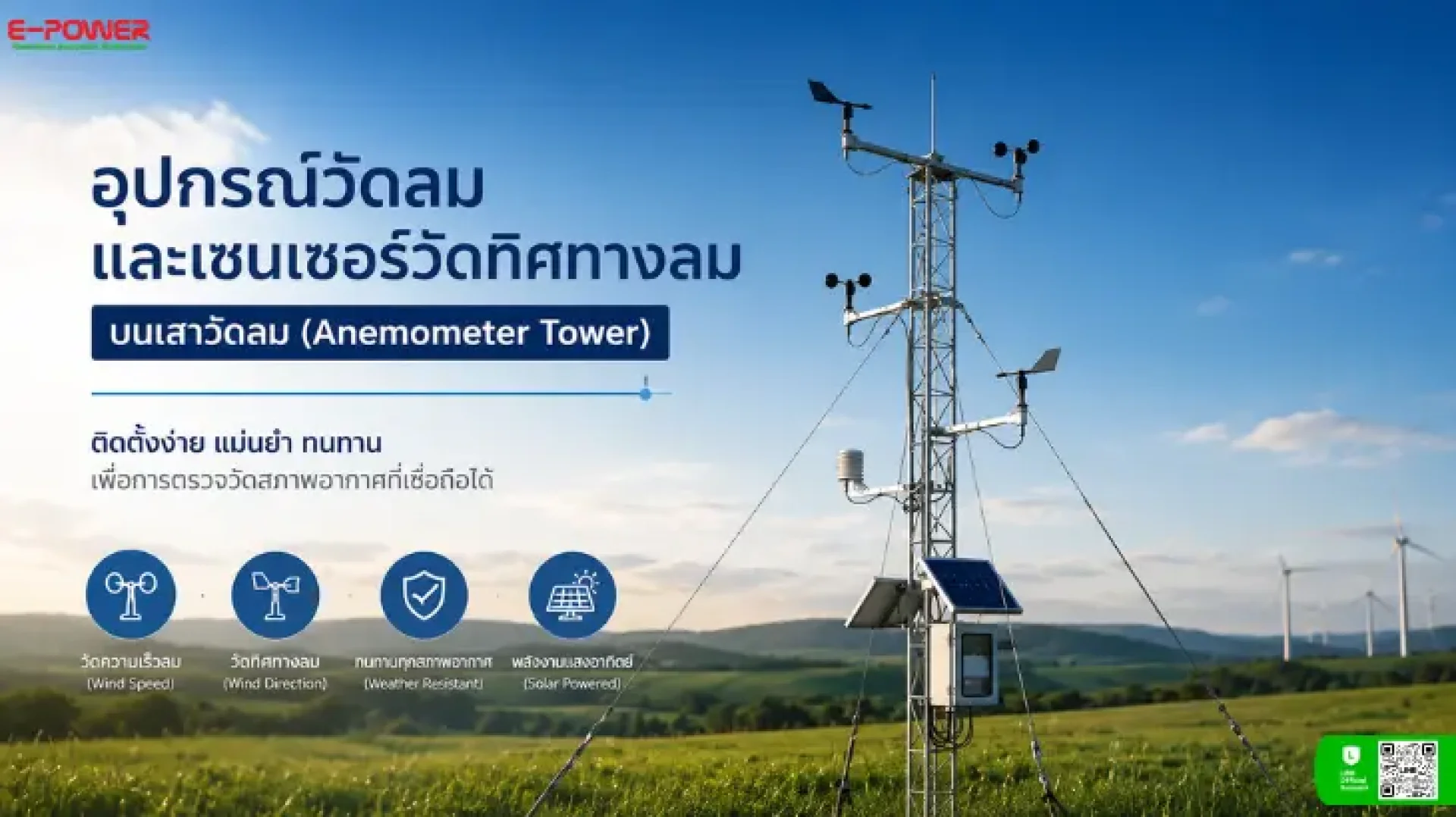
Wind Measurement Devices installed on an Anemometer Tower are critical for wind energy assessment, meteorological studies, weather station systems, and precision agriculture (Smart Agriculture). A complete wind measurement system typically includes a wind speed sensor (Anemometer), a wind direction sensor (Wind Vane Sensor), wind data logging and processing software, and environmental sensors such as thermometers (temperature), barometers (atmospheric pressure), and hygrometers (humidity).
1. Wind Speed Sensor (Anemometer)
A Wind Speed Sensor (Anemometer) measures wind velocity and wind pressure. Current popular technologies include rotary anemometers, heat-dissipating anemometers, acoustic anemometers, and ultrasonic wind speed sensors.
For wind farms and general wind measurement projects, rotary anemometers are the most widely used type and are divided into two main categories:
- Wind Cup Anemometer: Consists of 3 or 4 hemispherical or parabolic hollow cups mounted on support arms angled at 120° or 90°. All cup concavities face the same direction. Driven by wind, the cups rotate around a vertical axis at a speed directly proportional to wind speed.
- Propeller Anemometer: Consists of a 3-blade or 4-blade propeller mounted at the front of a vane, keeping it aligned with the wind direction. The blades rotate around a horizontal axis at a speed proportional to wind speed.
Alternative Technologies: Heat-dissipating anemometers are ideal for measuring very low air speeds. Ultrasonic wind sensors feature no moving parts, rapid response times, high accuracy, and low maintenance requirements.
Installation Guidelines for Wind Speed Sensors
To prevent measurement errors caused by the "Tower Shadow Effect" (where the tower structure obstructs or alters airflow), wind speed sensors must be mounted on sturdy horizontal support brackets maintained at proper distances from the tower body:
- Truss Tower: Extension distance must exceed 3 times the tower's cross-sectional width.
- Tube Tower: Extension distance must exceed 6 times the tower's outer diameter.
- Leveling and Alignment: Support brackets must be leveled horizontally and positioned at an angle between 30° and 90° relative to the dominant wind direction.
2. Wind Direction Sensor (Wind Vane Sensor)
A Wind Direction Sensor (Wind Vane Sensor) is the standard device for determining wind flow direction. It comes in single-wing, double-wing, and streamlined designs. The main structure consists of a tail, a pointing rod, a counterweight, and a vertical rotating shaft balanced precisely at the center of gravity to allow free 360-degree rotation.
Installation and Calibration Principles
- Mounting Distance: Installed on a horizontal beam extending at least 3 times the diameter/width for truss towers or 6 times for tube towers, set at a 90° angle to the main wind direction.
- True North Alignment: Must be calibrated according to the local magnetic declination to ensure the sensor points accurately toward True North.
Output and Display Options
Wind direction is generally represented in two main formats:
- 16 Cardinal Directions: Such as North (N), Northeast (NE), East (E), South (S), West (W), etc.
- Degrees (0° – 360°): Measured clockwise relative to True North (0°/360°):
90° = East Wind
180° = South Wind
270° = West Wind
3. Wind Measurement Software
Wind measurement software collects and records signals from wind speed sensors, wind direction sensors, temperature sensors, and barometric pressure sensors into a digital data log. This allows wind resource engineers to analyze wind energy potential (Wind Resource Assessment) or implement accurate environmental monitoring systems.
These systems support flexible output signals including 4-20mA, 0-10V, and standard Modbus RS485 protocols, ensuring smooth and stable integration with PLC control systems and SCADA networks.
Recommended Wind & Weather Sensors
Wind Speed Sensors
- RK100-01 Wind Speed Sensor : High-precision 3-cup anemometer engineered specifically for meteorological monitoring and weather station systems.
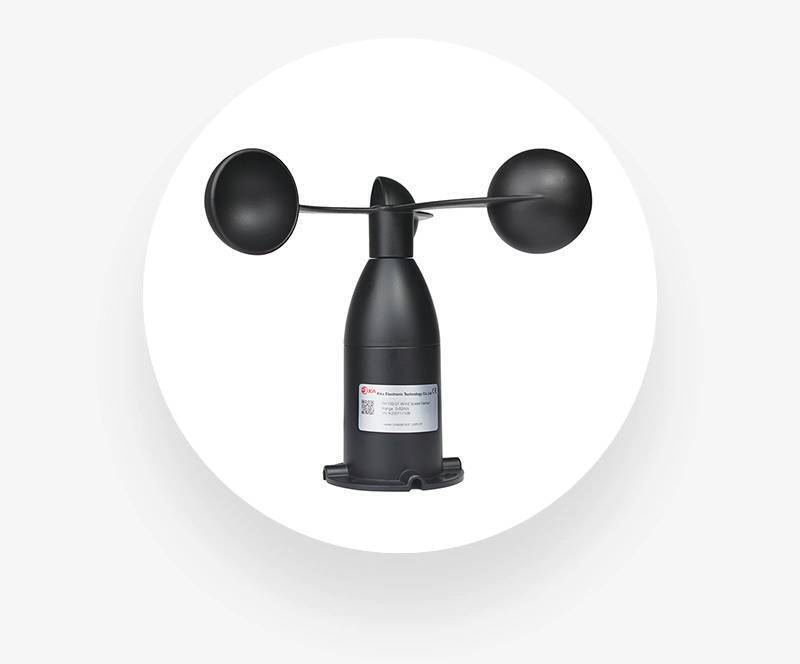
- RK100-02 Customized Wind Speed Sensor : Features lightweight, high-strength carbon fiber wind cups providing a low starting threshold for fast responses even under light wind conditions.
- Rika RK100-05 HVAC / Pipe Wind Speed Sensor: A hot-wire anemometer designed for measuring low-velocity airflow in air ducts, ventilation pipes, and industrial HVAC systems.
Wind Direction / Vane Sensors
- Rika RK110-02 Wind Direction Sensor: Industrial wind vane constructed with lightweight metal and high-precision magnetic sensitive chips. Supports 4-20mA, 0-5V, and Modbus RS485 outputs.
Weather Station Solutions
- Compact Weather Station RK330-01: Integrated weather sensor module combining temperature, humidity, atmospheric pressure, and solar radiation into a single compact housing.
- IoT Weather Station System: Real-time environmental monitoring solution featuring automatic data logging, Excel export, and direct connectivity to automated control platforms (PLC/SCADA/Smart Farming).